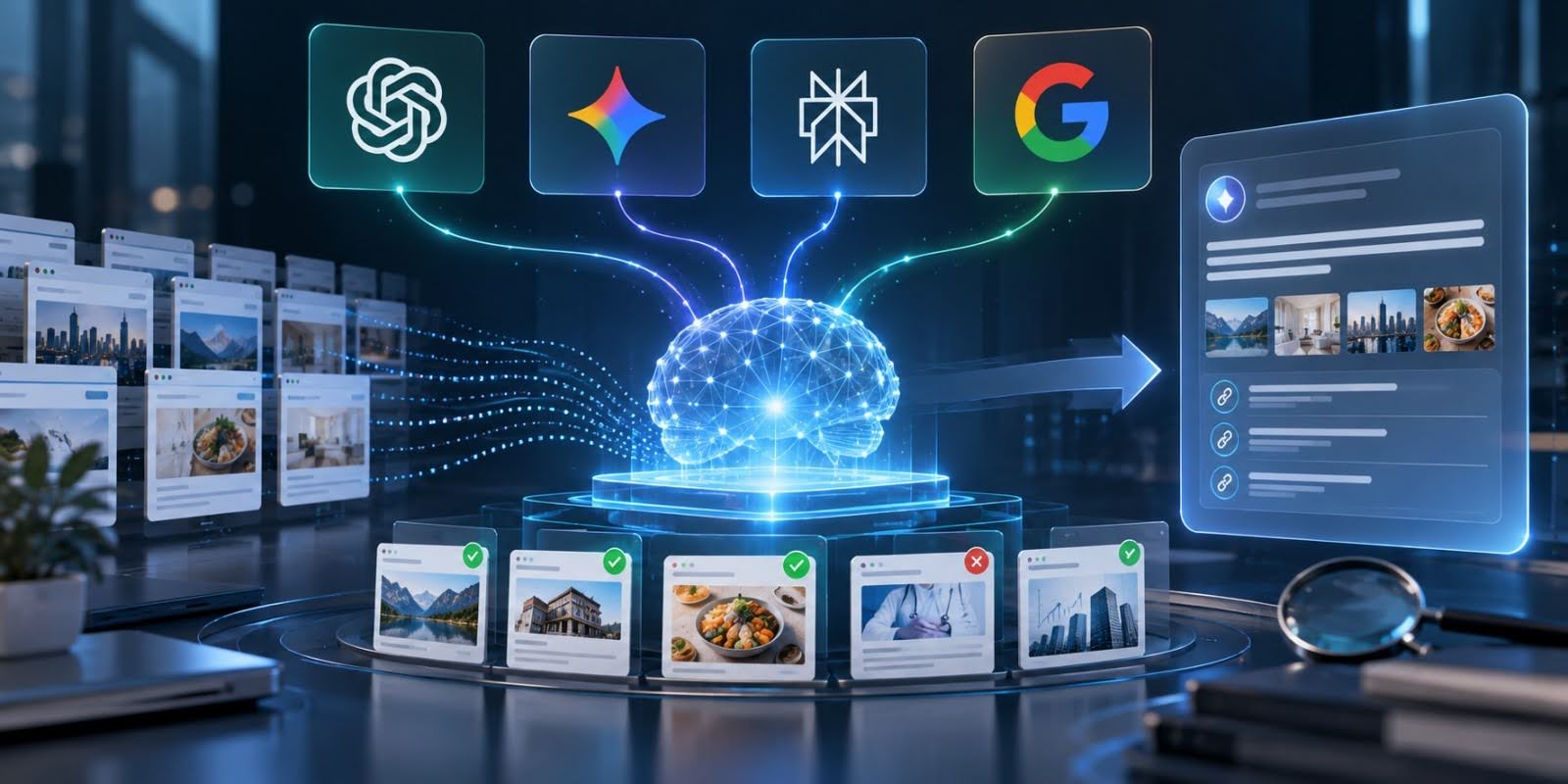
GEO helps Singapore businesses structure content in a way that it can be discovered, understood, and cited by AI systems such as large language models and AI-powered search engines. Unlike traditional SEO, Generative Engine Optimisation in Singapore focuses on how information is organised, contextualised, and presented for extraction rather than just ranking.
As AI-generated responses become more prominent across search interfaces, visibility is no longer limited to search engine results pages. Businesses now need to appear directly within AI-generated answers, summaries, and recommendations. Keep reading to understand why this shift requires a more structured approach to content that prioritises clarity and contextual relevance.
What Is Generative Engine Optimisation (GEO)?
Generative Engine Optimisation (GEO) is a digital marketing framework designed to increase a website’s visibility in AI-generated search results, such as Google’s AI Overviews, Perplexity AI, and OpenAI’s SearchGPT. It prioritises factual accuracy, structured data, and cite-worthy content over traditional ranking signals.
In Singapore, the importance of GEO is driven by the Smart Nation initiative and high smartphone penetration. Consumers increasingly use voice search and AI assistants to find services. Businesses that adopt GEO early ensure that, when an AI is asked for a recommendation, their brand is cited as the source of truth.
GEO vs SEO vs AEO: A Comparative Analysis
Understanding the distinction between these three pillars of search is vital for any digital strategy.
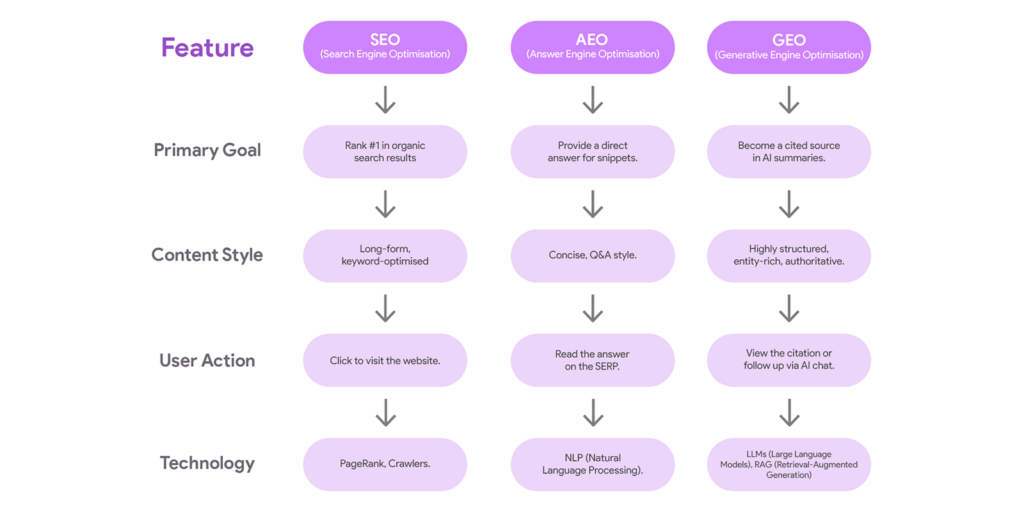
| Feature | SEO (Search Engine Optimisation) | AEO (Answer Engine Optimisation) | GEO (Generative Engine Optimisation) |
|---|---|---|---|
| Primary Goal | Rank #1 in organic search results. | Provide a direct answer for snippets. | Become a cited source in AI summaries. |
| Content Style | Long-form, keyword-optimised. | Concise, Q&A style. | Highly structured, entity-rich, authoritative. |
| User Action | Click to visit the website. | Read the answer on the SERP. | View the citation or follow up via AI chat. |
| Technology | PageRank, Crawlers. | NLP (Natural Language Processing). | LLMs (Large Language Models), RAG (Retrieval-Augmented Generation). |
Most businesses fail at GEO because they continue to optimise for rankings rather than extractability. In AI-driven search, visibility is no longer determined by position, but by whether your content can be understood and reused by machines.
The Evolution of
AI Search in Singapore
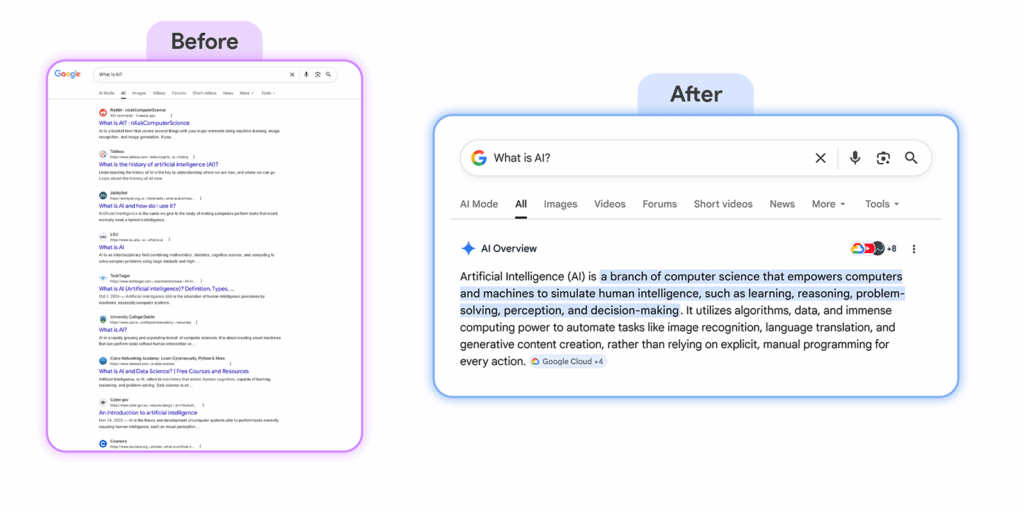
AI search is a retrieval method where an AI model synthesises information from multiple web sources to provide a singular response. In Singapore, this trend is visible through the rapid adoption of tools like Gemini and ChatGPT for local queries ranging from “best insurance for SMEs in Singapore” to “top-rated hawker centres for tourists.”
The shift toward AI-driven search means that “top 10” lists are being replaced by “The best option is…” conclusions. For Singaporean businesses, this means that if you are not in the AI’s training data or its retrieval window, you essentially do not exist for a significant portion of the online audience.
How GEO Works (Core Framework)
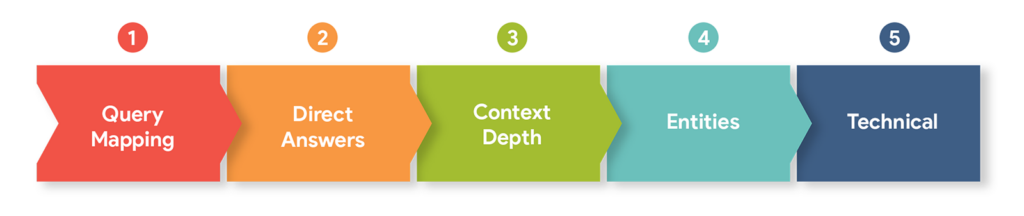
GEO works by aligning content structure, entity signals, and contextual clarity with how AI systems interpret and generate answers. Rather than focusing solely on keywords, GEO ensures that information is presented in a way that is both understandable and reusable by AI models.
1. Query Mapping (Intent First)
- Informational Intent: “What is the GST rate in Singapore for 2024?”
- Commercial Intent: “Compare top SEO agencies in Singapore.”
- Transactional Intent: “Book a GEO audit in Singapore.”
2. Direct Answer Structuring
Each section of content should begin with a clear and direct answer to a specific query. This allows AI systems to extract information without requiring additional context.
For example: “The current corporate tax rate in Singapore is a flat 17%.” Following this with detailed explanations allows the AI to “clip” the first sentence for its summary while using the rest for context.
Well-structured answers improve both readability for users and extractability for AI systems, making them more likely to be cited in generated responses.
3. Contextual Depth and Evidence
After providing a direct answer, the content should expand with supporting explanations, examples, and related concepts. This adds depth and ensures the content is not only accurate but also comprehensive.
- Statistics: Using specific data points (e.g., “Singapore’s e-commerce market is projected to reach $11 billion by 2025”).
- Citations: Referencing government bodies (MTI, IRAS) or industry leaders.
- Case Studies: Providing real-world examples of service delivery in Singapore.
Contextual expansion helps AI systems better understand the topic and increases the likelihood of content being selected for more complex queries.
4. Entity Optimisation
Entity optimisation involves using consistent and recognisable terms such as brand names, services, and industry concepts. AI systems rely on these entities to understand relationships and context within content.
Strong entity signals improve clarity and help position content as authoritative within a specific topic area.
5. Technical Enhancement
Technical elements such as schema markup, clean HTML structure, and proper heading hierarchy reinforce how content is interpreted by AI systems.
- Header Tags (H1-H4): Clear hierarchy.
- High Page Speed: AI crawlers prioritise fast-loading data.
- Clean HTML: Minimal code bloat ensures the AI captures the text accurately.
These enhancements ensure that content is machine-readable and aligned with how AI models process structured information.
GEO Content Strategy: Writing for AI Engines

A GEO-driven content strategy focuses on answering intent rather than simply targeting keywords. It prioritises clarity, completeness, and logical structure to ensure content can be effectively used by both users and AI systems.
GEO for SMEs and Local Services
For small businesses in Singapore, such as clinics, law firms, or cafes, GEO is about Local Entity Authority.
- Action: Create a local FAQ page. Answer questions like “Where is the best dental clinic in Orchard?” directly.
- Benefit: When a user asks an AI for a local recommendation, the AI uses your structured FAQ to validate your location and services.
GEO for E-commerce Brands
Singaporean e-commerce is highly competitive. AI search engines now provide product comparisons directly.
- Action: Use “Product Schema” and create “vs” pages (e.g., “Product A vs Product B in Singapore”).
- Benefit: AI models look for structured comparisons to help users make decisions. If your data is the most organised, you become the recommended choice.
GEO for B2B and SaaS
B2B decision-makers in Singapore use AI to shortlist vendors.
- Action: Publish “White Papers” and “Industry Frameworks” that define new terms or processes.
- Benefit: By defining a specific industry process (e.g., The Singapore Standard for Data Privacy in SaaS), your brand becomes the source entity for that topic.
Effective GEO content provides direct answers to key questions while also offering supporting context that enhances understanding. This approach ensures that content remains valuable even when extracted into AI-generated summaries, maintaining both accuracy and relevance.
How to Structure Content for GEO (AI-Friendly Framework)
Content structure plays a critical role in GEO because AI systems rely heavily on hierarchy and organisation to interpret information. Poorly structured content increases the risk of misinterpretation, reducing the likelihood of being selected in AI-generated answers. A well-structured page improves both user experience and machine readability.
An AI-friendly framework includes clear headings, concise paragraphs, and a logical progression from definitions to explanations and applications. This ensures that each section can stand alone while still contributing to the overall topic, making it easier for AI systems to extract precise information.
Entity SEO and GEO: Building Authority for AI Search
Entity SEO is a key component of GEO as it helps AI systems understand how different concepts relate to each other. Instead of relying only on keywords, AI models interpret content based on recognised entities and their relationships.
To build a strong entity authority, businesses should use consistent naming, reference related concepts within the same context, and align content with widely recognised industry terminology. This strengthens contextual signals and increases the likelihood of being cited in AI-generated answers.
GEO Strategies for Singapore Businesses
GEO strategies help businesses align their content with how users search and how AI systems deliver answers. By focusing on intent, structure, and clarity, businesses can position themselves within AI-generated responses where decisions are often made.
How Singapore Businesses Can Generate Leads Using GEO
GEO enables businesses to generate leads by appearing in AI-generated answers at the moment users are actively seeking solutions. This visibility can help users identify reputable businesses during their decision-making process.
For example, a service provider answering cost-related or solution-based queries can appear directly within AI summaries, increasing exposure and engagement without relying solely on traditional rankings.
GEO for SMEs in Singapore: Practical Implementation
Small and medium enterprises can implement GEO effectively without significant resources by focusing on structured content and clear communication.
By identifying key customer queries, creating dedicated pages, and structuring content with clear headings and definitions, SMEs can compete in AI-driven search environments. This approach prioritises clarity over complexity, making it accessible and scalable.
GEO Strategies for E-commerce Brands
E-commerce brands can benefit from GEO by structuring product-related content in a way that aligns with how AI systems generate recommendations.
This includes creating detailed product descriptions, publishing comparison guides, and structuring FAQs around common queries. These elements improve the likelihood of products being featured in AI-generated summaries and recommendations.
How to Increase Visibility in AI Search (AIO)
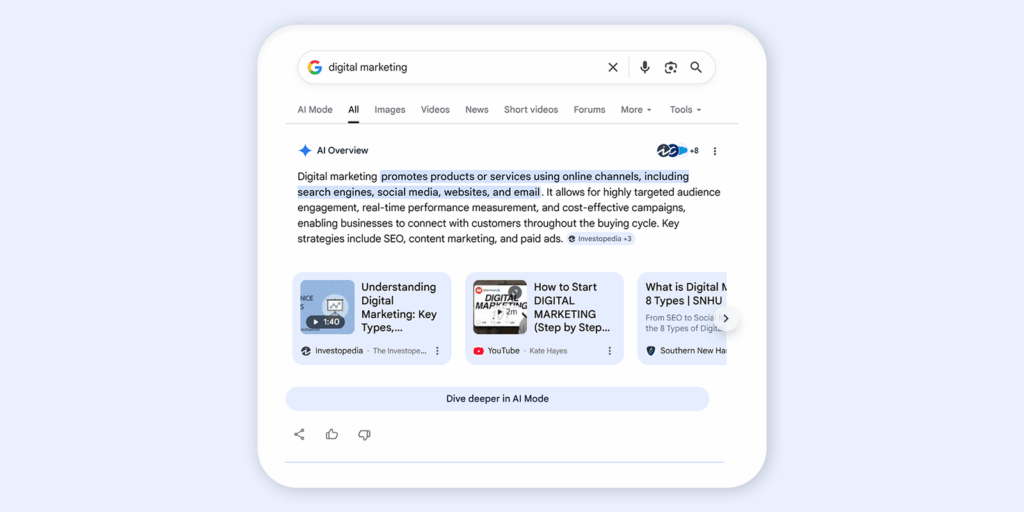
AI Overviews (AIO) are generated summaries that appear directly within search results, providing users with immediate answers. Visibility in AIO requires content that is not just clear but also structured and authoritative.
- Fact-Dense: High number of facts per 100 words.
- Neutral: Avoid marketing jargon like “the best” or “amazing.” Use “top-rated” or “widely recognised.”
- Structured: Use bullet points and numbered lists for any process-oriented content.
To improve AIO visibility, businesses should ensure that answers are concise and placed at the beginning of sections, supported by well-organised headings and consistent formatting. Content that is factually accurate and contextually complete is more likely to be selected by AI systems.
Technical GEO Optimisation
Technical GEO optimisation enhances how AI systems interpret and process content. While content quality is critical, technical structure ensures that information is accurately understood and extracted.
How to Use Schema Markup for GEO
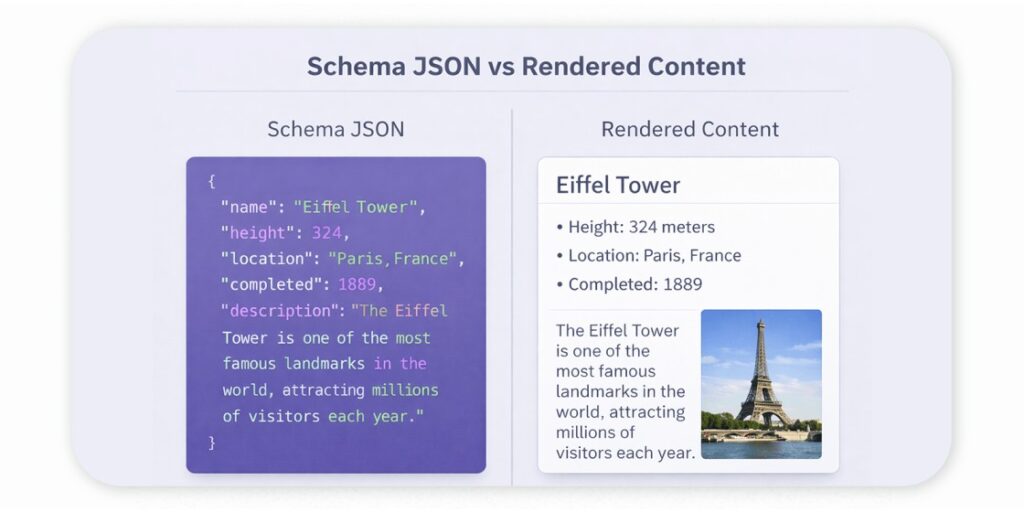
Schema markup provides structured data that helps AI systems identify and interpret different elements within a page. It adds context to content and improves how information is processed.
- Organisation Schema: Defines your brand, logo, and social profiles.
- FAQ Schema: Directly feeds questions and answers to AI models.
- LocalBusiness Schema: Essential for Singaporean businesses to show their physical location to AI engines.
- Article Schema: Tells AI who the author is and when the content was last updated. This is crucial for the “freshness” signal.
Common schema types, such as FAQ, Article, and Product schema, can support GEO efforts by making content more machine-readable. While schema does not guarantee inclusion in AI-generated answers, it strengthens the overall clarity and structure of a page.
Real-World GEO Use Cases (Singapore Context)

Understanding how GEO applies in real scenarios helps illustrate its practical value.
A service-based business can improve visibility by answering cost and service-related queries with clear, structured content. A B2B company can gain authority by providing well-defined explanations and frameworks. An e-commerce brand can appear in recommendations by structuring product data and comparisons effectively.
These examples show that GEO is not limited to a single industry but can be applied across different business models to improve AI visibility.
GEO Services in Singapore
GEO services in Singapore involve adapting both content and technical elements to align with AI-driven search environments. These services focus on improving how content is structured, understood, and presented in AI-generated outputs.
Businesses typically engage GEO services to develop strategies, optimise content, and implement technical enhancements that improve visibility beyond traditional search rankings.
What to Expect and How to Choose the Right Agency
When selecting a GEO provider, businesses should evaluate their experience with AI-driven search, their understanding of entity-based SEO, and their ability to structure content for extraction.
Choosing the right agency ensures that GEO strategies are implemented effectively and aligned with evolving search behaviour.
GEO Audit Checklist for Singapore Websites
A GEO audit assesses whether a website is prepared for visibility in AI-driven search environments. It focuses on content clarity, structure, entity usage, and technical readiness.
Before launching a GEO campaign in Singapore, evaluate your site with this checklist:
- Does every page have a clear H1 that matches a user query?
- Is the first paragraph of every section a direct answer?
- Have you removed "fluff" or overly promotional language?
- Is there a "Sources" or "References" section for factual claims?
- Does the site use JSON-LD Schema markup?
- Is the content updated for [Year] Singapore regulations and data?
A comprehensive audit should evaluate whether content provides direct answers, follows a logical hierarchy, uses consistent entities, and includes appropriate schema markup. This process helps identify gaps and prioritise improvements that enhance AI visibility.
FAQs
GEO focuses on structuring content for AI-generated answers, while SEO focuses on ranking in search engine results. GEO prioritises extractability, while SEO emphasises visibility and traffic.
GEO is important because AI search is becoming a primary source of information. Businesses that appear in AI-generated answers gain visibility at critical decision-making stages.
AI systems evaluate content based on clarity, structure, relevance, and authority. Content that provides direct and well-organised answers is more likely to be selected.
Yes, SMEs can benefit by focusing on structured content and clear answers. GEO does not require complex tools but relies on effective content organisation.
Results vary depending on competition and content quality, but improvements can occur as content becomes more structured and aligned with AI requirements.
The Future of GEO in Singapore
As AI search continues to evolve, the distinction between search engines and answer engines will become less defined. Businesses that invest in entity-driven content today will have a long-term advantage as AI systems increasingly prioritise trusted sources over indexed pages.
Bringing It All Together: GEO in Practice
GEO in Singapore represents a shift from ranking-focused optimisation to answer-focused visibility. By structuring content clearly, aligning entities, and implementing technical enhancements, businesses can improve their presence in AI-generated environments.
As AI search continues to evolve, adopting GEO ensures that content remains accessible, relevant, and competitive across both traditional and emerging platforms.
Preparing Your Website for GEO in Singapore
For businesses looking to improve visibility in AI-driven search environments, it is essential to evaluate current content and identify opportunities for optimisation. This includes refining structure, improving clarity, and ensuring technical readiness.
Aligning existing pages with GEO principles can significantly enhance discoverability and position content within AI-generated answers.
To take the next step, get a quote for a structured evaluation of your website’s readiness for AI search.