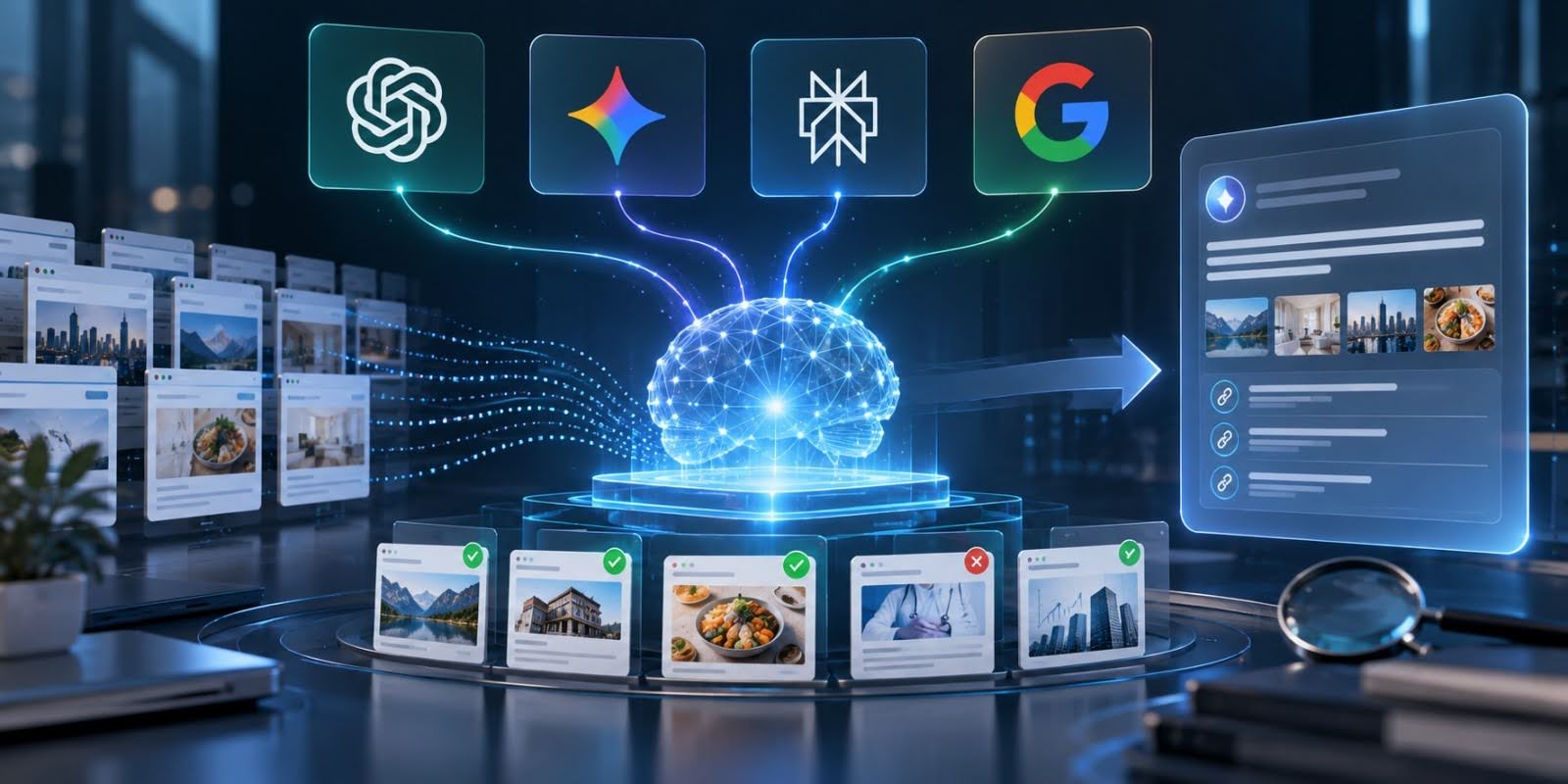
Off-page SEO optimisation happens outside a website to improve search visibility, authority, trust, and relevance. It helps search engines and AI-driven systems understand how credible a business is based on external signals such as backlinks, brand mentions, citations, reviews, and digital reputation.
Off-page SEO in Singapore has evolved over the years from simply counting backlinks to search engines evaluating the quality, relevance, trustworthiness, and context of external signals. AI-generated search summaries and answer engines also rely on authoritative references and consistent entity signals when deciding which businesses to mention or cite.
Keep reading to learn more about strengthening online authority through digital PR, local citations, expert content references, brand mentions, review signals, and more.
What Off-Page SEO Means in Modern Search
Off-page SEO is the process of improving a website’s authority through external signals from other websites, platforms, and online sources. These help search engines evaluate whether a business is credible and relevant within its industry.
Traditional off-page SEO in focused heavily on acquiring backlinks but now search systems consider broader trust indicators such as:
- Contextual brand mentions
- Media references
- Expert authorship signals
- Review consistency
- Industry citations
- Local business validation
- AI-recognised entity relationships
AI-driven systems and search engines analyse and use these signals to understand whether a website deserves visibility for competitive queries or generating summaries and recommendations.
This means when optimising for off-page SEO, Singapore businesses must align with genuine reputation building rather than mere link acquisition tactics.
Why Authority Matters in SEO and AI Search
Authority is a measurable trust signal that indicates whether a business is recognised within its industry. Search engines use authority to determine ranking potential, while AI systems use authority to identify reliable sources for generated answers.
Websites with stronger authority signals are more likely to:
- Rank for competitive keywords
- Appear in AI-generated summaries
- Earn citations from other publishers
- Gain visibility in local search
- Receive higher trust from users
Authority is influenced by multiple factors working together. Backlinks alone are no longer sufficient if they are unsupported by brand credibility, content quality, or external trust indicators.
Singapore businesses operating in competitive sectors such as finance, healthcare, legal services, education, SaaS, and professional services often require stronger authority signals because these industries are heavily evaluated for trust and expertise.
The Role of High-Quality Backlinks

A backlink is a hyperlink from another website pointing to a business website. Search engines treat backlinks as signals of relevance and credibility when they come from authoritative and contextually relevant sources.
High-quality backlinks are typically:
- Relevant to the business industry
- Placed naturally within content
- Published on trusted websites
- Earned through useful information
- Supported by contextual relevance
Low-quality backlinks can reduce trust if they originate from spam-heavy or irrelevant websites. Modern algorithms evaluate backlink quality more carefully than quantity.
Here are a few examples of strong and weak backlinks and their impact on SEO:
| Backlink Type | Characteristics | SEO Impact |
| Editorial backlinks | Naturally referenced in relevant content | Strong positive impact |
| Industry citations | Links from industry-related sources | Positive authority signal |
| Local directory links | Business listings and local citations | Supports local relevance |
| Spam directory links | Irrelevant or low-quality directories | Weak or negative impact |
| Paid manipulative links | Artificial link schemes | Risk of penalties |
Businesses focusing on sustainable SEO should prioritise trust and relevance over rapid link volume growth.
Digital PR as an Off-Page SEO Strategy
Digital PR combines public relations with search visibility objectives to help businesses gain exposure, media references, and authority signals from credible publications. It supports off-page SEO by increasing brand visibility across trusted sources.
These mentions help search engines understand that a business is recognised externally within its industry. Examples of digital PR activities include:
- Publishing industry research
- Providing expert commentary
- Contributing thought leadership content
- Launching data-driven campaigns
- Participating in interviews or media features
For Singapore businesses, digital PR can improve visibility in both local and regional markets. Media references from reputable publications can also improve discoverability in AI-generated search responses.
Digital PR also supports entity recognition. Therefore, when businesses are consistently associated with specific topics or industries across authoritative sources, search systems start to identify the business as a trusted entity.
Understanding EEAT in Off-Page SEO
EEAT, which is short for Experience, Expertise, Authoritativeness, and Trustworthiness, helps search engines evaluate content quality and business credibility. Off-page SEO contributes to EEAT through external validation signals. Search engines analyse whether other trusted sources recognise or reference a business.

Off-page signals connected to EEAT include:
- Expert interviews
- Professional associations
- Author credentials
- Industry mentions
- Media citations
- Verified reviews
- Educational references
Trustworthiness is particularly important for industries involving health, finance, legal advice, or major consumer decisions. Search systems apply stricter evaluation standards to these sectors because misinformation may affect users significantly.
Singapore businesses improving EEAT should focus on establishing visible expertise and transparent online credibility rather than relying only on technical optimisation.
Local Citations and Singapore Search Visibility
A local citation is an online mention of a business name, address, phone number, or operational details across external platforms. Citations help search engines verify business legitimacy and local relevance.
Local citations support off-page SEO in Singapore by improving geographic trust signals. Consistent business information across platforms reduces confusion and improves confidence in local search results.
Important local citation sources may include:
- Business directories
- Industry associations
- Chamber of commerce listings
- Local map platforms
- Review websites
- Professional directories
Citation consistency matters because conflicting business details can weaken trust signals. Businesses should ensure that core information remains aligned across all listings.
The following elements should remain consistent:
| Citation Element | Importance |
| Business name | Supports entity recognition |
| Address | Confirms local relevance |
| Phone number | Validates legitimacy |
| Website URL | Connects authority signals |
| Business category | Improves contextual understanding |
Local citations are especially valuable for businesses targeting location-based searches in Singapore.
How Brand Mentions Influence AI Search Systems
Brand mentions are references to a business name even when no hyperlink is included. Modern search systems increasingly recognise brand mentions as authority indicators.
AI-driven search technologies analyse how often a business is mentioned alongside relevant topics, industries, and keywords. Consistent associations strengthen entity understanding.
For example, if multiple trusted sources mention a business in relation to:
- Technical SEO
- Healthcare consulting
- Legal compliance
- Enterprise SaaS
- Digital transformation
search systems may associate that business strongly with those subjects. Brand mentions contribute to:
- Entity recognition
- Topical authority
- AI citation relevance
- Knowledge graph associations
- Industry trust signals
This is particularly relevant for GEO strategies because generative search systems often synthesise information from multiple external references rather than relying solely on backlinks.
Topical Authority and Off-Page SEO
Topical authority refers to how strongly a website or brand is associated with a specific subject area. Off-page SEO helps reinforce these associations externally.
Search engines analyse whether other trusted sources consistently connect a business to a topic. This strengthens confidence in the business’s expertise. Topical authority is influenced by:
- Relevant backlinks
- Industry references
- Expert contributions
- Consistent content themes
- External topic associations
A Singapore business specialising in SEO, for example, may strengthen topical authority if industry publications regularly reference its insights on technical SEO, AI search optimisation, or digital visibility trends.
Topical authority also improves the likelihood of appearing in AI-generated search responses because AI systems favour entities strongly connected to specific subjects.
Reviews and Reputation Signals
Online reviews are external trust signals that influence both search visibility and user confidence. Search engines evaluate review quality, consistency, and authenticity when assessing local businesses. Positive review signals -support:
- Local SEO visibility
- Trust evaluation
- Brand credibility
- User engagement
- Conversion confidence
Review signals are not limited to star ratings. Search systems also analyse review content, frequency, and relevance.
Businesses should focus on:
- Encouraging genuine customer feedback
- Responding professionally to reviews
- Maintaining review consistency across platforms
- Avoiding manipulated or fake reviews
Authenticity is important because AI systems increasingly detect behavioural patterns linked to artificial reputation manipulation.
The Relationship Between Content and Off-Page SEO
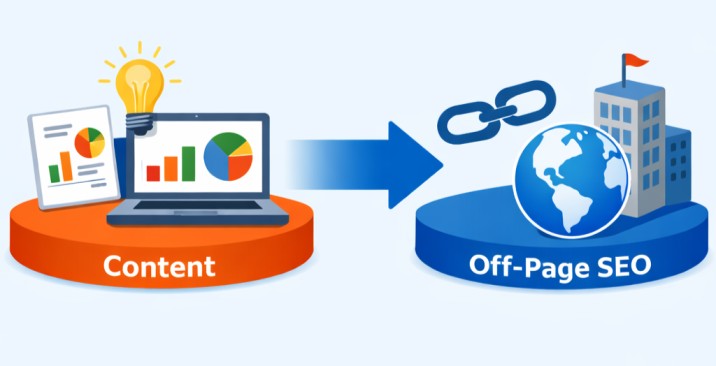
Content plays a central role in off-page SEO because valuable content attracts references, citations, backlinks, and mentions naturally. To support off-page SEO, content should typically include:
- Industry research
- Data studies
- Educational guides
- Expert commentary
- Original insights
- Thought leadership articles
This is because search engines are more likely to reward businesses whose content earns genuine external engagement. The relationship between content and off-page SEO is as follows:
| Content Type | Off-Page Benefit |
| Research reports | Earns media citations |
| Expert articles | Builds topical authority |
| Case studies | Attracts industry references |
| Educational resources | Gains editorial backlinks |
| Data-driven insights | Supports digital PR campaigns |
Businesses publishing generic or duplicated content are less likely to earn meaningful authority signals.
AI-Driven Trust Factors in Search
AI-driven searches evaluate trust differently from traditional ranking systems. They analyse semantic relationships, entity credibility, and these trust factors include:
- Brand consistency
- External references
- Verified expertise
- Author transparency
- Citation frequency
- Source credibility
- Cross-platform validation
Generative search engines prefer information that appears reliable across multiple authoritative sources. This means businesses that demonstrate consistent expertise across the web are more likely to appear in AI-generated responses.
Common Off-Page SEO Mistakes
Some off-page SEO tactics can weaken credibility rather than improve visibility. Search systems increasingly detect manipulative patterns and artificial authority signals. Common mistakes include:
- Buying irrelevant backlinks
- Excessive directory submissions
- Using spam-heavy guest posting networks
- Publishing duplicate press releases
- Creating unnatural anchor text patterns
- Generating fake reviews
These practices may reduce trust signals and create long-term ranking risks. Therefore, Singapore businesses should prioritise sustainable authority development through genuine industry relevance and external credibility.
Measuring Off-Page SEO Performance
Off-page SEO performance should be measured using authority, visibility, engagement, and trust indicators rather than backlink counts alone. These are some useful performance indicators to keep in mind:
- Referring domain quality
- Brand mention growth
- Organic keyword visibility
- Local search improvements
- Media coverage frequency
- Citation consistency
- Referral traffic quality
Businesses should also monitor whether they appear more frequently in AI-generated search results and branded search queries. Ensure your performance evaluations focus on long-term authority growth rather than short-term ranking fluctuations.
Off-Page SEO and Local Singapore Competition
Singapore’s digital market is highly competitive across many industries. This means businesses often have to compete within densely populated search environments where authority signals strongly influence rankings. Off-page SEO helps businesses differentiate themselves through:
- Recognised expertise
- Industry trust
- External validation
- Local relevance
- Stronger digital reputation
Local competition also means businesses benefit from Singapore-specific authority signals such as:
- Regional media mentions
- Local business citations
- Singapore-based partnerships
- Community involvement
- Industry event participation
These signals improve contextual relevance for local search visibility.
Why Off-Page SEO Supports Long-Term Search Stability
Off-page SEO contributes to long-term stability because authority signals are more difficult to replicate than basic technical optimisations. Websites with stronger trust and authority profiles are generally more resilient during algorithm changes because search engines prioritise credibility over manipulation.
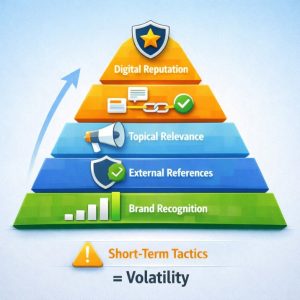
Long-term stability is supported through:
- Consistent authority growth
- Strong brand recognition
- Reliable external references
- Established topical relevance
- Trustworthy digital reputation
Businesses relying solely on short-term ranking tactics may experience greater volatility during algorithm updates.
Frequently Asked Questions
Off-page SEO refers to activities performed outside a website to improve search visibility and authority. This includes backlinks, brand mentions, digital PR, reviews, citations, and reputation signals. Search engines use these external signals to assess credibility and relevance.
Singapore has a competitive digital landscape where many businesses target similar keywords and audiences. Off-page SEO helps strengthen authority, trust, and local relevance. These signals improve the likelihood of ranking well and appearing in AI-generated search results
Backlinks remain important, but quality matters more than quantity. Search engines evaluate contextual relevance, authority, and trustworthiness rather than simply counting links. Natural editorial backlinks generally provide stronger value than artificial link-building tactics.
Digital PR helps businesses gain visibility through trusted media sources and industry publications. These mentions strengthen authority signals and can generate valuable backlinks and brand recognition. Digital PR also supports AI search visibility by improving entity credibility.
Local citations are online mentions of business information such as name, address, phone number, and website details. They help search engines verify local legitimacy and improve geographic relevance for local search visibility.
AI search systems evaluate external trust signals when deciding which sources to reference or summarise. Businesses with stronger authority, expert mentions, and consistent external recognition are more likely to appear in AI-generated responses.
Low-quality or manipulative backlinks may weaken trust signals and create ranking risks. Search systems increasingly detect unnatural linking patterns. Businesses should focus on relevance, authority, and authenticity when building backlinks.
Strengthening Visibility Through External Trust Signals
Off-page SEO is now an authority-building process that extends beyond traditional link acquisition as search engines and AI systems now evaluate external trust signals such as digital PR, expert mentions, local citations, reviews, etc, when assessing visibility.
For Singapore businesses, sustainable search performance depends on building credible external associations that reinforce expertise and topical relevance. Businesses that invest in genuine authority development are better positioned for long-term visibility across both traditional and AI-driven search environments.
For companies reviewing their external authority signals and digital PR presence, consider working with a trusted digital marketing agency such as W360 Asia to create effective off-page SEO strategies in Singapore. Get a quote to assess your SEO direction and uncover authority-building opportunities.