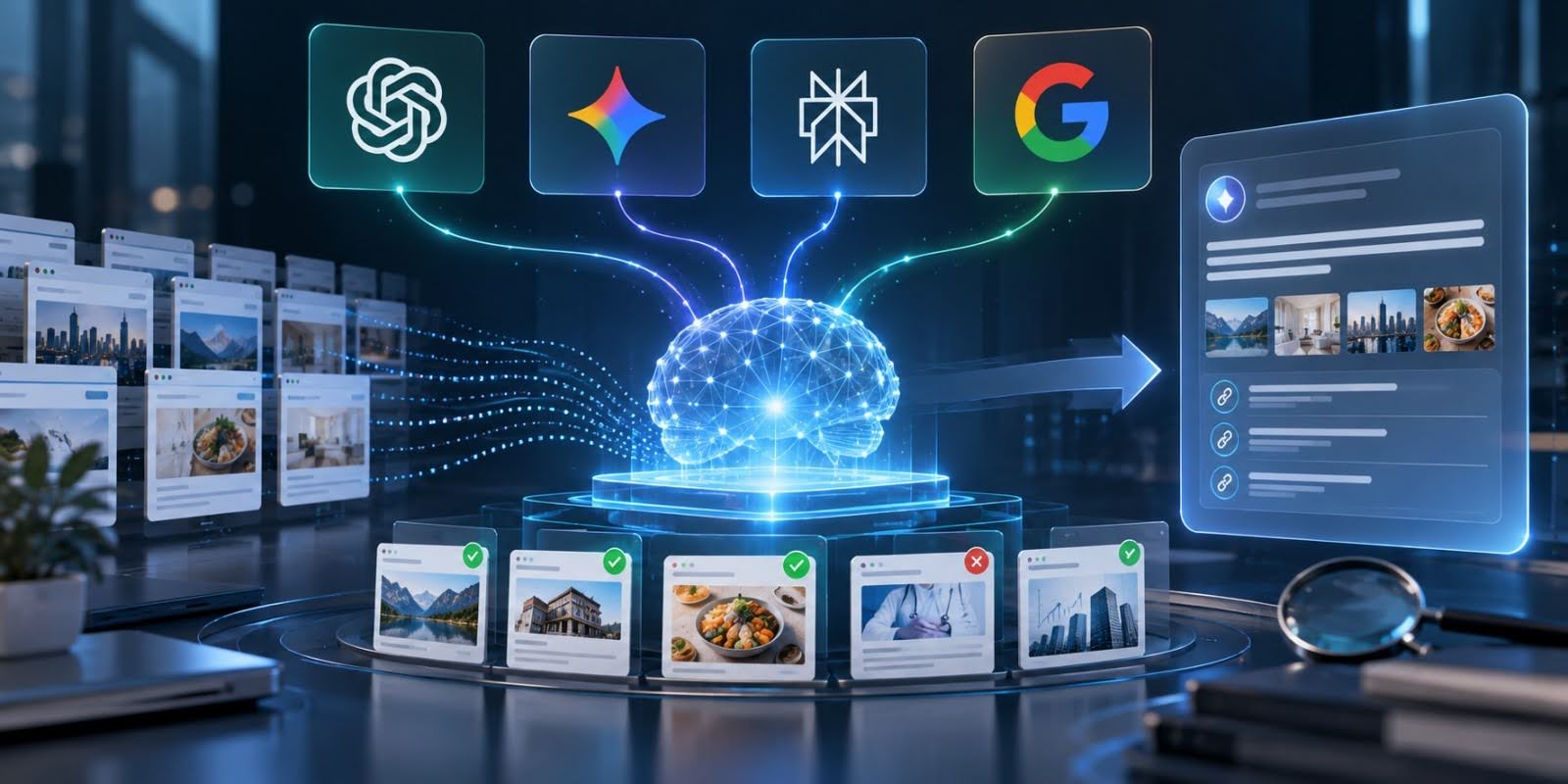
SEO on-page optimisation is the process of improving webpage elements so search engines and users can better understand content relevance and quality. Effective optimisation supports both traditional search rankings and visibility within AI-generated search experiences.
Many websites lose search visibility not because of algorithm penalties, but because of avoidable on-page mistakes. Common issues such as keyword stuffing, duplicate metadata, weak internal linking, poor heading structures, and slow-loading pages can reduce search relevance and user engagement.
Both Search engines and AI-generated search systems evaluate websites through a combination of user experience signals, contextual relationships, and content quality assessment. This article will breakdown how to identify and correct on-page SEO weaknesses before they affect your website’s search performance.
Keyword Stuffing Reduces Content Quality
Keyword stuffing refers to the excessive repetition of keywords within content in an attempt to influence search rankings. Modern search engines can identify unnatural keyword usage patterns.
Instead of improving visibility, excessive repetition often reduces readability and weakens contextual quality signals. Examples of keyword stuffing include:
- Repeating exact-match phrases unnaturally
- Adding keywords without contextual relevance
- Overusing keywords in headings
- Inserting repetitive location terms excessively
Search systems now prioritise semantic understanding rather than keyword frequency alone. AI-generated search experiences also favour natural language patterns because they improve interpretation accuracy.
Effective SEO on-page optimisation focuses on contextual relevance rather than mechanical repetition.
Duplicate Metadata Creates Relevance Confusion
Duplicate metadata occurs when multiple pages use identical title tags or meta descriptions. Search engines rely on metadata to interpret page intent and topical relevance. When multiple pages share the same metadata, it becomes more difficult for search systems to distinguish page purpose.
The following table shows how duplication affect search visibility:
Metadata Issue | Potential Impact |
Duplicate title tags | Reduced topical differentiation |
Duplicate meta descriptions | Lower click-through clarity |
Generic metadata | Weak contextual signals |
Missing metadata | Incomplete search interpretation |
Unique metadata helps search engines understand how pages differ from one another within a website structure. AI systems also rely on metadata signals when evaluating webpage context for summarisation and extraction.
Weak Internal Linking Limits Topical Relationships
Internal linking connects pages within a website to support navigation and contextual relevance. Weak internal linking structures can reduce:
- Crawl efficiency
- Page discovery
- Topic association
- User navigation
- Topical authority signals
Search engines evaluate how pages relate to one another contextually. Pages that exist in isolation may struggle to demonstrate broader topical expertise. For example, an on-page SEO page may logically connect to:
- Technical SEO
- Content optimisation
- AI SEO
- Local SEO
- Semantic SEO
Strategic internal linking helps search systems understand how topics interact across a website ecosystem.
Poor Heading Structure Affects Readability
Heading structures help organise content for both users and search engines. Therefore avoid a poorly structured page that includes:
- Multiple H1 headings
- Missing heading hierarchy
- Vague section titles
- Unorganised topic flow
Search engines use headings to understand content structure and topical segmentation. AI-generated search systems also rely on headings to isolate extractable sections for summaries and answer generation.
A strong heading structure will have:
- One H1 heading
- Clear H2 topic sections
- Supporting H3 subtopics where needed
- Descriptive wording
- Logical information flow
Well-structured headings improve not just readability but also machine interpretation.
Slow-Loading Pages Reduce User Engagement

Page speed affects how users interact with a website. Slow-loading pages may increase abandonment rates and reduce engagement signals. The common causes are:
- Uncompressed images
- Excessive scripts
- Large page assets
- Poor hosting performance
- Unoptimised code
Search engines consider usability and page experience when evaluating content quality. The following table shows how speed issues may affect performance:
| Speed Issue | Possible SEO Impact |
| Delayed page rendering | Higher abandonment |
| Slow mobile loading | Reduced engagement |
| Heavy image files | Longer load times |
| Script overload | Poor usability |
Fast-loading pages support stronger user experiences and improve accessibility across devices.
Thin Content Weakens Search Relevance
Thin content refers to pages with limited informational value or insufficient topical depth. Search engines prioritise content that demonstrates completeness and usefulness. Pages that are similar to the following examples may struggle to rank competitively:
- Very short service pages
- Duplicate content variations
- Pages created only for keywords
- Generic descriptions without context
AI-generated search systems may also avoid citing thin content because insufficient detail reduces extractability and reliability. If your Singapore business is competing within saturated industries, discover how to remain visible through on-page SEO optimisation.
Ignoring Search Intent Leads to Poor Alignment
Search intent refers to the reason behind a user’s search query. A mismatch between user intent and page content may reduce engagement and weaken search relevance signals. This table illustrates common intent mismatches:
User Intent | Weak Content Match |
Informational | Overly promotional content |
Transactional | Missing service clarity |
Commercial | Lack of comparison details |
Navigational | Confusing page structure |
Search engines analyse user interaction patterns to determine whether a page satisfies expectations. On the other hand, AI-generated answers also rely on intent matching because they aim to provide concise and contextually accurate responses.
Over-Optimised Anchor Text Can Look Manipulative
Anchor text is the clickable wording used within hyperlinks. Over-optimisation occurs when exact-match keywords are repeatedly used unnaturally across internal or external links. Search engines now evaluate link patterns contextually.
Excessive repetition may weaken natural language quality signals. Therefore balance anchor text as follows:
- Descriptive phrases
- Brand references
- Natural contextual wording
- Topic-relevant variations
Internal links should support user navigation rather than exist purely for keyword placement.
Duplicate Content Creates Indexing Challenges
Duplicate content refers to pages containing identical or highly similar information. Search engines may struggle to determine which version should appear in search results which can dilute relevance signals across multiple URLs. Examples of duplicate content include:
- Similar service pages
- URL parameter variations
- Copied product descriptions
- Repeated location pages
AI systems may also avoid ambiguous or repetitive content because it reduces informational clarity. Clear content differentiation improves indexing efficiency and topical precision.
Weak EEAT Signals Reduce Content Credibility
EEAT stands for Experience, Expertise, Authoritativeness, and Trustworthiness. Weak EEAT signals such as the examples presented below may affect how search systems evaluate content reliability, especially for professional or informational topics.
- Lack of factual clarity
- Outdated information
- Generic explanations
- Poor transparency
- Inconsistent topical focus
Search engines increasingly prioritise trustworthy content sources. AI-generated search systems also favour reliable and contextually complete information. Businesses publishing educational or advisory content should ensure information remains accurate and well-structured.
Poor Mobile Optimisation Affects Accessibility

Mobile optimisation ensures webpages function properly across smartphones and tablets. Search engines primarily evaluate mobile versions of websites when determining rankings. Poor mobile usability may negatively affect engagement and accessibility.
Common mobile issues include:
Mobile Issue | User Impact |
Small text sizes | Reduced readability |
Overlapping elements | Navigation difficulty |
Slow mobile loading | Higher abandonment |
Unresponsive layouts | Poor usability |
Modern seo on-page optimisation requires mobile-friendly formatting because many users access content through mobile devices. Furthermore, AI systems also favour accessible and readable content structures.
Missing Image Optimisation Reduces Contextual Signals
Image optimisation helps search systems interpret visual content and improve page performance. Unoptimised images may create several issues:
- Slow-loading pages
- Missing accessibility signals
- Reduced contextual relevance
- Incomplete image indexing
These are some essential image optimisation practices to follow:
- Descriptive file names
- Relevant alt text
- Compressed image sizes
- Appropriate formatting
- Contextual placement
Alt text also helps search systems understand how images relate to surrounding content.
Excessive Pop-Ups Harm User Experience
Pop-ups may interrupt content accessibility when implemented aggressively. Search engines evaluate user experience signals when assessing page quality. Excessive intrusive elements may negatively affect engagement.
Examples of disruptive behaviour include:
- Immediate full-screen overlays
- Repeated interruptions
- Mobile-blocking pop-ups
- Difficult close buttons
User experience remains closely connected to SEO performance because search systems aim to prioritise accessible and usable pages.
Inconsistent URL Structures Create Organisational Issues

URL structures help search engines understand page hierarchy and topical organisation. Poor URL practices may include:
- Excessively long URLs
- Random characters
- Duplicate keyword usage
- Unclear category structures
A clean URL structure generally improves readability and contextual interpretation. The following comparison illustrates URL clarity differences:
| Less Effective URL | Improved URL |
| /page?id=4822 | /on-page-seo-guide |
| /seo-seo-seo-services | /seo-services |
| /newpage-final-v2 | /content-optimisation |
Clear URLs support both user understanding and search engine interpretation.
Ignoring Content Freshness Can Reduce Relevance
Content freshness refers to maintaining accurate and updated information over time. Outdated pages may gradually lose relevance, particularly within industries that evolve frequently.
Common freshness updates include:
- Revising outdated statistics
- Updating examples
- Improving structure
- Adding new contextual information
- Refreshing internal links
Search engines evaluate whether content remains useful and current for users. AI-generated systems may also prioritise fresher information when generating summaries and search responses.
Weak Semantic SEO Limits Topical Depth
Semantic SEO focuses on contextual relationships between concepts and topics. Pages with weak semantic coverage may rely too heavily on isolated keywords without sufficiently covering related subjects.
For example, a page about on-page SEO may naturally include related concepts such as:
- Search intent
- Metadata
- Structured headings
- Internal linking
- EEAT
- Content hierarchy
Search systems use semantic relationships to determine topical completeness and contextual accuracy. AI-generated search experiences also rely heavily on semantic understanding to generate reliable responses.
Unclear Content Structure Reduces Extractability
Content extractability refers to how easily search engines and AI systems can interpret and summarise information. These are some unclear structures to avoid:
- Large unbroken paragraphs
- Mixed topics within sections
- Vague headings
- Excessive promotional wording
Well-structured content improves readability while supporting AI-generated answer visibility. AI-friendly structures generally include:
- Clear definitions
- Short paragraphs
- Topic-focused sections
- Descriptive headings
Why Contextual Clarity Matters More Today
Search engines increasingly evaluate clarity rather than isolated optimisation signals alone. Modern SEO performance depends on whether content:
- Answers questions directly
- Maintains logical organisation
- Demonstrates contextual depth
- Supports user understanding
- Avoids ambiguity
AI-generated search systems amplify the importance of clarity because they extract information for summaries and conversational answers. Businesses that prioritise understandable and structured information are generally better positioned for evolving search behaviour.
Frequently Asked Questions
SEO on-page optimisation refers to improving webpage elements so search engines can better understand relevance, structure, and user intent. This includes headings, metadata, content quality, internal links, semantic relevance, and page usability.
Keyword stuffing reduces readability and creates unnatural language patterns that search engines can detect. Modern algorithms prioritise contextual relevance and semantic clarity rather than excessive repetition. AI systems also favour natural content structures.
Page speed affects user experience, engagement, and accessibility. Slow-loading pages may increase abandonment rates and reduce satisfaction signals. Search engines consider usability factors when evaluating overall page quality.
Internal links help search engines understand relationships between pages and topics within a website. They also improve navigation, content discovery, and contextual authority signals. Strong internal linking supports broader topical relevance.
Duplicate metadata occurs when multiple pages use identical title tags or meta descriptions. This can create confusion for search engines and reduce topical differentiation between pages. Unique metadata improves clarity and contextual understanding.
Semantic SEO improves contextual understanding by covering related concepts naturally within content. Search engines use semantic relationships to evaluate topical depth and relevance. This also supports visibility within AI-generated search results.
Building Stronger SEO Through Better Optimisation Practices
Many on-page SEO problems stem from structural, contextual, and usability weaknesses rather than algorithm changes alone. Search engines and AI systems continue to prioritise content that demonstrates clarity, relevance, topical depth, and accessibility.
Businesses in Singapore can improve long-term search performance by partnering with an SEO agency such as W360 Asia to correct common optimisation issues such as weak internal linking, poor heading structures, duplicate metadata, and thin content.
For businesses reviewing their website performance, content structure, internal linking strategy, and technical usability, contact us to conduct an SEO audit to identify improvement opportunities.