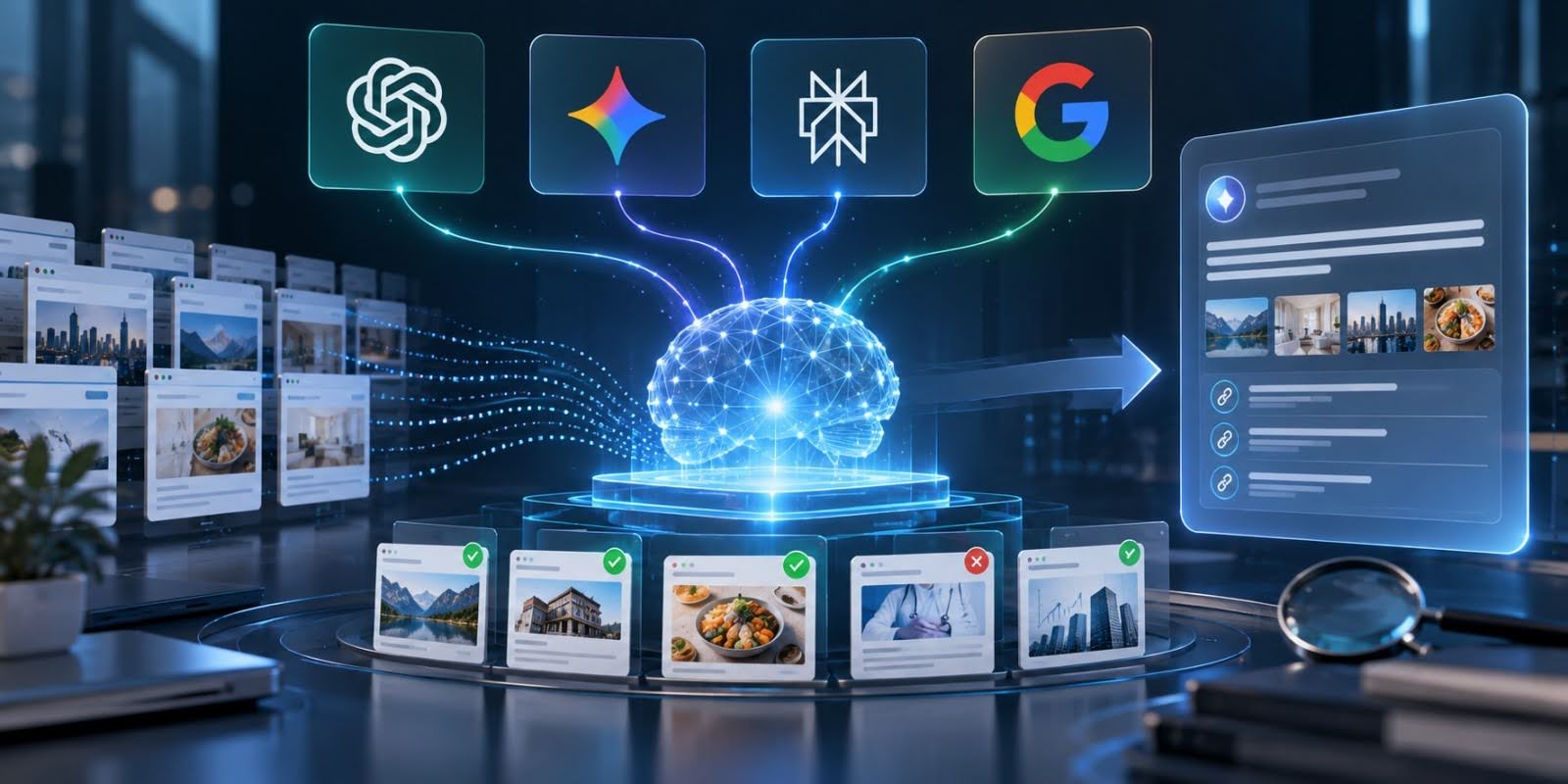
Topical authority has become a major ranking and visibility factor in modern search systems because search engines and AI-driven platforms now evaluate subject expertise instead of relying only on individual keywords. Websites that demonstrate consistent, in-depth coverage of related topics are more likely to appear in traditional search results, AI-generated summaries, and conversational search experiences.
SEO companies in Singapore therefore focus on building semantic relevance, topic clusters, entity relationships, content depth, and EEAT signals rather than depending solely on keyword placement. Search engines increasingly assess whether a website demonstrates trustworthy expertise across an entire subject area. This shift is influenced by advancements in semantic search, generative AI systems, and conversational search interfaces.
Businesses that continue relying on isolated keyword targeting may struggle to maintain long-term visibility as search technology evolves. Keep reading to uncover why topical authority has become central to SEO strategy and how semantic SEO, entity optimisation, EEAT, and AI contribute to modern search visibility.
Topical Authority Measures Subject Expertise
Topical authority refers to how comprehensively and consistently a website covers a specific subject area. Search systems evaluate whether a website demonstrates depth, relevance, and contextual understanding across connected topics.
Search engines increasingly prioritise websites that answer a broad range of related questions within a topic ecosystem. This helps them identify reliable sources of information.
Topical authority is often strengthened through:
Topical Authority Element | Purpose |
Topic clusters | Builds semantic relationships |
Comprehensive coverage | Demonstrates expertise |
Internal linking | Connects related content |
Consistent terminology | Improves contextual understanding |
Informational depth | Supports user intent |
This approach differs from older SEO methods focused primarily on repeating keywords within individual pages.
Search Engines Now Understand Context and Meaning
Modern search systems use semantic search technologies to understand meaning, relationships, and intent instead of relying solely on exact keyword matching.
Semantic SEO focuses on contextual relevance rather than isolated phrases. This means search engines evaluate whether content addresses related concepts naturally and comprehensively.
For example, a page about SEO may also include relevant contextual topics such as:
- Technical SEO
- Content strategy
- Structured data
- Search intent
- AI search visibility
- Internal linking
These related concepts help search engines understand the broader subject relevance of the content. Experienced SEO companies in Singapore therefore prioritise contextual completeness over excessive keyword repetition.
Topic Clusters Improve Semantic Relevance
Topic clusters are groups of interconnected content centred around a broader subject. This structure helps search engines understand topical relationships and subject expertise. A topic cluster usually includes:
- A primary pillar page
- Supporting informational articles
- Internal links connecting related topics
- Consistent semantic terminology
The following table shows a simplified example of a topic cluster structure:
| Pillar Topic | Supporting Topics |
| SEO in Singapore | Technical SEO |
| SEO in Singapore | AI SEO |
| SEO in Singapore | Local SEO |
| SEO in Singapore | GEO and AEO |
| SEO in Singapore | Topic clusters |
This interconnected structure improves crawlability, contextual understanding, and AI extraction potential.
Keywords Still Matter but Function Differently
Keywords remain important because they help search systems identify user intent and topical relevance. However, modern SEO no longer depends on exact keyword repetition alone.
An effective SEO strategy uses keywords to guide topic coverage rather than dominate content unnaturally. Search systems now evaluate:
Traditional Keyword SEO | Modern Semantic SEO |
Exact-match repetition | Contextual relevance |
Single-page optimisation | Topic ecosystem development |
Keyword density | Intent satisfaction |
Short phrases | Conversational language |
This change reflects how users search more naturally through AI assistants and conversational interfaces.
Semantic SEO Supports AI Search Visibility

Semantic SEO improves how AI systems interpret, summarise, and reference content. AI-generated search experiences prioritise information that is contextually clear and structurally organised. AI systems often evaluate:
- Topic relationships
- Content clarity
- Semantic consistency
- Contextual completeness
- Answer quality
Websites that explain topics comprehensively are more likely to appear in AI-generated responses. A successful SEO strategy includes content written for both human readers and machine interpretation.
Entity Optimisation Strengthens Search Understanding
Entity optimisation improves how search engines associate businesses, concepts, and topics within broader knowledge systems. An entity is a recognisable concept such as:
- A company
- A service
- A location
- A person
- A product category
Search engines increasingly rely on entities to understand relationships between topics and businesses. Entity optimisation commonly includes:
| Entity SEO Element | Function |
| Consistent business information | Reinforces recognition |
| Structured organisation data | Clarifies identity |
| Topic association | Builds relevance |
| External mentions | Supports validation |
| Internal semantic consistency | Improves contextual understanding |
This helps search systems identify a website as an authoritative source within a topic area.
EEAT Signals Influence Search Trust
- Content depth
- Author credibility
- Website transparency
- Trust signals
- Information accuracy
Content Depth Supports Topical Authority
Content depth refers to how comprehensively a subject is explained. Search systems increasingly reward content that fully addresses user intent instead of offering surface-level summaries. Deep content typically includes:
- Definitions
- Contextual explanations
- Related subtopics
- Supporting examples
- Structured formatting
The goal is not simply producing longer articles. Instead, the focus is on informational completeness and contextual clarity. The following table outlines differences between shallow and deep content approaches:
| Shallow Content | Deep Content |
| Limited topic coverage | Comprehensive explanations |
| Minimal context | Related topic integration |
| Keyword repetition | Intent-focused structure |
| Thin informational value | Detailed user guidance |
Comprehensive content improves both user satisfaction and AI extractability.
AI Search Systems Prioritise Extractable Information

AI-generated search experiences extract and summarise content directly from webpages. This changes how websites should structure information. Extractable content usually includes:
- Clear headings
- Short paragraphs
- Direct explanations
- Structured formatting
- FAQ sections
- Organised tables
SEO companies can assist organisations to structure content so AI systems can interpret and summarise information accurately. This differs from older SEO strategies that focused heavily on search rankings without considering machine readability.
Internal Linking Strengthens Topic Relationships
Internal linking helps search systems understand relationships between pages and topics within a website. A strong internal linking strategy improves:
Internal Linking Benefit | SEO Impact |
Topic association | Improves semantic relevance |
Crawlability | Helps discover pages |
Content hierarchy | Clarifies authority structure |
User navigation | Supports engagement |
Topic clusters become more effective when supporting pages link naturally to pillar pages and related articles. AI systems also use internal linking signals to understand content relationships and topical ecosystems.
Search Intent Alignment Improves Relevance
Search intent refers to the reason behind a user’s search query. Modern SEO strategies align content with user goals instead of focusing only on keywords. The common categories for search intent include:
Search Intent | User Objective |
Informational | Learn or research |
Navigational | Find a specific website |
Commercial | Compare options |
Transactional | Take action |
Topical authority improves when websites consistently satisfy informational and contextual intent across related topics. Search engines increasingly reward websites that answer questions directly and comprehensively.
Conversational Search Changes Content Strategy
Conversational search refers to natural language search behaviour commonly used in AI assistants and voice search systems. Users frequently search using complete questions such as:
- “How does topical authority affect SEO?”
- “Why is semantic SEO important?”
- “What makes a website trustworthy for AI search?”
Good SEO strategies adapt content structure to these conversational patterns by using question-based headings and direct explanations. This improves compatibility with AI-generated search experiences.
Structured Data Supports Semantic Clarity
Structured data provides explicit information about webpage content through schema markup. This improves search engine understanding of entities, content types, and relationships. Structured data commonly supports:
Schema Type | Function |
Organisation Schema | Identifies business details |
FAQ Schema | Supports answer extraction |
Article Schema | Clarifies content structure |
Breadcrumb Schema | Improves navigation understanding |
This helps reinforce semantic relationships and improve AI readability while supporting richer search appearances in traditional search environments.
AI Relevance Depends on Contextual Completeness
- Topic completeness
- Semantic relationships
- Trust signals
- Structured formatting
- Contextual consistency
Topical Authority Helps Smaller Businesses Compete
Topical authority allows smaller businesses to compete more effectively against larger brands by focusing on expertise and relevance. Large companies may have stronger brand recognition, but smaller websites can still perform well by:
- Covering niche topics comprehensively
- Demonstrating subject expertise
- Creating detailed informational content
- Building semantic relevance
- Improving AI readability
Search systems increasingly prioritise useful and contextually relevant information over brand size alone. This creates opportunities for SMEs with strong topic-focused content strategies.
Content Consistency Strengthens Semantic Signals
Content consistency refers to maintaining aligned terminology, messaging, and topic focus across a website. Search systems evaluate whether websites demonstrate clear thematic alignment.
Consistent semantic signals may include:
Consistency Element | Benefit |
Unified terminology | Improves contextual clarity |
Related topic coverage | Strengthens expertise |
Structured internal linking | Supports relationships |
Similar content formatting | Improves readability |
This consistency helps search engines and AI systems identify authoritative subject expertise.
AI Search Rewards Clarity Over Complexity
AI-generated search systems often prioritise content that explains topics clearly and directly. Complex wording, vague claims, or excessive promotional language may reduce extractability.
Effective AI-friendly content usually includes:
- Simple sentence structures
- Direct definitions
- Organised sections
- Minimal ambiguity
- Logical topic progression
This supports accurate summarisation while improving user understanding.
EEAT and Topical Authority Work Together
EEAT and topical authority are interconnected because comprehensive topic coverage supports perceived expertise and authority. A website demonstrating consistent expertise across related subjects is more likely to build trust signals over time.
The relationship between EEAT and topical authority can be summarised as follows:
EEAT Component | Topical Authority Contribution |
Experience | Real-world contextual knowledge |
Expertise | Detailed subject explanations |
Authoritativeness | Broad topic coverage |
Trustworthiness | Accurate and transparent content |
Search systems increasingly combine these signals when evaluating content quality.
Why Keyword-Only SEO Strategies Are Less Effective
Keyword-only SEO strategies often fail because they focus on isolated optimisation rather than broader contextual understanding. Limitations of keyword-only SEO include:
- Weak semantic relevance
- Thin informational coverage
- Poor AI extractability
- Limited topical authority
- Reduced conversational compatibility
Modern search systems evaluate topic ecosystems, user intent satisfaction, and contextual depth more heavily than keyword repetition alone. Businesses relying solely on keywords may therefore struggle in evolving search environments.
Frequently Asked Questions
Topical authority refers to how comprehensively a website covers a subject area. Search systems evaluate whether a website demonstrates expertise through connected and in-depth content.
Semantic SEO helps search engines understand contextual meaning and relationships between topics. This improves search relevance and AI-generated answer visibility.
Topic clusters organise related content around a core subject. This structure strengthens semantic relationships, improves crawlability, and supports topical authority.
Entity optimisation improves how search systems recognise businesses, topics, and concepts within broader knowledge frameworks. It strengthens contextual understanding and relevance.
EEAT helps search systems evaluate content trustworthiness and expertise. Strong EEAT signals improve credibility and may support long-term search visibility.
AI search systems extract and summarise information directly from websites. SEO strategies now need structured, extractable, and contextually complete content.
Yes. Keywords still help identify user intent and topic relevance. However, modern SEO also prioritises semantic relationships and informational completeness.
Yes. SMEs can build topical authority by creating comprehensive niche-focused content, improving internal linking, and consistently covering related topics in depth.
Building Search Relevance Beyond Keywords
Modern search visibility depends increasingly on contextual understanding, semantic relevance, topical depth, and AI compatibility. Search engines and AI-driven platforms now evaluate websites based on expertise, trustworthiness, and the completeness of their topic coverage rather than isolated keyword usage alone.
This is why modern SEO companies in Singapore such as W360 Asia, focus on topical authority, entity optimisation, EEAT, semantic SEO, and structured content ecosystems to improve long-term discoverability. Businesses that build comprehensive and interconnected content strategies are better positioned to remain visible across both traditional search engines and AI-generated search environments.
For Singapore organisations exploring structured optimisation strategies, request an audit to evaluate your website and discuss strategies for long-term growth.