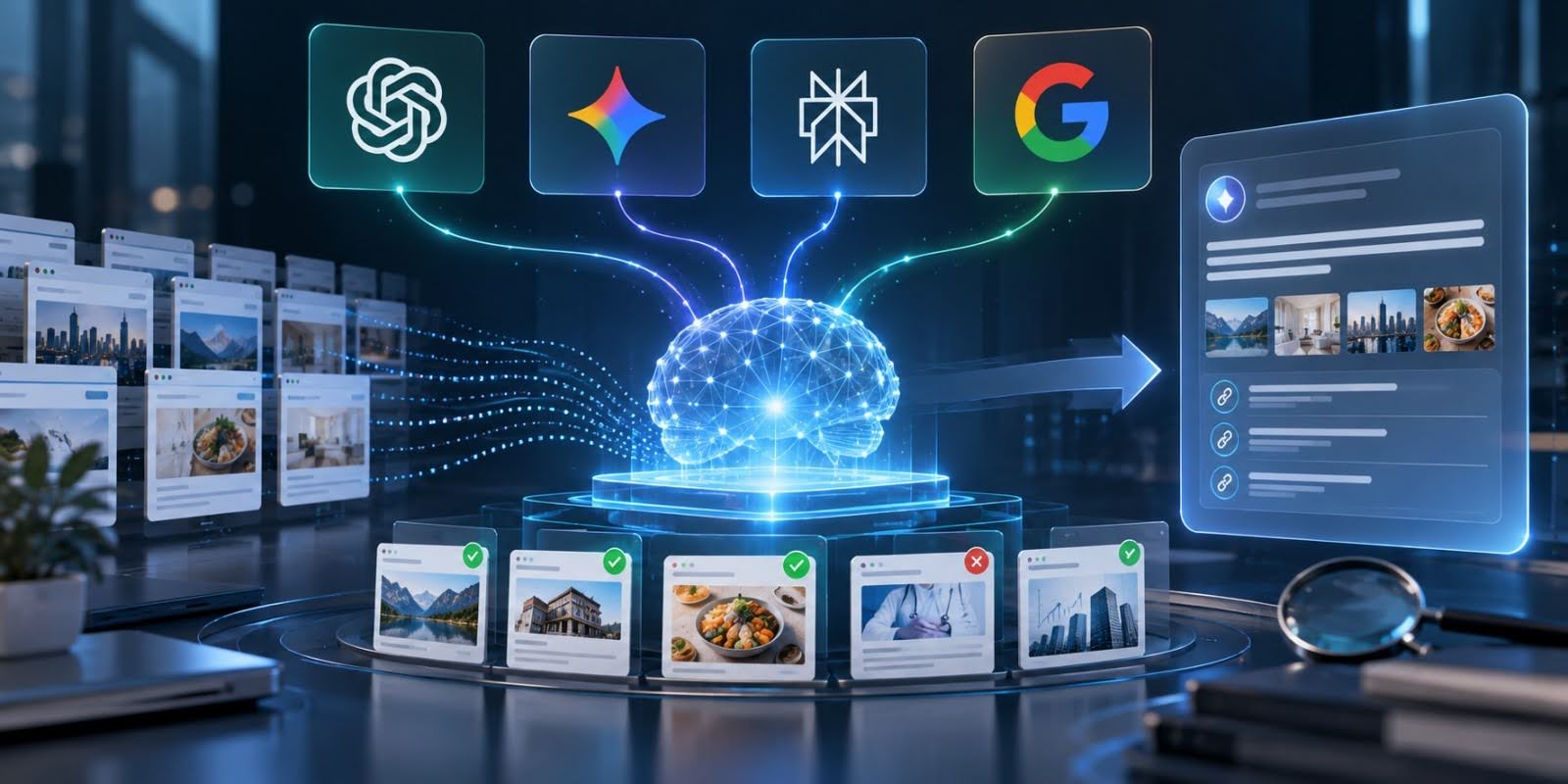
Search engine optimisation (SEO), from its early days of keyword stuffing to more refined, user-focused strategies, has continually evolved alongside search technology. What we are witnessing now is a fundamental transformation in how search works.
Artificial intelligence (AI) is redefining how users interact with information as AI-powered platforms such as Google’s AI Overviews and generative engines respond by delivering synthesised insights rather than traditional lists of links.This shift changes the role of SEO entirely with businesses now competing to be selected, trusted, and cited within AI-generated responses.
For organisations operating in highly competitive markets such as Singapore and across Asia, this transformation presents both a challenge and a strategic opportunity. Learn how to embrace AI SEO to strengthen your digital visibility and authority.
The Evolution of SEO: From Rankings to Relevance
Historically, SEO followed a relatively predictable formula:
- Target keywords
- Optimise on-page elements
- Build backlinks
- Improve technical performance
- Rank on search engine results pages (SERPs)
Success was measured by visibility in the top 10 results. For years, this model worked because user behaviour supported it. People searched, scanned results, and clicked through multiple pages to find what they needed.
Today, that behaviour has changed. Users expect immediate answers. Instead of searching “best SEO strategy”, they now ask highly specific, intent-driven questions such as:
- “What is the best SEO strategy for 2026?”
- “How does AI affect SEO performance in Singapore?”
- “What is AI SEO and how can businesses implement it?”
AI-driven platforms are designed to respond to this behaviour. They analyse multiple sources, extract key insights, and present a single answer, often reducing the need to visit individual websites.
This marks a critical shift from a ranking-focused discipline into a credibility-driven strategy.
Understanding AI SEO in the Modern Landscape
AI SEO represents the next stage of search optimisation. It is not simply about using AI tools, it is about aligning strategies with how AI systems discover, interpret, and present information.
In traditional SEO, success depended on keyword relevance and authority signals such as backlinks. While these factors still matter, they are no longer sufficient on their own. AI systems evaluate content differently. They prioritise:
- Clarity and structure
- Context and completeness
- Accuracy and trustworthiness
- Relevance to user intent
This evolution has led to a broader framework that extends beyond traditional SEO into:
- Answer Engine Optimisation (AEO)
- Generative Engine Optimisation (GEO)
Together, these disciplines ensure that content is not only discoverable but also usable and reference-worthy within AI-generated outputs.
How AI is Changing Search Behaviour
Search behaviour itself has evolved significantly.
1. From Keywords to Conversations
Users now search in full, natural-language questions instead of fragmented keywords. AI systems interpret intent and provide conversational responses.
2. From Browsing to Instant Answers
Instead of clicking multiple links, users receive synthesised answers directly within search interfaces.
3. From Search Engines to AI Assistants
Search is no longer confined to Google. Users now rely on:
- AI chat platforms
- Voice assistants
- Generative search engines
4. From Traffic to Visibility
Traffic is declining for many websites because users no longer need to click through. Success now depends on being featured in AI outputs, not just visited.
This marks a shift from search engine optimisation to search experience optimisation.
AI SEO in Singapore and Competitive Markets
In markets such as Singapore, where mobile search accounts for 96% of online queries, digital competition is intense and search behaviour is highly sophisticated. Businesses are no longer just competing for page-one rankings, they are competing for:
- Inclusion in AI-generated answers
- Authority within their niche
- Trust signals recognised by AI systems
AI-driven search environments reward organisations that produce high-quality and contextually rich content. This creates an opportunity for forward-thinking businesses to outperform competitors who are still relying on outdated SEO tactics. This is why AI SEO is not just an enhancement, it is a necessary evolution for maintaining relevance in search.
Generative Engine Optimisation (GEO): The New Layer of Visibility
As AI platforms become more dominant, a new discipline has emerged: Generative Engine Optimisation (GEO) which focuses on structuring content so that AI systems can interpret, extract, and cite it within generated answers. Unlike traditional SEO, which emphasises rankings, GEO focuses on influence. It determines whether your content is included in the answers users see.
In an AI-driven search environment, users may never visit your website directly. Instead, they rely on AI-generated responses. If your content is cited within those responses, you gain visibility and authority. If it is not, your presence diminishes, even if your rankings remain strong.
GEO requires a different approach to content creation, prioritising:
- Clear and direct explanations
- Logical structure and formatting
- Depth and contextual relevance
- Authoritative and well-supported insights
Content must now be written for both human readers and AI systems simultaneously.
The Integration of SEO, AEO, and GEO
Modern search optimisation requires an integrated and multi-layered approach. Traditional SEO still remains the foundation, ensuring discoverability and indexing. Answer Engine Optimisation (AEO) builds on this by structuring content for direct answers, including:
- Featured snippets
- FAQs
- Concise, question-based responses
Generative Engine Optimisation (GEO) extends visibility into AI-generated outputs by making content usable as a trusted reference. Together, these three layers form a comprehensive strategy that aligns with both traditional search engines and emerging AI platforms.
How AI SEO Works in Practice
Implementing AI SEO requires a shift in how content is created and structured. Content must:
- Use clear headings and logical organisation
- Provide direct answers to likely user queries
- Include contextual depth and supporting information
- Demonstrate expertise and authority
AI systems interpret relationships between concepts rather than relying solely on keywords. This makes semantic relevance and topic depth essential. Technical optimisation also plays a critical role. Websites must be:
- Fast and mobile-friendly
- Easy to crawl and index
- Structured with clean HTML and schema markup
Ultimately, AI SEO is about ensuring your content matches how both users and AI systems consume and interpret information.

Strategic Implications for Businesses
The rise of AI-driven search presents both risks and opportunities.
Risks
- Declining visibility from outdated SEO strategies
- Reduced traffic from traditional search listings
- Increased competition within AI-generated outputs
Opportunities
- Stronger authority through AI citations
- Higher-quality, conversion-ready traffic
- Competitive advantage through early adoption
For businesses in competitive digital environments, adopting AI SEO is no longer optional, it is a strategic necessity.
The Future of SEO: From Rankings to AI Visibility
SEO is no longer just about competing on search engines, it is about competing within AI ecosystems. Search is becoming more personalised, conversational, and predictive.
The future of search will be defined by:
- AI-generated answers
- Personalised search experiences
- Zero-click interactions
- Cross-platform discovery
This means the goal is no longer “get to page one” but instead “become the answer.” Content must deliver value in a way that is both human and machine-interpretable. The future of SEO lies in balancing technical optimisation with content quality and strategic positioning.
FAQs
AI SEO is the practice of optimising content to perform across both traditional search engines and AI-driven platforms, ensuring visibility in rankings as well as AI-generated answers.
AI is shifting SEO from a ranking-focused approach to one centred on answering user queries and being cited within AI-generated responses.
GEO ensures that content is structured in a way that allows AI systems to extract, interpret, and reference it within generated outputs.
Yes. Traditional SEO remains essential, but it must be integrated with AEO and GEO to remain effective.
By creating structured, authoritative, and high-quality content that aligns with user intent and AI interpretation.
Final Thoughts
The evolution of SEO reflects a broader transformation in how information is accessed and consumed. Artificial intelligence has introduced a new layer to search, one that prioritises answers over links and trust over rankings.
To remain competitive, businesses must move beyond traditional SEO and adopt a more comprehensive approach that includes AEO and GEO. In this new landscape, visibility is no longer defined by where you rank. It is defined by whether your content is recognised, trusted, and used by AI systems.
Strengthen Your Visibility in AI-Driven Search
As search continues to evolve, businesses need more than traditional SEO to remain competitive as content needs to cater to both users and AI search engines. At W360 Group, we develop integrated strategies that combine SEO, AEO, and GEO to ensure your brand is not only discoverable, but also selected and trusted within AI-driven platforms.
Want to learn more about AI SEO? Reach out to our team!
Latest Posts