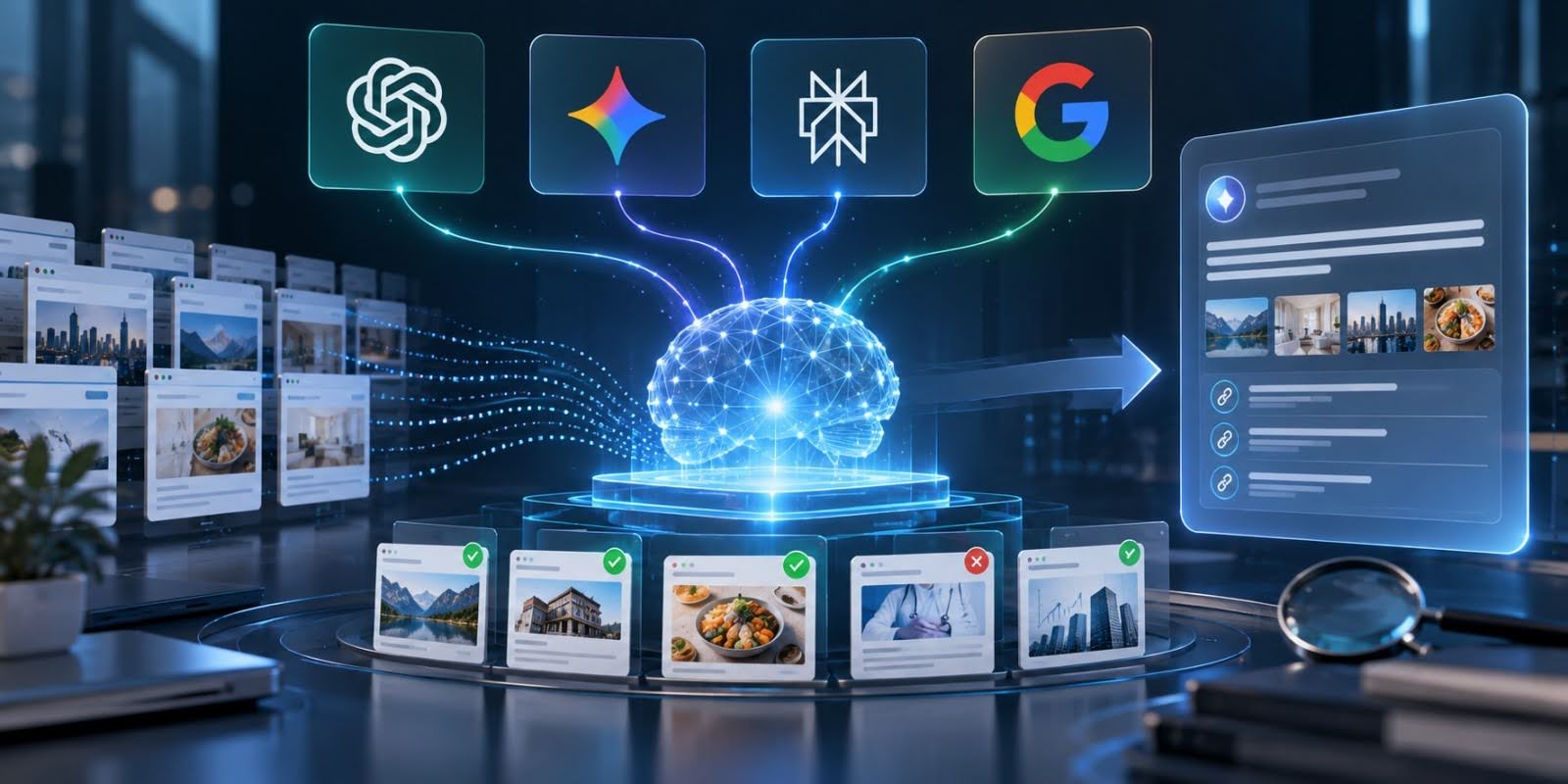
SEO helps businesses improve visibility in search engines and AI-generated search experiences by making website content easier to discover, understand, and trust. For SMEs in Singapore, SEO is often one of the most practical digital marketing strategies because it supports long-term visibility without relying entirely on paid advertising.
Small businesses usually compete against larger companies with stronger brand recognition, larger marketing teams, and higher advertising budgets. However, SEO does not depend only on company size. Search engines increasingly reward relevance, expertise, content quality, user experience, and local trust signals. This creates opportunities for SMEs to compete effectively within specific industries, services, or geographic areas.
Beyond traditional search rankings, SEO in Singapore now extends towards optimising for AI-generated summaries and answer engines as these platforms extract information directly from well-structured websites. SMEs that create well-organised and trustworthy content can improve visibility not only in search engine results pages but also in AI-generated answers.
This article will breakdown how SMEs in Singapore can compete against larger brands using practical SEO strategies such as niche keyword targeting, topical authority development, local trust building, AI-assisted optimisation, and structured content creation.
Why SEO Matters for SMEs in Singapore
SEO is the process of improving a website so search engines and AI systems can better understand its content and relevance. For SMEs, SEO supports discoverability when users search for products, services, solutions, or industry information online.
In Singapore, digital competition is high across sectors such as professional services, retail, education, healthcare, construction, and technology. Many users compare businesses online before making purchasing decisions. A visible and informative website helps SMEs remain competitive during this research process.
SEO helps Singapore businesses in multiple stages of the customer journey:
Customer Stage | SEO Contribution |
Awareness | Helps users discover the business through search |
Research | Provides educational and informational content |
Comparison | Demonstrates expertise and trustworthiness |
Decision | Improves confidence through clear service information |
Retention | Encourages repeat visits through useful resources |
Unlike short-term advertising campaigns, SEO content can continue generating visibility over time when properly maintained and updated.
How SMEs Can Compete Without Large Marketing Budgets
Large brands often compete on scale, but SMEs can compete on specificity and relevance. Search engines increasingly prioritise content that directly answers user intent instead of content from the largest company.
Smaller businesses can compete more effectively by focusing on:
- Specific customer problems
- Niche service categories
- Local search intent
- Industry expertise
- Content depth and clarity
For example, a broad keyword such as “digital marketing” is highly competitive. However, a more focused topic such as “SEO for interior design firms in Singapore” may offer stronger opportunities for a smaller business with specialised expertise.
SMEs also benefit from faster decision-making and content flexibility. Larger organisations often require multiple approval layers, while smaller businesses can publish useful content more quickly and respond faster to industry changes.
Understanding Search Intent Before Creating Content
Search intent refers to the reason behind a user’s search query. Search engines attempt to match results with the user’s intended goal rather than simply matching keywords.
There are four common types of search intent:
Search Intent | User Goal | Example |
Informational | Learn or research | “how SEO works for SMEs” |
Navigational | Find a specific website | “W360 SEO Singapore” |
Commercial | Compare solutions | “best SEO agency for SMEs” |
Transactional | Take action | “request SEO consultation” |
SMEs benefit when content aligns clearly with user intent. A mismatch between content and search intent often reduces engagement and conversion opportunities.
A practical SEO strategy usually includes content across multiple intent stages. Informational articles support visibility and trust-building, while service pages support decision-making and enquiries.
Niche Keyword Targeting Creates Better Opportunities
Niche keyword targeting focuses on highly relevant search terms instead of broad, highly competitive phrases. This approach helps SMEs compete in areas where larger brands may not have specialised content.
Long-tail keywords are especially valuable because they often reflect clearer user intent. These search terms usually have lower search volume but higher relevance and conversion potential.
Examples of niche keyword targeting include:
Broad Keyword | Niche Keyword |
SEO agency | SEO for medical clinics in Singapore |
Accounting services | Corporate tax filing for SMEs Singapore |
Renovation company | HDB kitchen renovation contractor Singapore |
IT support | Managed IT support for SMEs Singapore |
Niche keywords improve content relevance because they target specific industries, customer groups, or service needs.
SMEs should also consider question-based keywords because AI-generated search experiences often prioritise direct answers. Queries beginning with “how”, “what”, “why”, and “best way to” are increasingly important for AI search visibility.
Topical Authority Helps SMEs Build Search Visibility
Topical authority refers to how strongly a website demonstrates expertise within a specific subject area. Search engines evaluate whether a website consistently publishes useful and connected content around a topic.
SMEs can build topical authority by covering related subjects comprehensively instead of creating isolated articles. For example, a business focused on SEO in Singapore could build topical authority by creating content about:
- Technical SEO
- Local SEO
- AI SEO
- Content optimisation
- SEO reporting
- Website audits
- Search intent
- Schema markup
Each article strengthens the overall subject relevance of the website. Topical authority also improves AI extraction potential because generative search systems often reference websites that consistently demonstrate expertise across related themes.
Local SEO Improves Visibility for Singapore-Based Searches

Local SEO improves visibility for searches connected to geographic intent and is especially important for SMEs serving customers within Singapore. It helps search engines identify business relevance within a specific location while supporting map visibility and local search results.
Important local SEO elements include:
- Google Business Profile optimisation
- Consistent business information
- Local service pages
- Customer reviews
- Location-specific content
- Local citations
SMEs should ensure that business details remain consistent across directories, websites, and social platforms. Inconsistent information may weaken trust signals. Local content should also remain natural as overusing geographic terms can reduce readability and may appear manipulative to search systems.
Trust Signals Influence Both SEO and AI Visibility
Trust signals help search engines and AI systems determine whether a website is credible and reliable. These signals are increasingly important because AI-generated answers prioritise trustworthy sources.
Trust signals include:
Trust Signal | Purpose |
Clear business information | Confirms legitimacy |
HTTPS security | Protects user data |
Author expertise | Supports credibility |
Customer reviews | Demonstrates user trust |
Structured contact pages | Improves transparency |
Updated content | Maintains relevance |
SMEs can strengthen trust by ensuring content is factual and professionally structured. AI systems also evaluate content clarity, therefore, websites should not provide vague claims or thin content as this will make it less likely to appear in AI-generated responses.
AI-Assisted Optimisation Supports Content Efficiency
AI-assisted optimisation refers to using AI tools to improve content research, structure, analysis, and optimisation workflows. AI tools can help SMEs produce content more efficiently, but human oversight remains important.
AI can support SEO workflows in several ways:
AI Use Case | SEO Benefit |
Keyword clustering | Organises related topics |
Search intent analysis | Improves relevance |
Content outlining | Speeds up planning |
Metadata generation | Supports consistency |
Technical audits | Identifies issues faster |
Content gap analysis | Reveals missing topics |
AI-generated content should still be reviewed carefully for factual accuracy, readability, and originality. Search engines prioritise useful content rather than automatically rewarding AI-written material.
SMEs benefit most when AI is used to improve workflow efficiency while maintaining human expertise and editorial quality.
Technical SEO Helps Search Engines Understand Websites
Technical SEO improves how search engines crawl, interpret, and index website content. Even strong content may struggle to rank if technical foundations are weak.
Important technical SEO elements include:
- Mobile responsiveness
- Fast loading speed
- Clean site structure
- Secure HTTPS setup
- Structured data markup
- Internal linking
- Proper heading structure
Technical SEO also supports AI-generated search systems because structured websites are easier to process and extract information from. Schema markup is especially useful because it provides explicit information about services, organisations, FAQs, reviews, and articles. Structured data helps search engines interpret page meaning more accurately.
Content Structure Affects AI Extraction

AI systems frequently extract information from websites to generate summaries and direct answers. Content structure therefore affects how easily information can be processed and cited.
Well-structured content usually includes:
- Clear headings
- Concise explanations
- Self-contained sections
- Short paragraphs
- Logical information flow
- Direct factual answers
For example, a section titled “What Is Local SEO?” with a direct explanation is easier for AI systems to extract than vague or heavily promotional wording. Tables also improve extractability because they organise information into structured formats. AI systems often prioritise clearly structured content during summarisation.
Internal Linking Strengthens Content Relationships
Internal linking connects related pages within the same website. This helps users navigate content and helps search engines understand topical relationships. A strong internal linking strategy improves:
SEO Benefit | Explanation |
Crawlability | Helps search engines discover pages |
Topic relationships | Connects related subjects |
User navigation | Encourages deeper exploration |
Authority distribution | Supports weaker pages |
SMEs should use internal links naturally within relevant content. Anchor text should clearly describe the linked topic rather than using vague phrases such as “click here”. Internal linking also helps AI systems understand topic clusters and content hierarchy.
SMEs Should Focus on Helpful Content Instead of Volume
Publishing large amounts of content does not automatically improve SEO performance. Search engines increasingly evaluate usefulness, clarity, originality, and relevance. Helpful content usually:
- Solves a user problem
- Explains a topic clearly
- Uses verifiable information
- Matches search intent
- Remains easy to navigate
SMEs often perform better when they focus on fewer, higher-quality articles instead of publishing large volumes of thin content. Content should also remain current, therefore, it is beneficial to update existing pages than create duplicate or repetitive topics.
User Experience Influences Search Performance
User experience affects how visitors interact with a website. Poor usability may reduce not just engagement but also trust and conversions. Search engines analyse behavioural signals such as:
User Behaviour | Potential SEO Impact |
Fast page exits | May indicate poor relevance |
Slow loading | Reduces usability |
Mobile issues | Affects accessibility |
Difficult navigation | Weakens engagement |
SMEs should ensure websites remain accessible, mobile-friendly, and easy to navigate. Simple improvements such as clear menus, readable fonts, and logical layouts support both SEO and conversion performance.
SEO Measurement Helps SMEs Refine Strategy
SEO performance should be measured consistently to identify strengths, weaknesses, and opportunities. These are some of the most common SEO performance indicators:
- Organic traffic
- Keyword visibility
- Click-through rate
- Engagement metrics
- Conversion actions
- Indexed pages
SMEs should focus on meaningful business outcomes rather than rankings alone. Increased visibility is valuable only if it supports enquiries, leads, or customer engagement.
SEO measurement tools commonly include analytics platforms, search performance reports, and technical audit tools.
AI Search Is Changing How Users Discover Businesses
AI-generated search experiences increasingly provide summarised answers directly within search interfaces. This changes how users interact with websites and discover businesses.
Modern SEO therefore includes optimisation for:
Search Environment | Optimisation Focus |
Traditional search | Rankings and click-through |
AI overviews | Extractable summaries |
Answer engines | Direct factual responses |
Generative search | Structured, trustworthy content |
SMEs that provide clear explanations, transparent information, and well-structured content may improve visibility in AI-generated answers even without dominating traditional rankings.
This makes content quality and structure increasingly important for future SEO performance.
Common SEO Mistakes SMEs Should Avoid

Many SMEs face SEO challenges because of inconsistent strategies or outdated practices.
Common SEO mistakes include:
- Targeting overly broad keywords
- Publishing duplicate content
- Ignoring technical issues
- Overusing keywords unnaturally
- Creating content without search intent
- Neglecting local SEO signals
Another common issue is focusing only on rankings instead of content usefulness. Search systems increasingly reward websites that provide meaningful value to users. Avoiding these mistakes supports both traditional search visibility and AI search inclusion.
Practical SEO Priorities for SMEs
SEO strategies become more manageable when SMEs focus on practical priorities rather than attempting to optimise everything at once.
A structured SEO approach may include:
Priority Area | Recommended Focus |
Website foundation | Technical health and usability |
Keyword targeting | Niche and intent-driven terms |
Content strategy | Topical authority development |
Local visibility | Google Business Profile and local trust |
AI readiness | Structured and extractable content |
Performance review | Ongoing analysis and updates |
This phased approach helps SMEs improve gradually while maintaining operational efficiency.
Frequently Asked Questions
SEO improves how websites appear in search engines and AI-powered search experiences. For SMEs, SEO supports long-term visibility, customer discovery, and online credibility without depending entirely on paid advertising.
Yes. SMEs can compete effectively by targeting niche topics, focusing on local relevance, and creating specialised content. Search engines increasingly prioritise relevance and usefulness rather than company size alone.
SEO timelines vary depending on competition, website condition, content quality, and industry. Improvements may appear gradually over several months as search engines crawl, evaluate, and rank content.
Local SEO helps businesses appear in geographically relevant searches. This is important in Singapore because many users search for nearby services, providers, and businesses before making decisions.
Topical authority refers to how strongly a website demonstrates expertise within a subject area. Websites that consistently publish connected and informative content around a topic are more likely to build authority signals.
AI systems now generate summaries and direct answers from online content. Websites with clear structure, factual information, and trustworthy content are more likely to appear in AI-generated search experiences.
Yes. Technical SEO helps search engines access, understand, and index website content correctly. Even high-quality content may struggle to perform if technical foundations are weak.
AI-generated content can support efficiency, but content quality remains the main priority. Human review is important to ensure accuracy, originality, clarity, and relevance.
Building Sustainable Visibility Through SEO
SEO continues to evolve as search engines and AI systems prioritise relevance, clarity, trust, and user experience. For SMEs in Singapore, this creates opportunities to compete through specialised expertise and helpful content rather than relying solely on large marketing budgets.
Businesses that focus on niche targeting, topical authority, technical quality, local trust signals, and AI-friendly content structures are better positioned to improve long-term visibility across both traditional search engines and generative search platforms.
Singapore businesses looking to improve search visibility, strengthen content structure, and support long-term digital discoverability can consider reviewing their current SEO strategy and technical foundations with SEO agencies such as W360 Asia.
If you are exploring structured optimization approaches, get a quote for further evaluation of your website and search presence.