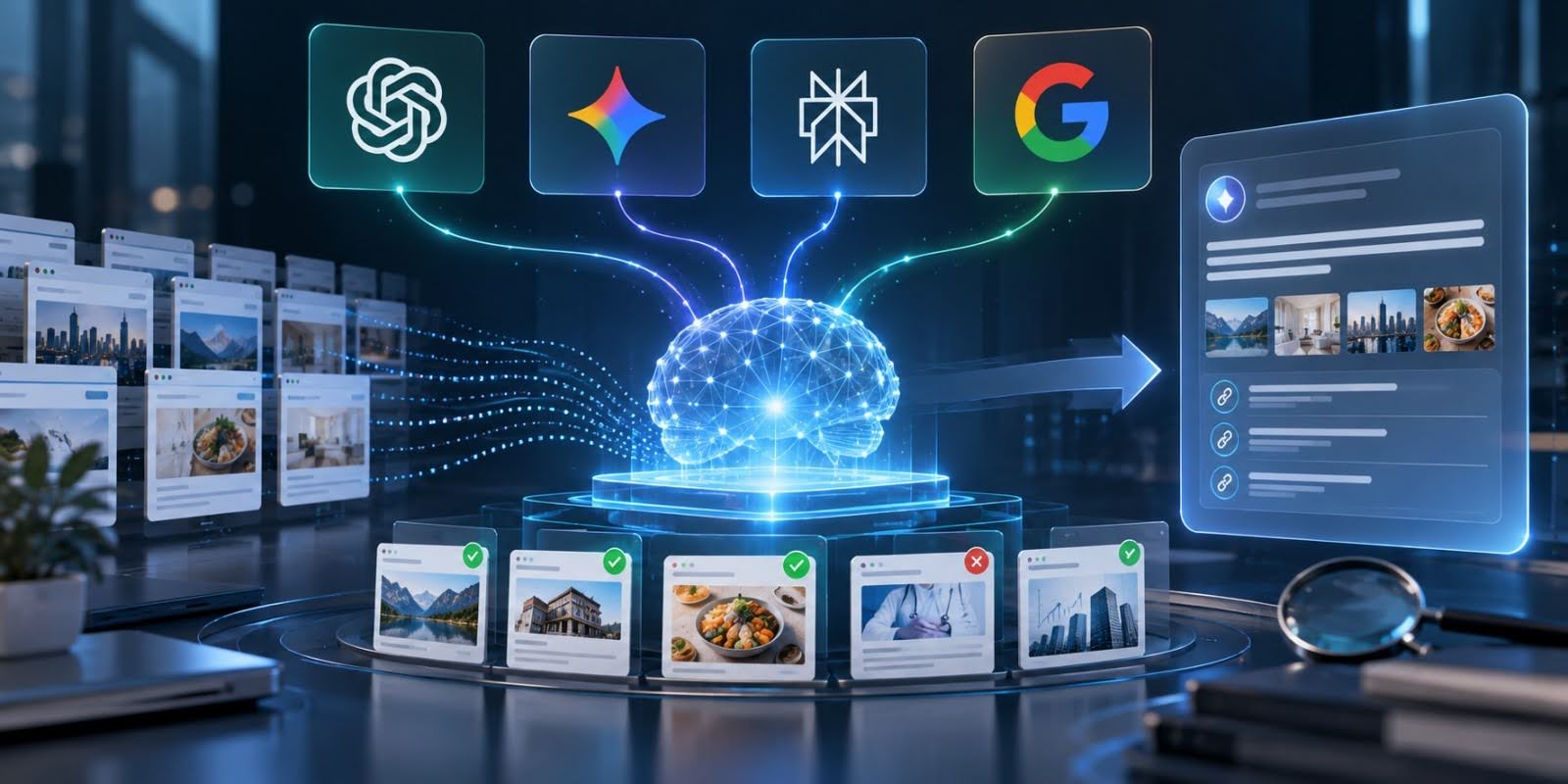
SEO strategies are no longer universally effective across all industries because search behaviour, competition, customer intent, and compliance requirements, vary significantly between sectors. Businesses in Singapore now require SEO approaches that reflect their operational model, audience behaviour, and digital objectives.
Modern SEO services in Singapore offer customised strategies instead of standardised optimisation packages with the introduction of AI-powered search systems to keep up with changing algorithms and user behaviour. These differ across industries such as e-commerce, healthcare, finance, SaaS, B2B, and food and beverage businesses.
AI-generated search experiences have also changed how websites are evaluated and summarised. Businesses now need content that supports traditional rankings while remaining suitable for AI extraction, answer generation, and conversational search visibility.
This article will explain why industry-specific SEO strategies are necessary and the different optimisation approaches for various sectors.
SEO Strategies Depend on Industry Context
SEO performance depends heavily on industry characteristics, customer intent, and search behaviour. Businesses operating in different sectors face different search patterns, competition levels, and content requirements.
An effective SEO strategy must therefore align with:
SEO Factor | Industry Impact |
Search intent | Varies by customer behaviour |
Compliance requirements | Differs across regulated industries |
Content expectations | Depends on audience knowledge |
Conversion journey | Changes by business model |
Competition level | Varies between sectors |
Local relevance | Important for service-based businesses |
For example, a healthcare website requires medically accurate informational content, while an e-commerce website focuses more heavily on product discoverability and transactional optimisation. This variation means personalised SEO services are needed for Singapore businesses that cater to their needs.
Search Intent Changes Across Industries
Search intent refers to the purpose behind a user’s search query. Different industries attract different search behaviours and therefore require different optimisation strategies.
The table below shows how search intent varies by sector:
Industry | Common Search Intent |
E-commerce | Product comparison and purchase |
Healthcare | Research and symptom information |
SaaS | Solution evaluation |
Finance | Trust verification and education |
F&B | Local discovery and convenience |
B2B | Long-form research and validation |
SEO strategies need to align website content with the specific intent patterns of its target audience as pages that fail to answer user needs may struggle in both traditional and generative search environments.
E-Commerce SEO Focuses on Product Discoverability

E-commerce SEO prioritises product visibility, category optimisation, and transactional search intent. Users searching for products typically expect fast access to detailed product information and purchase options.
These websites require optimisation elements such as:
- Product schema markup
- Optimised category structures
- Internal linking systems
- Product-focused metadata
- Filterable navigation
- Transactional keyword targeting
Search systems also evaluate product relevance, user experience, and website structure. Poorly organised e-commerce websites often face indexing and crawlability challenges.
AI-generated search experiences increasingly summarise products directly within search interfaces. This means product descriptions, specifications, and category content should remain structured and easy to interpret.
Healthcare SEO Requires Accuracy and Trust Signals
Healthcare SEO prioritises factual accuracy, trustworthiness, and regulatory sensitivity. Medical-related content affects user wellbeing and is therefore evaluated more carefully by search systems. These websites commonly require:
Healthcare SEO Requirement | Purpose |
Author expertise signals | Improves trust |
Accurate medical information | Supports credibility |
Clear service explanations | Improves understanding |
Structured FAQ content | Supports answer extraction |
Strong technical SEO | Improves accessibility |
Search engines often apply stricter quality evaluations to healthcare-related topics because inaccurate information can affect user safety. Since AI systems also prioritise trustworthy healthcare content, websites with vague claims or unsupported medical statements may not appear in AI-generated answers.
Finance SEO Requires Compliance-Aware Content
Finance-related SEO requires careful handling of accuracy and compliance. Financial decisions involve risk, so search systems often apply stricter quality standards to financial content. Finance SEO strategies should emphasise:
- Transparent information
- Educational content
- Regulatory awareness
- Clear disclaimers
- Secure technical infrastructure
Financial users often perform extensive research before taking action. This means finance related SEO needs detailed informational content alongside transactional pages. AI search systems also prefer finance content that explains concepts clearly without exaggerated claims.
SaaS SEO Prioritises Solution-Based Search Intent
SaaS SEO focuses heavily on problem-solving content because software users often research solutions before selecting platforms. SaaS websites commonly target searches related to:
SaaS Search Type | User Goal |
Problem identification | Understand challenges |
Solution comparison | Evaluate alternatives |
Feature research | Assess capabilities |
Integration questions | Confirm compatibility |
Technical implementation | Understand usage |
SaaS-related SEO strategies therefore rely heavily on educational content, feature explanations, use-case pages, and comparison resources. AI-driven search systems also favour SaaS content that clearly explains functionality and technical concepts in simplified language.
B2B SEO Involves Longer Decision Cycles
For B2B, business purchasing decisions often involve multiple stakeholders and longer evaluation periods. B2B search users frequently look for:
- Industry expertise
- Technical explanations
- Operational insights
- Case-based content
- Strategic guidance
Therefore, a good SEO strategy usually needs long-form informational content designed to support research and trust-building. The B2B buyer journey often includes multiple search stages:
| Decision Stage | Typical Search Behaviour |
| Awareness | Industry research |
| Evaluation | Solution comparisons |
| Validation | Expertise verification |
| Decision | Vendor-specific searches |
Due to this extended journey, comprehensive and interconnected content structures are required.
F&B SEO Prioritises Local Visibility

Food and beverage businesses rely heavily on local search relevance because customer decisions are often location-based and immediate. F&B-related SEO commonly focuses on:
- Google Business Profile optimisation
- Location pages
- Review visibility
- Mobile usability
- Local search intent
- Menu indexing
Search engines frequently prioritise proximity, reviews, and operational information for local F&B searches. AI-generated search systems also summarise opening hours, cuisines, or location details directly within responses. This makes structured and accurate information increasingly important for visibility.
Local SEO Requirements Differ by Industry
Local SEO is not identical across all business types. Different industries require different local visibility strategies. The following table highlights how local SEO priorities differ:
Industry | Local SEO Focus |
Clinics | Service trust and location accuracy |
Restaurants | Reviews and operational details |
Retail | Product availability |
Professional services | Expertise and credibility |
Home services | Geographic coverage |
Reliable SEO services in Singapore consider how users search within each industry context rather than applying identical local optimisation methods.
AI Search Visibility Requires Structured Information
AI-generated search experiences prioritise structured and extractable information. Websites with disorganised or unclear content may struggle to appear in AI-generated answers. Custom SEO strategies increasingly include:
- Structured heading systems
- Conversational content formatting
- Schema markup implementation
- FAQ optimisation
- Self-contained content sections
AI systems frequently extract information directly from webpages. Businesses therefore benefit from content structures that support summarisation and contextual understanding.
This applies differently across industries depending on user expectations and information complexity.
Technical SEO Needs Vary Between Website Types
Technical SEO requirements differ depending on website structure, platform complexity, and business objectives.
For example:
Website Type | Technical SEO Priority |
E-commerce | Crawl efficiency and indexing |
SaaS | Site architecture and integrations |
Healthcare | Accessibility and trust |
Publishing | Content discoverability |
Enterprise B2B | Scalable content structure |
A one-size-fits-all technical SEO checklist may overlook sector-specific technical challenges. Custom SEO strategies identify technical priorities based on business model and website architecture.
Content Depth Depends on Industry Expectations
Different industries require different levels of informational depth. Search engines evaluate whether content adequately satisfies user intent within a specific topic context.
For example:
- Medical topics often require detailed explanations
- SaaS users expect technical clarity
- E-commerce users prioritise concise product information
- B2B audiences may require extensive educational resources
An effective content strategy therefore depends on audience expectations rather than fixed content-length formulas. AI search systems also evaluate contextual completeness, therefore, thin or overly generic content should be removed or updated to increase extraction opportunities.
Competitive SEO Landscapes Differ by Sector

SEO competition varies significantly between industries. Some sectors face extremely competitive search environments, while others benefit from specialised opportunities. The level of competition often affects:
- Content depth requirements
- Authority-building strategies
- Link acquisition difficulty
- Technical optimisation standards
- Topic clustering needs
For example, finance and healthcare websites often require stronger trust signals than niche B2B industries with lower search competition. An effective SEO strategy reflects the realities of the specific competitive landscape.
Topic Clustering Supports Industry Authority
Topic clustering refers to grouping related content around a core subject. This structure helps search systems understand expertise and semantic relevance. Here are a few examples:
Industry | Example Topic Cluster |
Healthcare | Symptoms, treatments, prevention |
SaaS | Features, integrations, workflows |
Finance | Regulations, planning, compliance |
E-commerce | Categories, product guides, comparisons |
Topic clustering improves topical authority and supports AI understanding of website expertise. AI systems increasingly favour websites that demonstrate comprehensive coverage of related subjects.
Conversational SEO Varies by Audience Type
Conversational search optimisation depends on how different audiences naturally ask questions. For example:
Industry | Conversational Query Example |
Healthcare | “What causes chronic back pain?” |
SaaS | “Which CRM works for small teams?” |
Finance | “How does business loan approval work?” |
F&B | “Where can I find halal cafes nearby?” |
An effective SEO strategy adapts language and content structure to audience-specific search patterns. AI-driven search experiences rely heavily on conversational understanding, making natural language optimisation increasingly important.
User Experience Expectations Differ by Industry
User experience influences SEO because search systems evaluate usability, engagement, and accessibility. Different industries require different UX priorities:
Industry | Key UX Priority |
E-commerce | Fast purchasing journey |
Healthcare | Information clarity |
SaaS | Feature navigation |
F&B | Mobile accessibility |
B2B | Educational content structure |
A custom SEO strategy considers how users interact with websites within each industry context. Improved user experience also supports AI interpretation by making content easier to navigate and process.
SEO Reporting Should Reflect Business Objectives
SEO performance metrics should align with business goals rather than relying on generic ranking reports. Different industries often prioritise different indicators:
Industry | Common SEO Goal |
E-commerce | Product conversions |
SaaS | Demo requests |
Healthcare | Appointment enquiries |
B2B | Lead generation |
F&B | Local discovery |
An effective SEO strategy measures outcomes relevant to operational objectives instead of applying identical KPIs to all businesses.
AI-Assisted SEO Requires Human Industry Understanding
AI tools support SEO workflows through automation, clustering, analysis, and content assistance. However, industry expertise remains important. Human oversight is necessary for:
- Compliance-sensitive industries
- Technical explanations
- Audience-specific messaging
- Brand positioning
- Strategic prioritisation
AI-generated content without industry context may produce inaccurate or generic outputs. Custom SEO strategies therefore combine automation efficiency with sector-specific expertise.
Generic SEO Packages Often Miss Industry Nuances
Standardised SEO packages may overlook critical differences between industries, platforms, and customer behaviours. Generic approaches often fail because they:
- Ignore search intent variation
- Apply identical keyword strategies
- Overlook compliance requirements
- Misalign content structures
- Neglect industry-specific user journeys
Customisation improves SEO relevance because strategies are built around actual business requirements rather than fixed templates. This becomes increasingly important as AI search systems prioritise contextual accuracy and content usefulness.
Modern SEO Requires Multi-Layered Optimisation
SEO now involves multiple interconnected optimisation layers rather than isolated keyword targeting which involves:
SEO Layer | Function |
Technical SEO | Supports accessibility |
Content optimisation | Improves relevance |
GEO | Supports AI extraction |
AEO | Improves answer visibility |
Local SEO | Strengthens geographic relevance |
Entity optimisation | Improves semantic understanding |
Different industries prioritise these layers differently depending on their operational model and audience behaviour.
Frequently Asked Questions
Different industries have different customer journeys, search intent patterns, competition levels, and compliance requirements. These differences affect how websites should structure content, optimise keywords, and improve visibility.
Healthcare SEO prioritises trust, accuracy, and informational quality, while e-commerce SEO focuses more heavily on product discoverability, category structures, and transactional intent.
F&B users often search with immediate location-based intent. Local SEO helps restaurants and cafes appear in map results, nearby searches, and local AI-generated recommendations.
AI changes how search systems summarise and extract information. Modern SEO strategies now include GEO, conversational optimisation, structured data, and AI-friendly content formatting.
Topical authority refers to how comprehensively a website covers related subjects within an industry. Websites with strong topic clusters are more likely to gain search trust and AI relevance.
No. SEO strategies should reflect industry context, website structure, audience behaviour, and operational goals. Generic strategies often fail to address sector-specific requirements.
Structured data helps search engines and AI systems understand webpage meaning more accurately. It improves content classification and supports enhanced search visibility.
Yes. SMEs often compete in niche markets with specific customer behaviours. Custom SEO strategies help businesses target relevant audiences more effectively and improve visibility within specialised sectors.
Why Industry-Specific SEO Matters More Than Ever
SEO has evolved beyond standard keyword optimisation into industry-specific discipline. Modern SEO services in Singapore therefore require customised strategies tailored to industry requirements, audience expectations, and AI-driven search behaviour. Businesses that align SEO with their operational context are better positioned to improve long-term discoverability.
Singapore businesses evaluating their current digital visibility should take up an SEO audit to review whether your SEO strategy reflects industry-specific search behaviour, technical requirements, and AI search readiness.
If your organisation is exploring digital marketing agencies for tailored optimisation, consider getting in touch with W360 Asia for an assessment of your website and current search visibility.