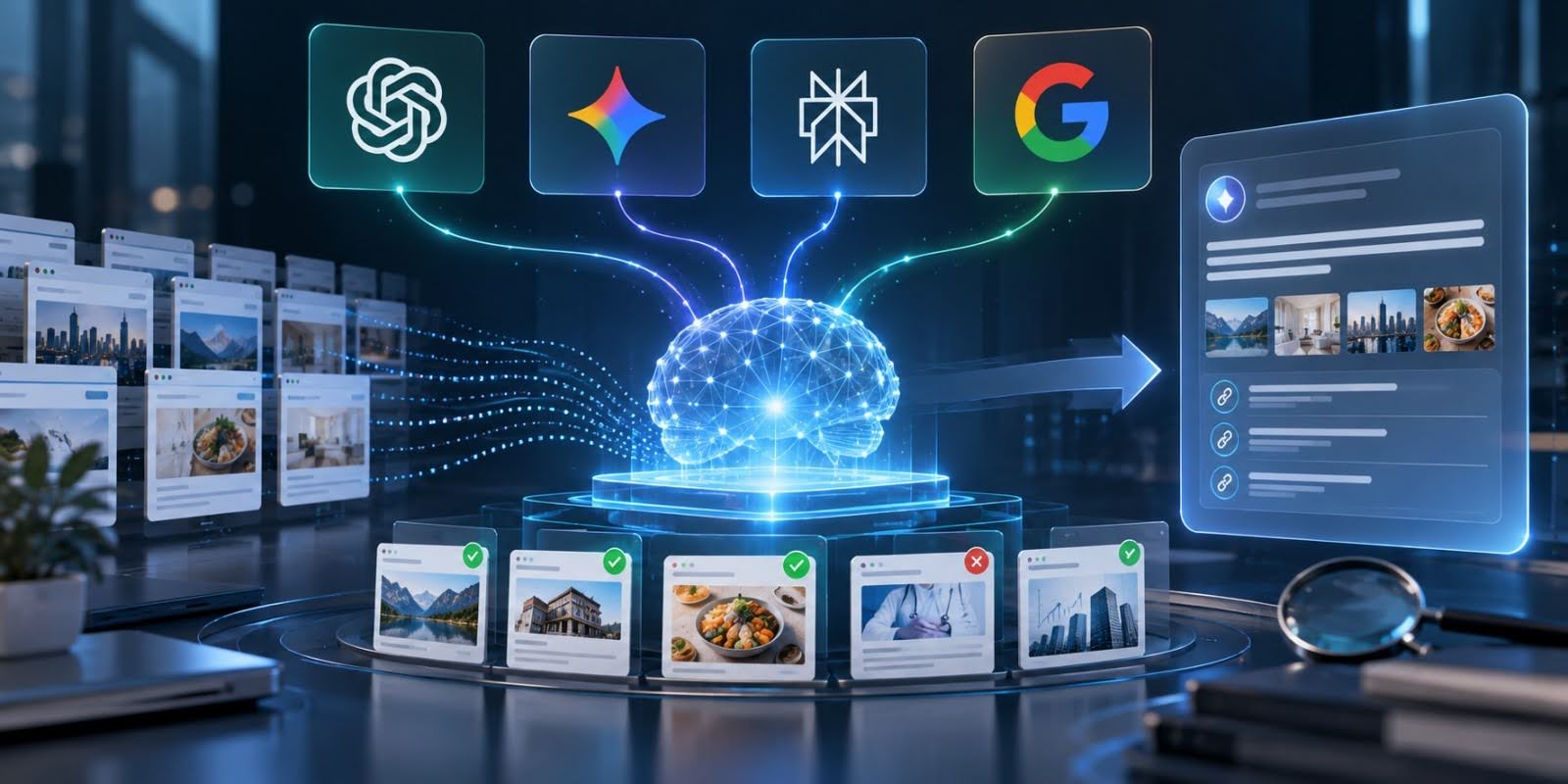
In 2026, local search behaviour in Singapore continues to evolve alongside AI-generated search experiences and Google’s local ranking systems. Users increasingly rely on Google Maps, AI-generated summaries, voice search, and location-based recommendations before making purchasing decisions.
This is where local SEO comes in. It is the process of improving a business’s visibility in location-based search results on Google and other search platforms to help businesses appear when users search for nearby services or products.
Local SEO in Singapore now involves more than adding a business address online. It includes Google Business Profile optimisation, local citation consistency, review management, localised content creation, proximity relevance, and structured business information that search engines and AI systems can easily interpret.
Keep reading to learn why businesses that appear consistently in Google’s Local Map Pack often gain stronger visibility for intent-driven searches and get tips to elevate your online presence in Singapore.
What Is Google’s Local Map Pack?
Google’s Local Map Pack is the group of local business listings displayed alongside a map in Google search results. It commonly appears for searches with local intent such as “dentist near me”, “cafe in Tanjong Pagar”, or “aircon servicing Singapore”.
The Map Pack usually displays:
- Business name
- Review ratings
- Business category
- Operating hours
- Contact information
- Directions and location details
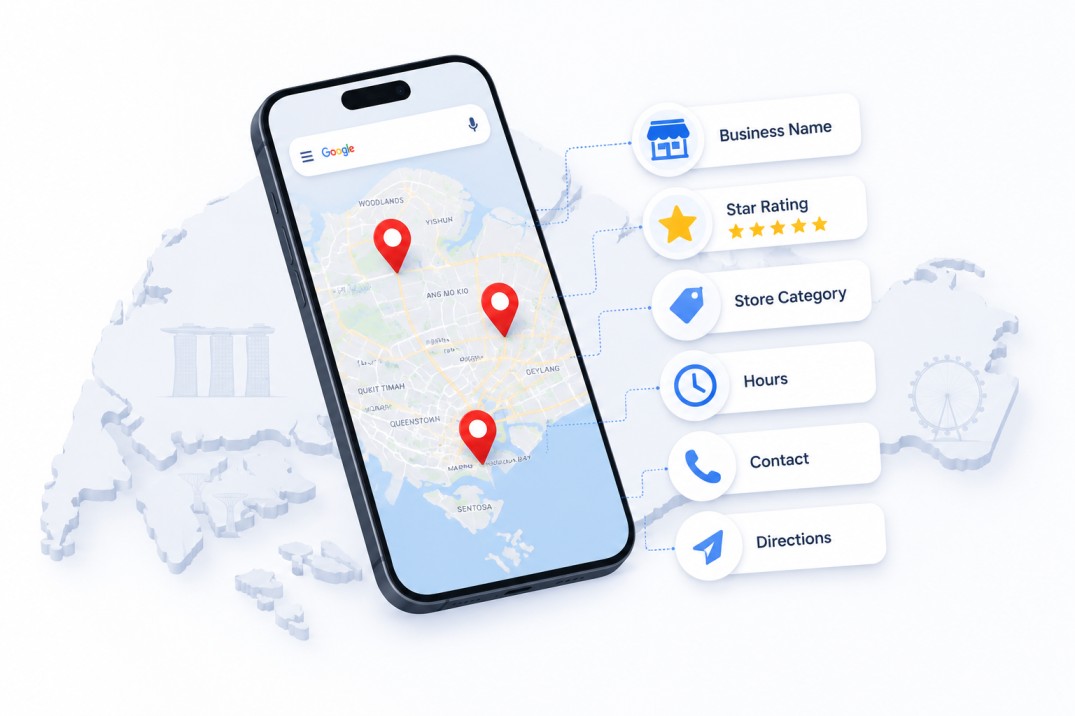
The Local Map Pack is important because it appears above many traditional organic search listings on mobile and desktop searches. This placement gives businesses stronger visibility during high-intent searches.
In Singapore, mobile users frequently interact with map results when searching for nearby restaurants, clinics, retail stores, tuition centres, renovation companies, and professional services.
How Local SEO Works in 2026
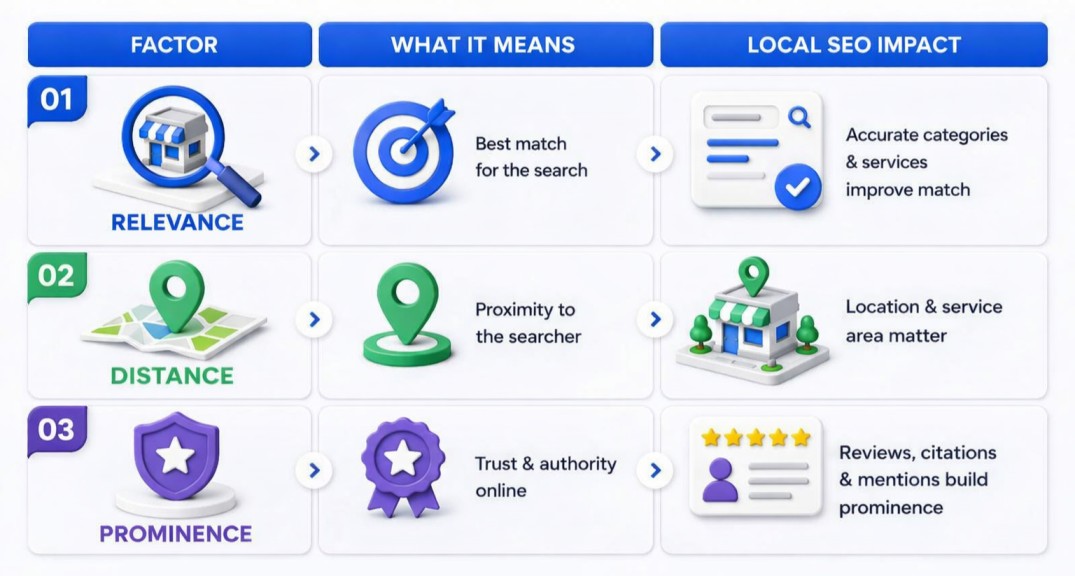
Local SEO helps Singapore residents and search engines determine which businesses are most relevant, trustworthy, and geographically suitable for the search query. Google’s local ranking system generally evaluates three primary factors:
Ranking Factor | Definition | Local SEO Impact |
Relevance | How closely the business matches the search query | Accurate business categories and services improve matching |
Distance | How near the business is to the searcher | Physical location and service area matter |
Prominence | How established and trusted the business appears online | Reviews, citations, mentions, and authority improve prominence |
In 2026, AI-driven search systems will also analyse contextual signals beyond traditional keywords. Search engines increasingly evaluate user behaviour, business credibility, semantic relevance, and structured business data.
This means businesses must optimise not only for search engines, but also for AI-generated answers and recommendation systems.
Why Local SEO Matters for Businesses in Singapore
Local SEO matters because many searches in Singapore have immediate transactional intent. Users often search for services while actively planning a visit, comparing providers, or making purchase decisions.
Common examples include:
- “family clinic near Bugis”
- “best gym in Tampines”
- “office renovation contractor Singapore”
- “Japanese restaurant Orchard Road”
These searches typically lead to actions such as phone calls, bookings, direction requests, or walk-in visits. Singapore’s high mobile usage and dense urban environment make proximity-based search behaviour especially important.
Businesses competing within similar industries often rely on local visibility to stand out within specific districts or neighbourhoods. Local SEO also supports businesses targeting multiple service regions across Singapore by improving local relevance signals for different geographic areas.
Google Business Profile Optimisation
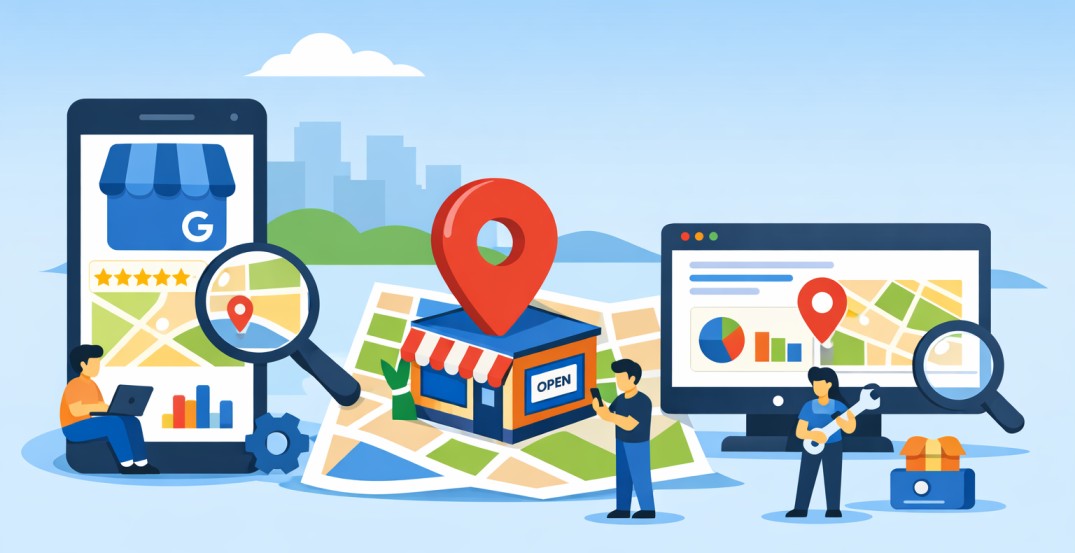
Google Business Profile is one of the most important elements of local SEO in Singapore. It is the business listing that appears within Google Maps and local search results.
A properly optimised profile helps Google understand what a business offers, where it operates, and how relevant it is to local searches.
Essential Business Information
Business information should remain accurate and consistent across all platforms. Incorrect details may reduce trust signals and affect local visibility. Important details include:- Business name
- Primary category
- Address
- Phone number
- Website URL
- Operating hours
- Service areas
Business Categories and Services
Business categories help Google determine which searches are relevant to a listing. The primary category should closely reflect the main business offering. Secondary categories may support additional services when relevant. For example, a clinic may use categories such as:- Medical clinic
- Family physician
- Health consultant
Business Photos and Visual Signals
Visual content helps users evaluate credibility and relevance before visiting a business. Useful image types include:- Storefront photos
- Interior images
- Team photos
- Product images
- Service process visuals
Business Updates and Activity
Google Business Profile activity signals may indicate that a business remains active and operational. Businesses can update profiles using:- Service updates
- Business announcements
- Seasonal operating hour changes
- New product or service information
Local Citations and Business Consistency

Local citations are online mentions of a business’s name, address, and phone number across directories, listings, and external websites. Citation consistency helps search engines verify that a business is legitimate and geographically established.
Why Citation Accuracy Matters
Search engines compare business details across multiple platforms. Inconsistent information may create confusion regarding business identity or location. Common inconsistencies include:
- Different phone numbers
- Address variations
- Outdated operating hours
- Incorrect suite numbers
Maintaining consistency improves trust and data reliability.
Common Citation Sources in Singapore
Businesses in Singapore may appear on various local and international platforms. Examples include:
| Citation Type | Examples |
| Search platforms | Google Maps, Bing Places |
| Business directories | Yellow Pages Singapore |
| Review platforms | Facebook, TripAdvisor |
| Industry-specific listings | Medical, legal, education directories |
Industry-specific citations may provide additional relevance signals depending on the business sector.
Structured Business Data
Structured business data refers to information formatted for search engine interpretation. Schema markup may help clarify details such as:
- Business type
- Address
- Contact details
- Operating hours
- Reviews
Structured data supports both traditional search engines and AI-driven search systems.
Review Signals and Online Reputation
Reviews influence both local rankings and user decision-making. Positive review signals may improve visibility while also increasing user trust. Google evaluates review-related factors such as:
- Review quantity
- Review recency
- Review diversity
- Review relevance
- Response activity
Businesses with active review profiles often appear more trustworthy and engaged.
How Reviews Influence Local Rankings
Reviews help search engines assess business prominence and user satisfaction. A consistent flow of genuine customer reviews may indicate:
- Active business operations
- Real customer engagement
- Service reliability
- Local popularity
Reviews also provide additional keyword and contextual signals based on customer feedback.
Review Management Best Practices
Review management should focus on authenticity and customer experience rather than manipulation. Businesses can improve review practices by:
- Encouraging honest customer feedback
- Responding professionally to reviews
- Monitoring review platforms regularly
- Addressing service concerns constructively
Businesses should avoid fake reviews or incentive-based review schemes that violate platform policies.
Responding to Negative Reviews
Negative reviews can still contribute positively when handled professionally. A structured response approach may include:
- Acknowledging the concern
- Clarifying misunderstandings
- Offering resolution channels
- Maintaining professional tone
Public responses may demonstrate accountability and customer service quality.
Proximity Ranking and Geographic Relevance
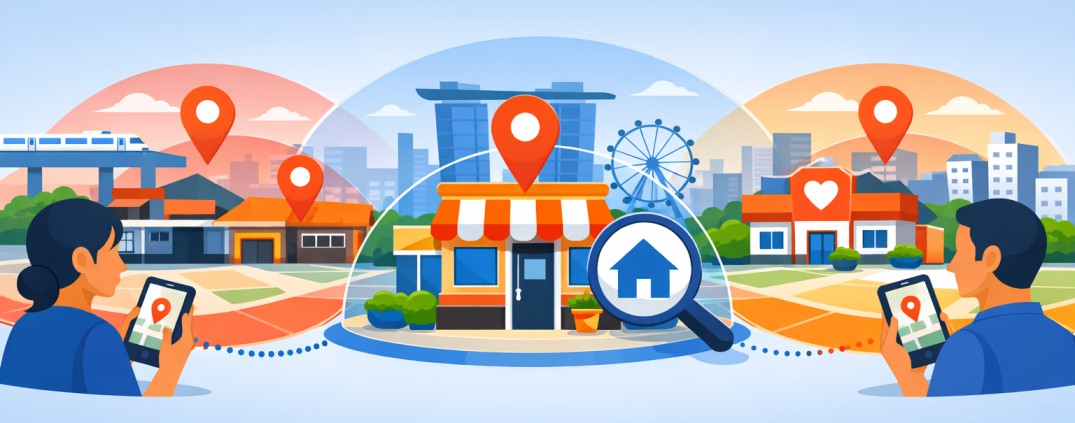
Proximity ranking refers to how close a business is to the user performing the search.Google uses location data to prioritise businesses within convenient geographic range.
In Singapore, proximity signals can be highly competitive due to dense urban districts and concentrated commercial areas.
How Proximity Affects Visibility
Two users searching for the same service may see different local results depending on their physical location. For example:
| Search Location | Possible Local Result Difference |
| Jurong East | Businesses within western Singapore may appear |
| Tampines | Eastern region businesses may receive priority |
| Orchard | Central businesses may dominate visibility |
This makes hyper-local relevance important for service businesses targeting specific regions.
Service Area Optimisation
Businesses operating across multiple districts may optimise for broader local visibility using service area configurations and localised content. Common service area strategies include:
- Creating location-specific landing pages
- Mentioning serviced districts naturally
- Including local references where relevant
- Building citations tied to service regions
Businesses should avoid creating duplicate location pages with minimal content variation.
Localised Content for Local SEO
Localised content helps search engines understand regional relevance and service coverage. In Singapore, localised content often includes references to:
- Districts
- Commercial areas
- Housing estates
- MRT stations
- Industry clusters
The goal is to provide contextual relevance rather than artificially inserting location keywords.
Types of Localised Content
Different content formats support local SEO in different ways, for example:
| Content Type | Local SEO Purpose |
| Service pages | Target location-based services |
| Area pages | Improve regional relevance |
| Case studies | Demonstrate local experience |
| FAQs | Address local search intent |
| Guides | Support informational searches |
Content should answer practical user questions while remaining factually structured for AI interpretation.
Local Intent and Search Behaviour
Local intent refers to searches where users expect geographically relevant results. Common local intent patterns include:
- “near me”
- “open now”
- “best in”
- “closest”
- “within [location]”
AI-driven search engines increasingly interpret intent contextually rather than relying only on exact keyword matches. Businesses should therefore optimise content semantically and contextually.
AI-Driven Local Search Behaviour in 2026

AI-generated search experiences are changing how users discover local businesses. Search engines increasingly generate summarised recommendations using:
- Business reviews
- Structured business data
- Local relevance signals
- Website content
- External mentions
This means local SEO in Singapore now overlaps with GEO, AEO, and AI search optimisation.
AI Search Systems and Business Visibility
AI systems may extract business information directly from structured and trusted online sources. Businesses with consistent and well-structured information are more likely to appear in:
- AI-generated summaries
- Conversational search answers
- Voice search responses
- Recommendation interfaces
Clear factual content improves machine interpretation and extraction.
Conversational Search Queries
Users increasingly search using conversational phrases rather than short keywords. Examples include:
- “Which dental clinic near Novena is open late?”
- “What is the best co-working space near Raffles Place?”
- “Where can I find affordable physiotherapy in Singapore?”
Content that answers these queries naturally may perform better within AI-driven environments.
Mobile Experience and Local SEO
Mobile usability strongly affects local search performance because many local searches happen on smartphones. Google evaluates mobile experience factors such as:
- Page loading speed
- Mobile responsiveness
- Navigation usability
- Readability
- Interaction accessibility
Poor mobile experience may reduce user engagement and increase bounce rates.
Click-to-Action Optimisation
Local users often take immediate actions after searching. Common actions include:
- Calling a business
- Requesting directions
- Booking appointments
- Viewing operating hours
- Checking reviews
Businesses should ensure these actions remain easily accessible on mobile devices.
Local Link Signals and Community Relevance

Local backlinks and community mentions may strengthen geographic relevance signals. Search engines use these references to understand whether a business has local authority and recognition.
Types of Local Link Opportunities
Relevant local links may come from:
- Community organisations
- Industry associations
- Local media publications
- Event sponsorships
- Educational partnerships
The quality and contextual relevance of links generally matter more than quantity.
Brand Mentions and Entity Signals
Search engines increasingly evaluate entity recognition rather than relying solely on traditional backlinks. Business mentions across trusted websites may help reinforce:
- Business legitimacy
- Industry association
- Geographic relevance
- Brand recognition
Entity-based optimisation also supports AI search visibility.
Common Local SEO Mistakes
Many businesses reduce their local visibility through inconsistent optimisation practices. Common mistakes include:
Mistake | Potential Impact |
Duplicate business listings | Confuses search engines |
Inconsistent contact details | Weakens trust signals |
Fake reviews | Violates platform policies |
Thin location pages | Reduces content quality |
Neglecting mobile usability | Hurts user experience |
Correcting foundational issues often improves long-term local SEO stability.
Measuring Local SEO Performance
Local SEO performance should be evaluated using visibility, engagement, and conversion-related metrics. Useful performance indicators include:
- Google Business Profile interactions
- Direction requests
- Phone calls
- Website clicks
- Local keyword rankings
- Review growth
- Local traffic trends
Businesses should evaluate trends over time rather than relying on short-term fluctuations.
Google Business Profile Insights
Google Business Profile provides useful engagement data including:
- Search visibility
- Discovery searches
- Direction requests
- Call activity
- Website visits
These insights help businesses understand local user behaviour patterns.
Local Search Visibility Tracking
Local rankings may vary depending on geographic location and device type. Businesses should monitor:
- District-specific rankings
- Mobile search visibility
- Google Maps performance
- Competitor positioning
- Review growth patterns
Local SEO tracking requires ongoing observation because search results change dynamically.
Frequently Asked Questions
Local SEO in Singapore refers to optimising a business’s online presence so it appears in geographically relevant search results. It focuses on improving visibility in Google Maps, local search listings, and location-based searches performed by users within Singapore.
Google Business Profile helps Google understand a business’s location, services, and relevance to local searches. It also influences visibility within Google’s Local Map Pack and supports customer actions such as calls, direction requests, and bookings.
Reviews contribute to business prominence and trust signals. Search engines analyse review quantity, recency, sentiment, and engagement to help determine local visibility and user relevance.
No. Service-area businesses, professional service providers, and businesses operating across multiple districts can also benefit from local SEO. Geographic relevance still influences search visibility even without a walk-in storefront.
AI-driven search systems increasingly generate summaries and recommendations based on structured business data, reviews, content quality, and local relevance. Businesses with clear and consistent information are more likely to appear in AI-generated answers.
Local SEO timelines vary depending on competition, existing authority, business reputation, and optimisation quality. Improvements may gradually appear over several months as search engines process new signals and engagement patterns.
Building Sustainable Local Search Visibility
Local SEO in Singapore continues to evolve alongside AI-driven search experiences, mobile-first behaviour, and increasingly competitive local search environments. Businesses that maintain accurate business information, strong review profiles, structured local content, and consistent geographic relevance are generally better positioned for long-term visibility.
Google’s Local Map Pack visibility depends on multiple interconnected factors including relevance, proximity, prominence, and overall user trust. As search engines become more context-aware, businesses must focus on clarity, consistency, and useful information rather than isolated keyword tactics.
For businesses looking to improve local search visibility, Google Maps performance, and location-based search relevance may consider partnering with an experienced digital marketing agency such as W360 Asia. Get a quote for further evaluation and planning.