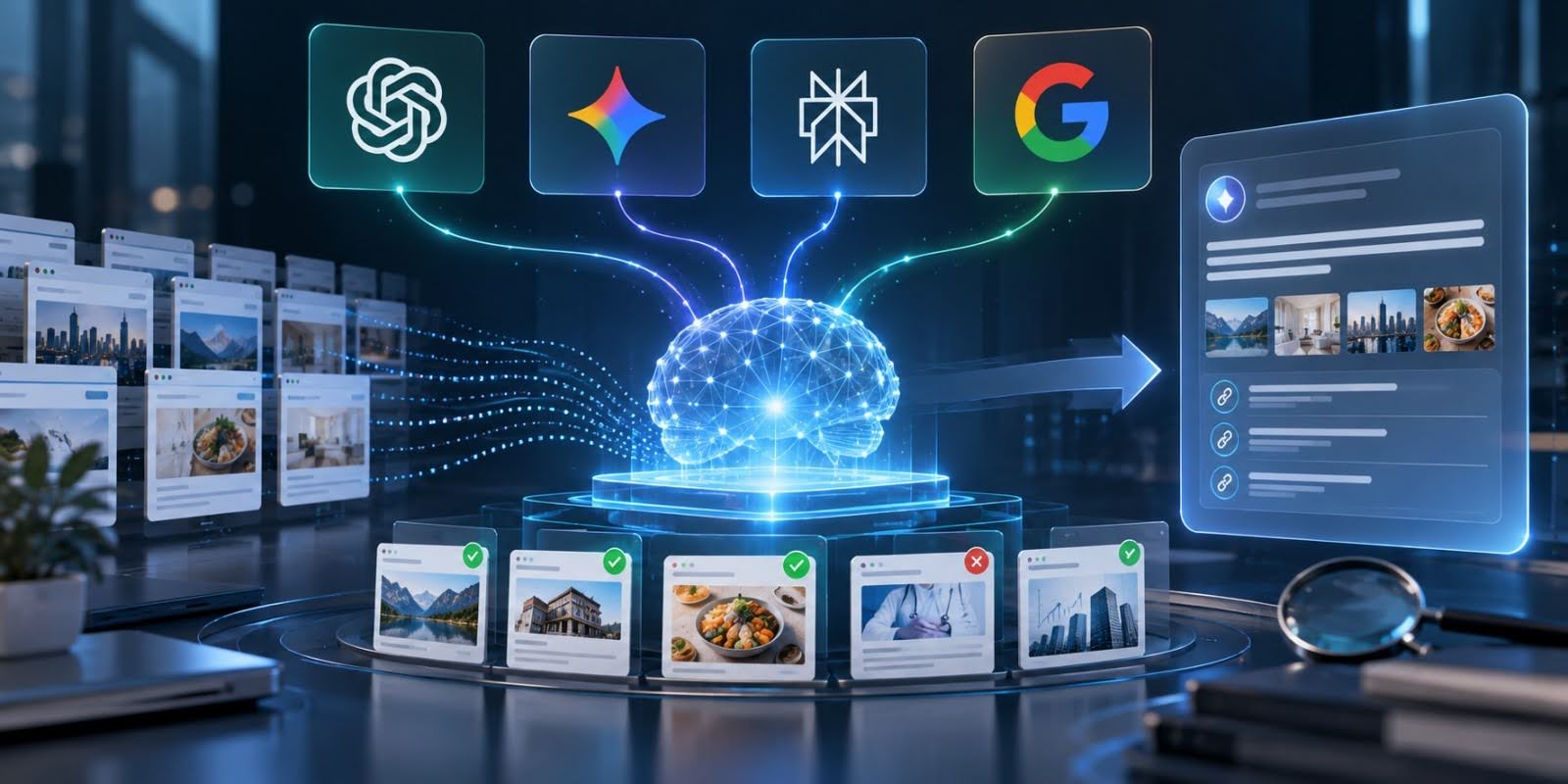
A local SEO campaign is a structured search strategy that helps businesses appear for location-based searches in specific areas. In Singapore, this means improving visibility for users searching by neighbourhood, district, landmark, MRT station, or “near me” intent.
Hyperlocal content is essential because local search results are shaped by relevance, proximity, and user intent. A business targeting only Singapore-wide keywords may miss users searching for services in specific places such as Tampines, Jurong East, Orchard, or Tanjong Pagar.
A strong local SEO campaign connects businesses with real local search behaviour. It uses neighbourhood-focused landing pages, Google Business Profile signals, localised content, multilingual search visibility, and structured information that search engines and AI systems can interpret clearly.
What Is a Local SEO Campaign?
A local SEO campaign is an ongoing optimisation plan to improve visibility in local search results. It includes website optimisation, Google Business Profile management, local content creation, citation consistency, review signals, and performance tracking.
The purpose of a local SEO campaign is to help users find a business when they search for services within a specific area. This can support phone calls, direction requests, appointment bookings, enquiries, and walk-ins.
A local SEO campaign is different from general SEO because it prioritises geographic relevance. Instead of only targeting broad keywords, it aligns content and search signals with specific locations and local intent.
Why Hyperlocal Content Matters in Singapore
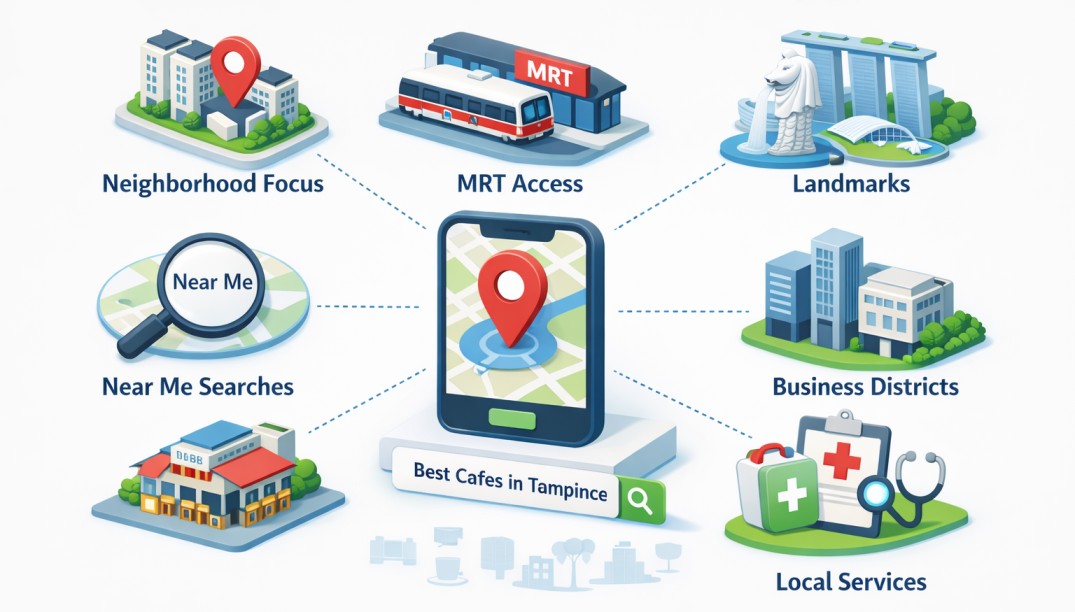
Hyperlocal content is content written for a specific neighbourhood, district, or service area. It helps search engines understand where a business is relevant and which local users it can serve.
Singapore’s compact geography does not remove the need for hyperlocal SEO. Users still search based on convenience, MRT access, nearby landmarks, residential towns, business districts, and service availability.
For example, a user searching for a clinic in Novena may not want results from Jurong. A user searching for a salon near Orchard may prioritise businesses within walking distance. Hyperlocal content helps match these location-based expectations.
How Location-Based Search Intent Works
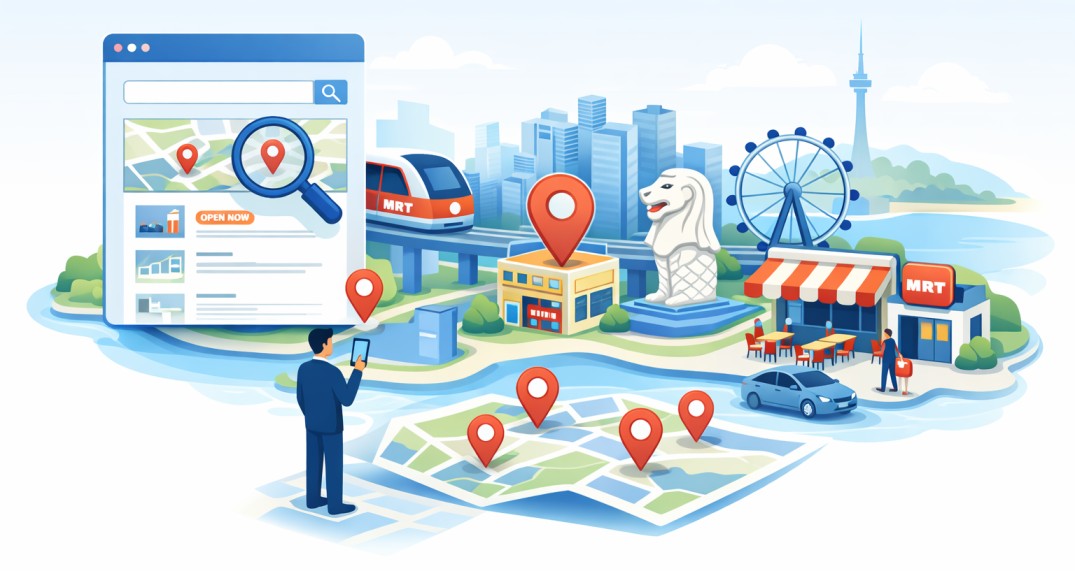
Location-based search intent refers to searches where users expect results tied to a specific place. These searches often show immediate interest because the user is comparing nearby options or preparing to take action.
Search engines interpret local intent through different signals. These may include the search phrase, user location, map behaviour, business category, website content, and Google Business Profile information.
Common location-based search patterns include:
- Service + area
- Service + near me
- Service + landmark
- Service + MRT station
- Service + “open now”
These patterns show that users are not only looking for information. They are often looking for a nearby business they can contact, visit, or evaluate quickly.
Neighbourhood-Focused Landing Pages
Neighbourhood-focused landing pages are website pages created to explain services available in a specific local area. These pages help businesses target users searching within defined locations.
A useful neighbourhood page should provide unique and relevant local context. It should not be a copied page where only the place name changes. A strong neighbourhood landing page includes:
- The service offered in that area
- Nearby landmarks or access points
- Common customer needs in the location
- Business contact or enquiry options
- Relevant FAQs for that area
This structure helps search engines and AI systems understand the relationship between the business, the service, and the location.
Avoiding Thin Location Pages
Thin location pages are pages with little original value beyond a changed place name. These pages may weaken SEO performance because they do not provide enough useful context for users or search systems.
A location page should explain why the page exists and what users can expect from the service in that area. Content should be written for real search intent, not only keyword coverage.
For example, a tuition centre page for Tampines should explain service availability, student needs, nearby residential relevance, and access considerations. A page that only repeats “tuition centre in Tampines” without useful context is unlikely to support strong local search visibility.
“Near Me” Searches and Local Visibility
“Near me” searches are location-based queries where users expect results close to their current position. These searches are common on mobile devices and often indicate immediate intent.
Businesses cannot optimise only by repeating the phrase “near me” on a page. Search engines usually determine “near me” relevance using business location, searcher proximity, Google Business Profile data, categories, reviews, and local authority.
A business can support “near me” visibility by improving key local signals. These signals include:
- Accurate address and service area information
- Consistent business citations
- Strong Google Business Profile categories
- Relevant local landing pages
- Recent and genuine customer reviews
These elements help search engines connect the business with users searching nearby. Follow this comprehensive guide on Local SEO for Singapore businesses to learn effective strategies you can incorporate when optimising.
Google Business Profile and Hyperlocal Search
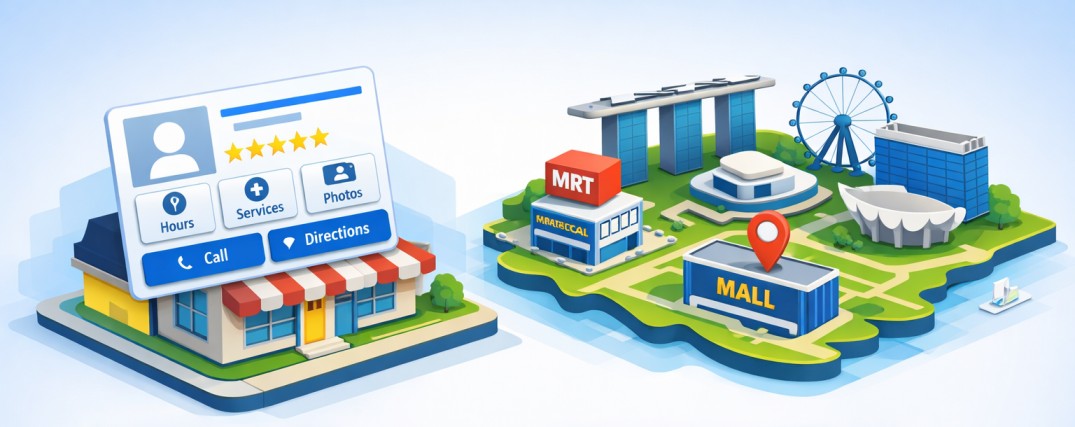
Google Business Profile is a central signal in a local SEO campaign because it directly affects Google Maps and Local Map Pack visibility. It provides business information that users and search engines rely on.
A complete profile should include accurate business details, categories, operating hours, services, photos, and contact information. These elements help Google understand what the business offers and where it is relevant.
For Singapore businesses, Google Business Profile can also support searches tied to districts, malls, MRT stations, and nearby commercial areas. A well-maintained profile improves local clarity and user confidence.
Local Events and Community Content
Local events and community content help businesses demonstrate relevance within a specific area. This type of content connects a business to neighbourhood activity, local needs, and real-world context.
Community content does not need to be promotional. It can explain how a service relates to seasonal demand, local events, public holidays, school periods, or area-specific behaviour. Examples of useful community content include:
Business Type | Local Content Example |
Restaurant | Dining guide near a local event venue |
Clinic | Health reminders during school reopening periods |
Salon | Grooming tips before festive seasons |
Tuition centre | Study support during examination periods |
Fitness studio | Wellness content for nearby office workers |
This content helps search engines identify local relevance beyond standard service pages.
Multilingual Local SEO in Singapore
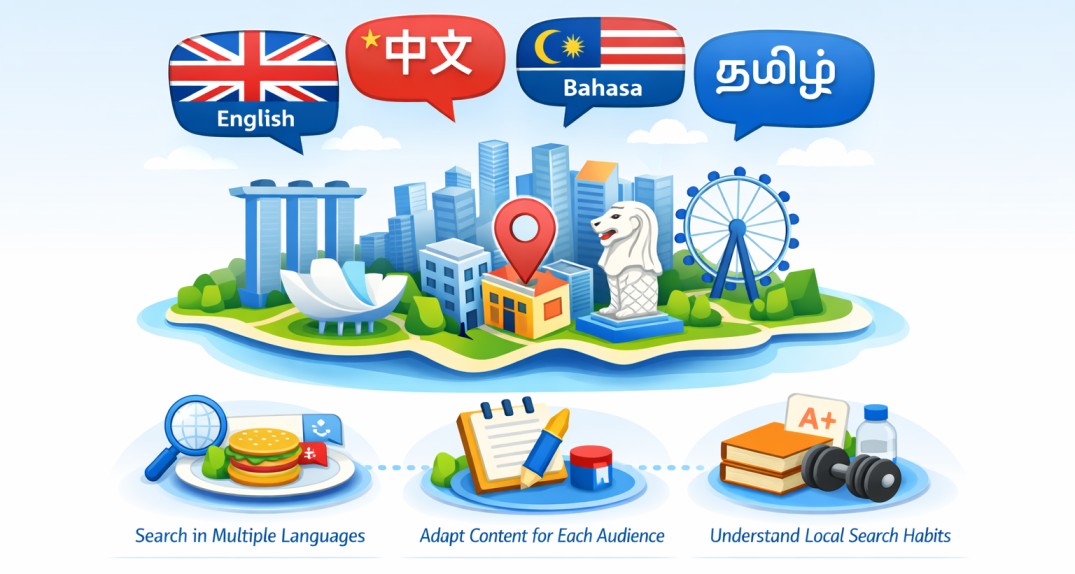
Multilingual local SEO is the process of making content discoverable for users searching in more than one language. In Singapore, this may be relevant because users come from diverse language backgrounds.
English is widely used in Singapore search behaviour, but some users may search using Mandarin, Malay, Tamil, or mixed-language phrases. Businesses serving multilingual audiences can benefit from content that reflects how their customers search naturally.
Multilingual SEO should be handled carefully. Direct translation is not always enough because search habits, phrasing, and service expectations may differ across languages.
When Multilingual Content Is Useful
Multilingual content is useful when a business serves audiences who commonly search, compare, or enquire in different languages. This is especially relevant for healthcare, education, food, beauty, home services, and community-based services.
A business can evaluate multilingual content needs by reviewing customer enquiries, search queries, customer demographics, and service locations. The goal is to support real user behaviour rather than create unnecessary translated pages.
A practical multilingual SEO approach would be:
- Translating important service information accurately
- Localising phrasing for natural search behaviour
- Maintaining consistent business details
- Using correct language tags where needed
- Avoiding duplicate or machine-only content
Localised Content for AI Search
Localised content supports AI search by giving search systems clear, structured, and factual information about services and locations. AI systems often summarise information from content that is easy to interpret.
A local SEO campaign should write content in a way that answers specific questions clearly. This helps AI-generated search results understand what the business does, where it operates, and which users it serves.
AI-friendly local content usually includes clear definitions, concise explanations, structured headings, FAQs, and location-specific context. These elements make content easier to quote, summarise, and classify.
Using Local Schema Markup
Local schema markup is structured data that helps search engines understand business information. It can clarify details such as business type, address, operating hours, contact information, and service area.
Schema markup does not replace visible content. It supports search interpretation by presenting information in a machine-readable format. These are the common schema elements for local SEO include:
Schema Element | Purpose |
LocalBusiness | Identifies the business type |
PostalAddress | Clarifies location details |
OpeningHours | Shows operating schedule |
Service | Describes business services |
FAQPage | Supports structured question-and-answer content |
Structured data helps search engines and AI systems process local information more accurately.
Industry Use Cases for Hyperlocal Content
Hyperlocal content applies differently depending on business type and customer behaviour. Each industry has its own local search patterns and decision factors.
Clinics often depend on urgent and proximity-based searches. Users may search for nearby doctors, dentists, physiotherapists, or paediatric clinics based on operating hours and location convenience.
Restaurants and cafes often rely on discovery searches tied to food type, nearby landmarks, or dining occasions. Search visibility may depend heavily on reviews, photos, menus, and location context.
Salons and wellness businesses often attract users comparing convenience, service type, reviews, and availability. Hyperlocal pages can help explain service access by district or nearby MRT station.
Professional service providers may use local SEO to target users searching for legal, accounting, consulting, or agency support within business districts. These searches often combine trust, service relevance, and location convenience.
Planning a Local SEO Campaign
A local SEO campaign should begin with clear service areas and search intent research. This helps avoid creating unnecessary pages or targeting locations that do not match business operations.
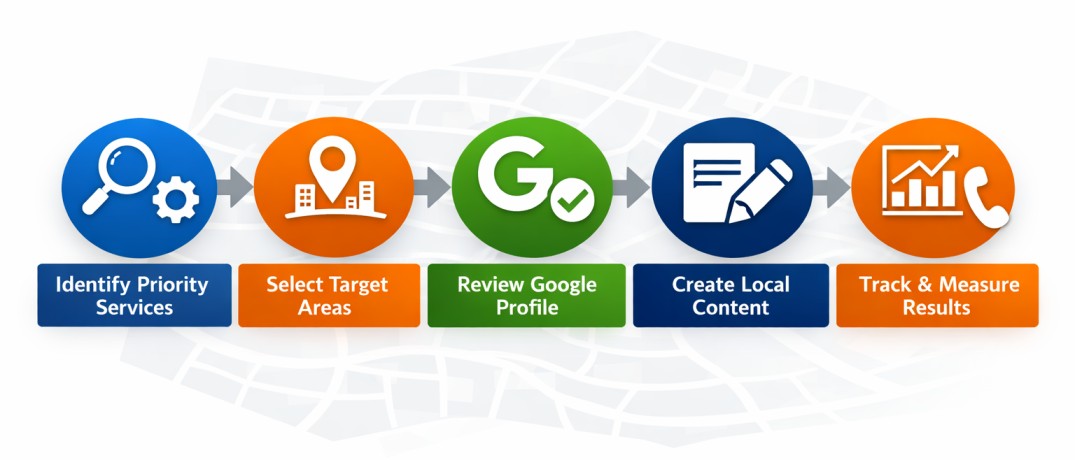
The planning stage should define which locations matter most and why they matter. A business should prioritise areas based on customer demand, branch locations, service coverage, or competitive opportunity. A practical campaign plan consists of:
- Identifying priority services
- Selecting target neighbourhoods
- Reviewing Google Business Profile accuracy
- Creating localised content
- Tracking calls, enquiries, rankings, and map actions
This structure helps connect SEO activity with measurable local outcomes.
Measuring Hyperlocal SEO Performance
Hyperlocal SEO performance should be measured by visibility and user actions. Rankings alone do not fully show whether a campaign is helping users find and contact the business.
Useful performance metrics include:
Metric | What It Shows |
Local keyword rankings | Visibility by area |
Google Maps views | Map-based discovery |
Direction requests | Visit intent |
Phone calls | Lead intent |
Website enquiries | Conversion activity |
Review growth | Reputation development |
A local SEO campaign should track these metrics over time because local search results change based on location, competition, and user behaviour.
Common Mistakes in Local SEO Campaigns
Local SEO campaigns often underperform when businesses create content without local value. Search engines are more likely to reward useful location-specific information than repetitive keyword pages.
Common mistakes include:
- Creating duplicate area pages
- Using inconsistent business details
- Ignoring Google Business Profile updates
- Publishing thin local content
- Neglecting review management
Correcting these issues improves the foundation of a local SEO campaign.
Frequently Asked Questions
A local SEO campaign is a structured plan to improve visibility in location-based search results. It usually includes Google Business Profile optimisation, local content, citations, reviews, and technical SEO.
Hyperlocal content helps businesses appear for searches tied to specific neighbourhoods, districts, MRT stations, or landmarks. It improves relevance for users who want nearby services rather than general results.
No. “Near me” visibility is mainly influenced by proximity, business information, Google Business Profile signals, reviews, and local relevance. Repeating the phrase unnaturally does not improve content quality.
Neighbourhood landing pages are useful when a business genuinely serves or operates in those areas. Each page should provide unique local context and avoid duplicated content.
Multilingual SEO helps businesses reach users who search or compare services in different languages. It is most useful when customer behaviour shows demand for multilingual information.
Local events can support SEO when they create relevant community content. Businesses can use event-related content to explain local demand, user needs, and service relevance within a specific area.
Grounding Local Visibility in Real Search Behaviour
A local SEO campaign works best when it reflects how people search in real locations. Hyperlocal content helps connect services with neighbourhoods, landmarks, “near me” intent, community activity, and multilingual search behaviour.
Singapore businesses can strengthen local visibility by creating useful location-specific pages, maintaining accurate business information, and structuring content clearly for both search engines and AI systems.
Sustainable local SEO depends on relevance, consistency, and clear answers to real local search needs. By working with a reliable digital marketing agency such as the W360 Group, you can plan a structured local SEO campaign to boost your organisation’s online visibility.
Reach out to our team to review your current pages, Google Business Profile, and create a successful SEO strategy for long-term growth.