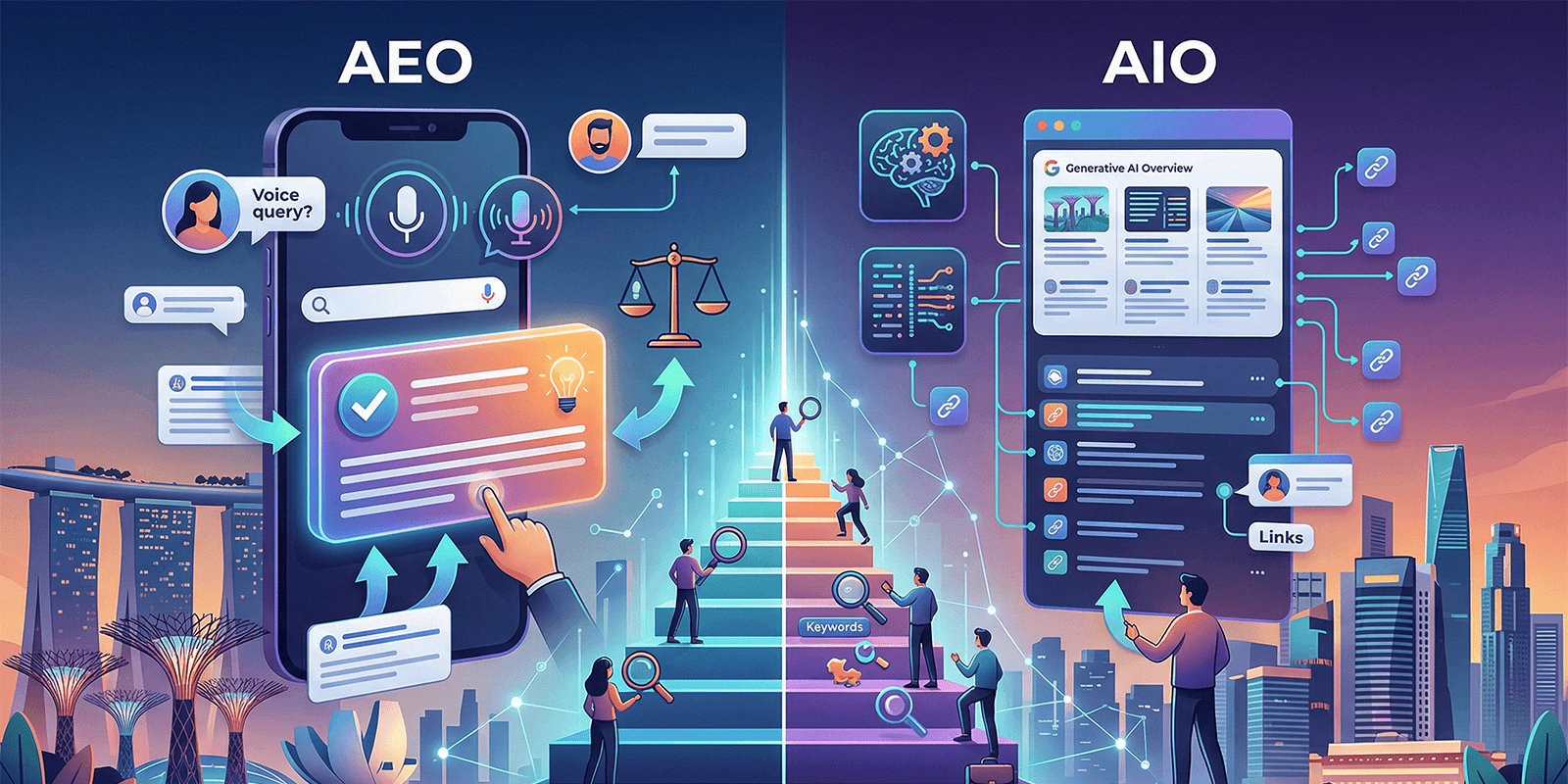
Search Engine Optimisation (SEO) is no longer just about keywords and backlinks. The rise of Artificial Intelligence (AI) is redefining how brands are found online, how users interact with content, and how marketers must optimise for visibility across both search engines and AI Answer Engines.
Today’s SEO blends traditional strategies with Generative Engine Optimisation (GEO), the practice of ensuring content is discoverable and cited by generative AI systems such as Google’s Search Generative Experience, ChatGPT-powered search, and other AI discovery platforms. Learn why understanding this shift is crucial for Singapore businesses competing in digital channels where user behaviour and search technology are rapidly evolving.
From Classic SEO to AI-Enhanced Search
Traditional SEO focused on manual keyword research, link-building, and on-page optimisation. These tasks involved a lot of manual effort and intuition. Today, AI changes the game by automating data-heavy work and enabling deeper analysis of user intent, context, and content performance.
Search engines like Google and AI-powered discovery tools now prioritise relevance over keyword frequency. They use machine learning to understand what users really mean when they search, not just the literal words typed in. This means Singapore brands must create content that answers real user questions and not just repeat target keywords.
The Role of AI in Smarter SEO Workflows
AI-powered tools have transformed the way marketers optimise websites:
- Automated Site Audits: AI platforms can scan your Singapore business site and pinpoint issues like slow page speed, crawl errors, or duplicate content before they hit rankings.
- Semantic Keyword Clusters: Instead of targeting isolated keywords, AI groups related terms based on context and intent which is crucial for long-tail searches like “best hawker centres in Singapore for laksa at affordable prices”.
- Meta & Schema Automation: Generative tools can draft optimised titles, meta descriptions, and structured data snippets that help both traditional search engines and AI models understand your pages.
These capabilities free your team from repetitive tasks and support data-driven decision-making.
AI-Generated Content: Scale with Quality
Generative AI allows marketers to create content at scale, from blog posts to product descriptions and dynamic FAQs. However, high-quality content always needs a human touch. Search engines still reward Experience, Expertise, Authoritativeness, and Trustworthiness (E-E-A-T), especially for topics like finance, healthcare, and education where Singapore users trust credible sources first.
For example, an AI draft on “Singapore SME digital growth strategies” should be reviewed by a local expert to ensure accuracy and cultural relevance before publishing.
Key Trends Shaping Generative Engine Optimisation
1. Conversational & Voice Search
People increasingly use natural language queries, especially on mobile and voice assistants like Google Assistant. Optimising for conversational search and longer, user-intent phrases helps you capture traffic from both traditional search and AI answer engines.2. Real-Time Personalisation
AI tools can personalise search experiences based on user behaviour, location, and preferences, meaning Singapore businesses should craft content tailored for diverse local segments (e.g., travellers, residents, expats).3. Predictive SEO Planning
AI can forecast trending topics and shifts in user interest, enabling you to plan content calendars that stay ahead of competitors. This is useful in fast-moving sectors like tech, e-commerce, and hospitality in Singapore.Examples: Application of AI + GEO
Here are a few ways Singapore businesses can apply AI SEO and GEO:- A food delivery platform using AI analytics to find rising search queries like “best late-night supper delivery Singapore” and creates optimised guides to capture that demand.
- An eco-tourism startup leveraging GPT tools to generate structured travel itineraries for Singapore’s nature parks, complete with FAQ sections targeting voice search.
- A local retailer using automated competitor monitoring tools to adjust product content and schema markup weekly, keeping ahead in ecommerce search rankings.
FAQ
GEO ensures your content is discoverable, useful, and cited by AI-powered search tools and answer engines (like Google SGE or AI chat systems), beyond traditional search result rankings. It focuses on how AI models interpret and present your content.
AI enhances SEO by automating keyword research, generating semantic content insights, and improving technical audits. It also changes how search engines prioritise content, emphasising context, user intent, and quality.
No. AI is a powerful assistant, but human expertise ensures relevance, quality, accuracy, and cultural nuance, which search engines and users both value.
With widespread mobile and voice assistant use, optimising for conversational, long-tail queries helps Singapore brands capture traffic from both spoken queries and AI answer engines.
Use structured data, FAQs that mirror natural language questions, and content that directly answers common user queries, making it easier for AI models to cite your pages.
Embrace the AI-SEO Landscape in Singapore with W360 Asia
AI isn’t replacing SEO, it’s elevating it. By combining data-driven AI tools with human insight and creativity, you can improve both traditional rankings and visibility in AI-driven discovery systems. This modern approach positions your brand to attract more organic traffic, engage users meaningfully, and stay competitive in an increasingly intelligent digital search landscape.
If you are seeking to invest in AI-powered SEO and GEO strategies contact W360 to discuss how you can boost your brand and reach.
Latest Posts