How AI is changing SEO can be seen most clearly in the growing difference between ranking in traditional search results and being cited in AI-generated answers. A webpage may rank on Google's first page yet receive little or no visibility in ChatGPT, Gemini, Perplexity or Google AI Overviews, while another source may be cited even when it is not the highest-ranking organic result.
Traditional SEO and AI search visibility are therefore related but distinct. Google rankings measure where webpages appear in conventional search results, while AI citations measure whether a generative system uses or references a webpage as a source for an answer.
This distinction matters for Singapore businesses because AI-powered discovery is increasingly becoming part of the search journey. A business that measures only rankings may miss situations where competitors are repeatedly mentioned or cited by generative engines.
The purpose of this study framework is to compare Google organic rankings with AI citation visibility across multiple platforms. It does not assume that ranking on page one directly causes AI citations. Instead, it examines where the two visibility systems overlap, where they diverge, and what this means for AI SEO strategies.
Executive Summary
Google rankings still matter, but they should no longer be treated as the only measure of search visibility. AI systems can retrieve, summarise and cite information in ways that do not mirror the exact order of a traditional search engine results page.
Google's current guidance confirms that conventional SEO remains relevant to its generative search features. Google states that AI Overviews and AI Mode are rooted in its core Search ranking and quality systems, while technologies such as retrieval-augmented generation and query fan-out can retrieve multiple relevant pages to construct an answer.
Independent research also suggests that the relationship between rankings and AI citations is meaningful but not simple. A 2026 cross-platform empirical study examining 730 AI citations across 75 commercial queries and 1,006 unique webpages found that organic rank position remained an important variable when evaluating AI citation probability, while structured data alone did not independently predict citations.
At the same time, broader AI visibility research indicates that traditional search strength does not automatically produce equivalent visibility in generative platforms. The practical conclusion is that traditional SEO remains foundational, but businesses need additional measurement around brand mentions, citation frequency, prompt coverage and cross-platform source selection.
Research Question and Hypothesis
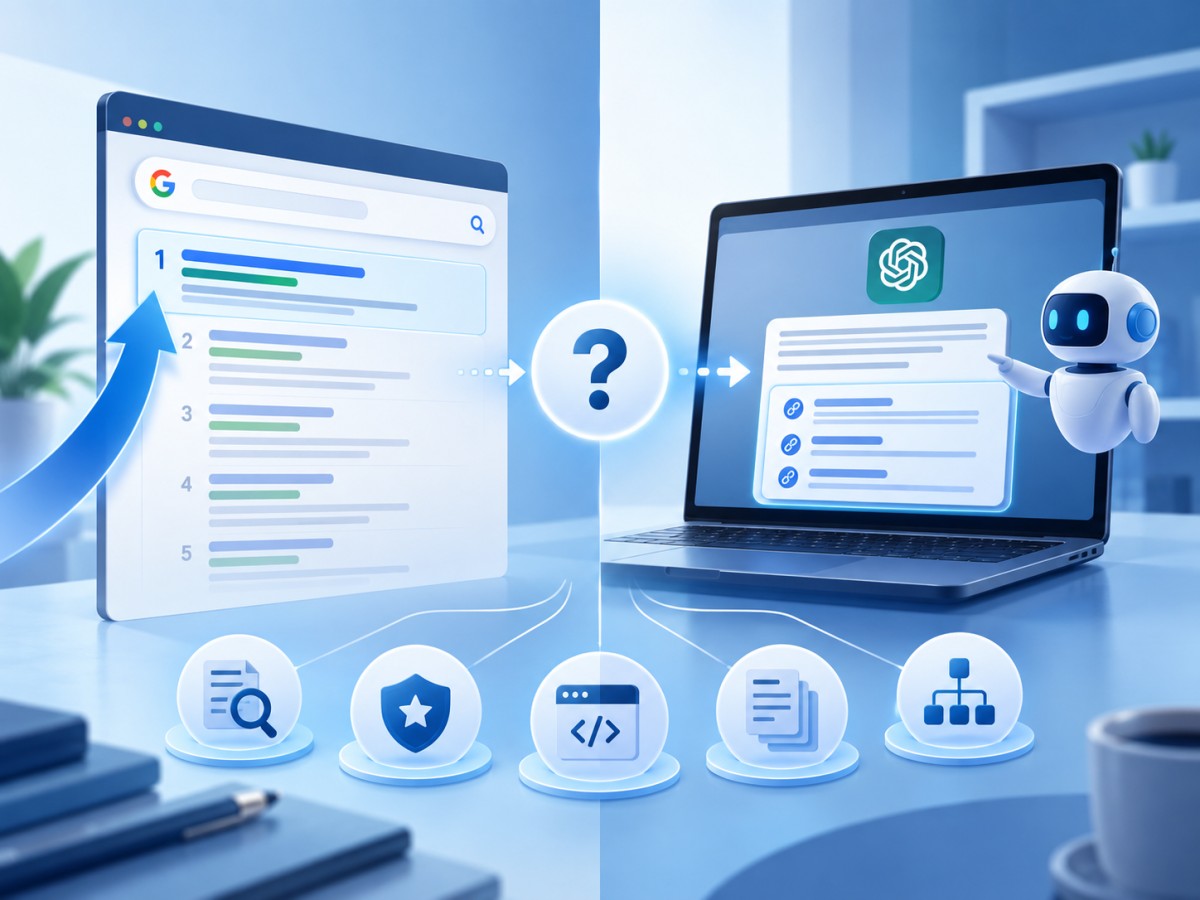
The central research question is whether webpages ranking on Google's first page are more likely to appear as sources in AI-generated answers.
The working hypothesis is that stronger Google visibility may be associated with stronger AI citation visibility because well-ranking pages often share several characteristics that are also useful for generative search. These can include relevance, authority, technical accessibility, content depth and strong information architecture.
However, correlation should not be confused with direct causation.
A page can rank highly because it satisfies Google's organic ranking systems, while an AI platform may select another source because it contains information better suited to a specific generated answer. AI systems can also retrieve multiple pages, synthesise information and surface sources that do not correspond exactly with the traditional top ten.
The study therefore evaluates whether page-one ranking provides an advantage without treating it as a guaranteed path to AI citation.
Study Methodology
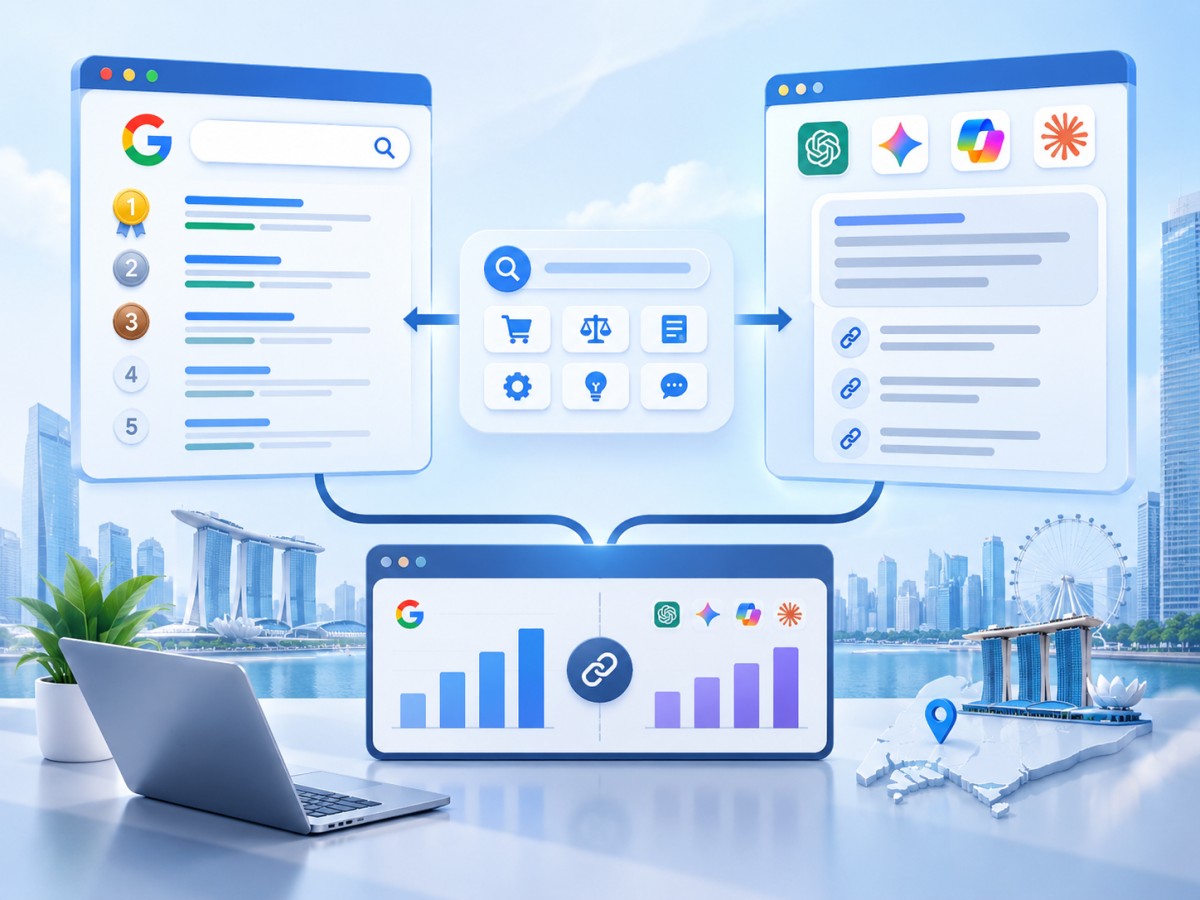
A ranking-versus-citation study requires two separate datasets collected for the same or closely matched queries. One dataset records Google organic positions, while the other records citations from generative search platforms.
The comparison should use consistent commercial and informational queries relevant to Singapore businesses.
For each query, the dataset should record:
- Google organic positions.
- ChatGPT citations.
- Gemini citations.
- Perplexity citations.
- Google AI Overview sources.
- Brand mentions where no direct citation appears.
Each URL can then be assigned to a ranking group and compared with citation visibility across platforms.
A useful classification model is shown below.
| Ranking Group | Definition |
|---|---|
| Top 3 | Organic positions 1–3 |
| Positions 4–10 | Remaining first-page results |
| Outside Top 10 | Relevant pages not ranking on page one |
| AI-Cited Only | Pages cited by AI but not prominent organically |
| Dual Visibility | Pages appearing in both Google results and AI citations |
The objective is not to prove a ranking formula. It is to identify observable relationships between conventional SEO and generative source selection.
Google Search Dataset
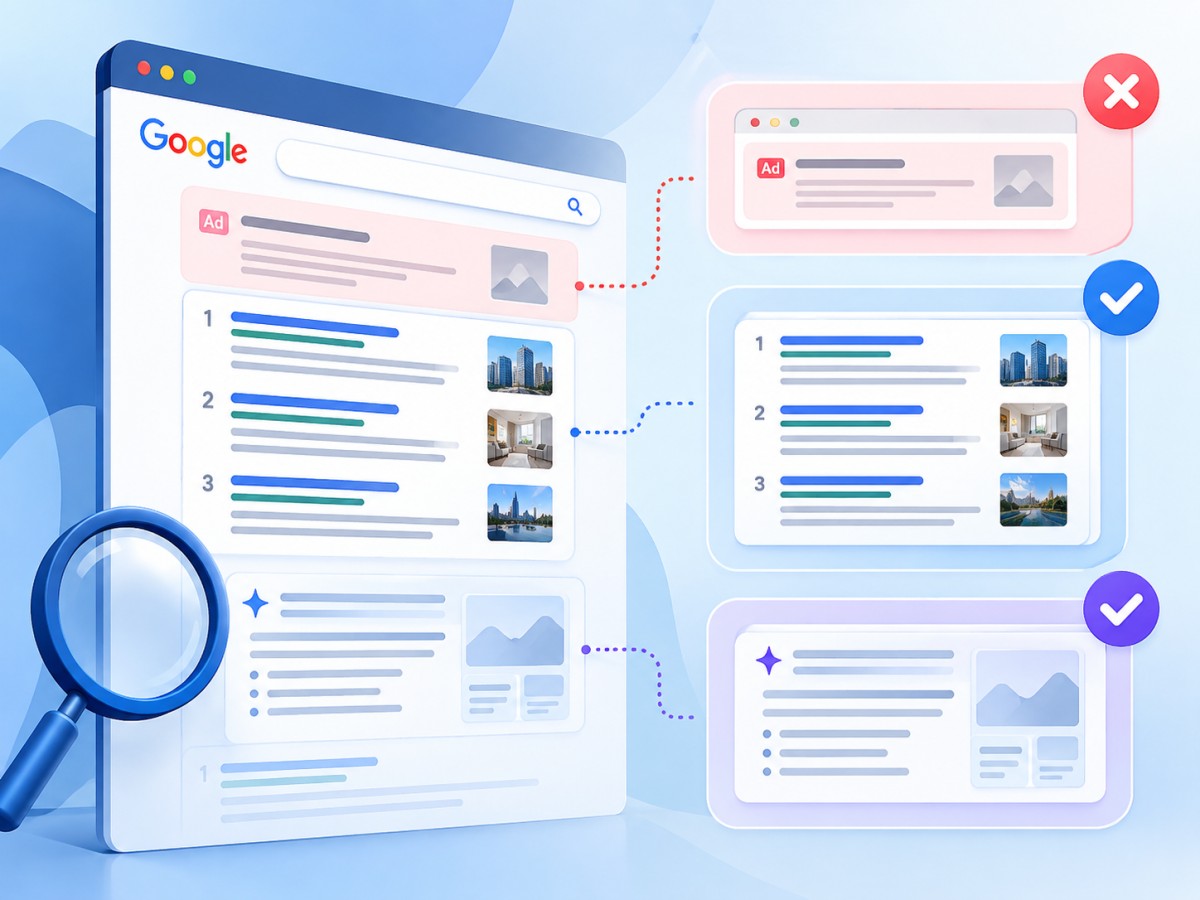
The Google Search dataset should represent the organic visibility baseline for each query. It should exclude paid results and clearly distinguish conventional organic listings from AI-generated features.
For Singapore-focused queries, the search environment should remain as consistent as possible in terms of location, language and device assumptions.
The ranking dataset should record the exact URL rather than only the domain. A domain can rank with one page while an AI system cites another page from the same website.
This distinction matters because page-level relevance can be more useful than domain-level visibility when analysing source selection.
For example, a service page may rank organically for a commercial term, while an AI platform may cite a supporting research article from the same domain because the generated response needs evidence rather than service information.
AI Citation Dataset
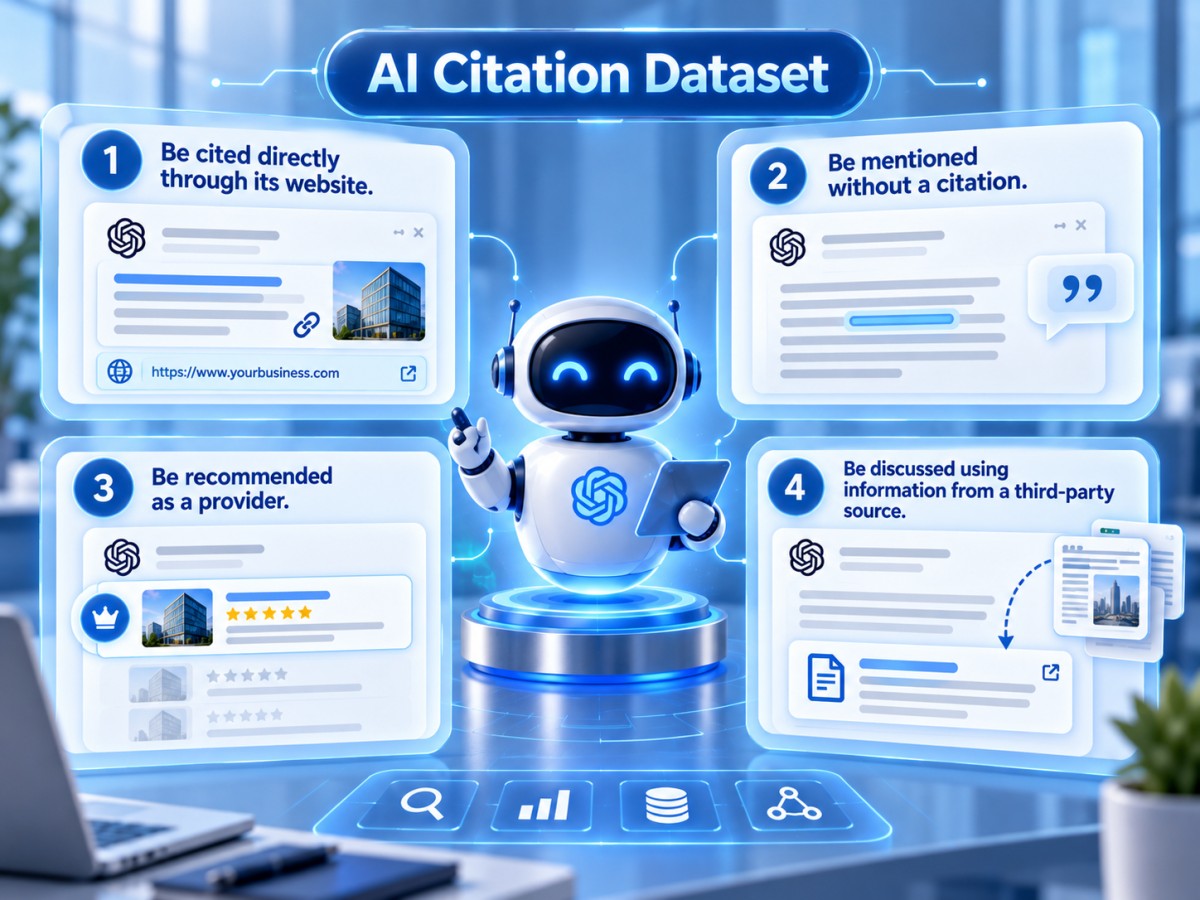
The AI citation dataset measures whether a source is explicitly referenced in an AI-generated answer. Brand mentions that appear without a source link should be recorded separately.
This distinction is important because generative platforms can expose visibility in several ways.
A business can:
- Be cited directly through its website.
- Be mentioned without a citation.
- Be recommended as a provider.
- Be discussed using information from a third-party source.
Each outcome reflects a different type of visibility.
Citation data should also be platform-specific. ChatGPT, Gemini, Perplexity and Google AI Overviews do not necessarily retrieve or present sources in the same way, so combining them into one citation count can hide meaningful differences.
Google Top 10 vs AI Citation Comparison
The most useful first comparison is between Google's top ten organic results and the webpages cited across generative platforms.
A high level of overlap would suggest that strong traditional SEO and AI source visibility share important underlying characteristics. A low level of overlap would suggest that generative engines are frequently selecting a broader source set.
Existing research points towards a relationship but not a one-to-one match.
The 2026 SSRN study examining ChatGPT and Gemini citations found that organic ranking position remained important when evaluating citation probability, even after other variables were considered. The study also cautioned against assuming that individual technical signals such as schema independently determine citation outcomes.
This supports a practical interpretation: ranking well can improve the environment in which citation visibility becomes possible, but it does not guarantee source selection.
For Singapore businesses, this means page-one SEO remains strategically valuable while requiring additional AI visibility analysis.
Top 3 Ranking Analysis
Top-three organic positions are usually associated with strong relevance and authority for a query, making them particularly useful for comparison with AI citation behaviour.
The study should examine how often top-three pages are also cited across generative engines.
Three patterns are especially useful.
First, some pages may hold both strong organic positions and repeated AI citations. These pages may demonstrate a combination of relevance, authority and useful information.
Second, some top-ranking pages may not receive AI citations. Their content may satisfy conventional search intent but provide limited information for the specific generated response.
Third, an AI platform may cite a lower-ranking page alongside or instead of the top organic results.
The third pattern is especially important because it demonstrates why AI SEO cannot simply be reduced to “rank higher in Google”.
Positions 4–10 Analysis
Pages ranking from positions four to ten still represent strong organic visibility, but they provide a useful comparison group against the top three.
If pages in positions four to ten receive significant AI citation visibility, it would suggest that generative systems are not restricted to the most prominent organic positions.
This is consistent with Google's description of query fan-out in generative search. Google explains that AI systems may generate related queries and retrieve multiple relevant results to answer a broader question.
A page can therefore be useful to an AI-generated response even if it is not the first organic result for the user's original wording.
This creates an important opportunity for content optimisation. A resource that answers one component of a broader question can potentially become useful during AI retrieval even when it does not dominate the primary keyword ranking.
Pages Outside Google's Top 10
Pages outside Google's first page are particularly valuable for testing whether generative engines rely exclusively on top-ranking results.
If these pages receive citations, the study should examine why.
Possible characteristics worth analysing include highly specific topical relevance, original research, first-party data, specialist expertise, freshness, strong third-party references or information that is missing from more prominent organic results.
However, citations outside the top ten should not automatically be presented as evidence that rankings no longer matter.
The correct interpretation is that AI retrieval can sometimes surface sources beyond the most visible traditional results.
This creates a broader source environment rather than replacing the importance of organic visibility.
ChatGPT Citation Comparison
ChatGPT citation visibility should be compared with organic rankings on a query-by-query basis.
The analysis should identify how frequently cited ChatGPT sources also appear on Google's first page, how often they rank in the top three and how often citations come from pages outside the top ten.
Brand mentions without source attribution should be tracked separately.
This distinction matters because ChatGPT can recognise a company as relevant without selecting that company's website as the citation source.
For AI SEO optimisation, businesses should therefore evaluate both entity visibility and source visibility.
A company that is frequently mentioned but rarely cited may need a different strategy from a company that is rarely recognised at all.
Gemini Citation Comparison
Gemini should be evaluated independently because its source environment and integration with Google's ecosystem can differ from other AI platforms.
The analysis should compare Gemini-cited URLs with the corresponding Google organic results and identify whether citations tend to cluster around strongly ranking pages.
Because Google states that its generative search features rely on core Search ranking and quality systems, conventional SEO remains especially relevant when evaluating generative visibility within Google's ecosystem.
However, this does not mean that organic ranking position alone determines citation selection.
The generated answer may retrieve supporting information through related queries rather than simply reproducing the original SERP order.
Perplexity Citation Comparison
Perplexity is useful for source analysis because citations are generally prominent in its answer interface.
A comparison study can record the organic ranking position of each Perplexity-cited URL and examine whether certain page types appear even when they do not hold top Google positions.
This can help identify content that performs strongly as a source rather than merely as a ranked result.
For example, research articles, data pages or highly focused explanatory resources may contribute information that supports an answer even if a commercial landing page ranks more prominently in traditional search.
This makes Perplexity citation analysis particularly useful for identifying information assets that complement commercial pages.
Google AI Overview Comparison
Google AI Overviews provide one of the clearest environments for comparing conventional search and AI-generated visibility because both appear within the same broader search ecosystem.
Google's 2026 guidance states that AI Overviews and AI Mode remain rooted in core Search ranking and quality systems. The company also emphasises valuable, unique and non-commodity content rather than separate “AI-only” optimisation tactics.
The study should therefore compare:
- Organic ranking position.
- AI Overview source inclusion.
- Source URL.
- Page type.
- Query intent.
Google has also introduced dedicated Search Console reporting for generative AI visibility, including AI Overviews and AI Mode. As of 31 August 2026, Google said these reports had been rolled out worldwide.
This provides businesses with an additional measurement layer for evaluating generative visibility inside Google Search.
Cross-Platform Findings
Cross-platform analysis determines whether pages with strong traditional SEO performance also gain consistent visibility across several AI systems.
The most valuable pattern is not a single citation. It is repeated visibility across multiple relevant prompts and platforms.
A webpage can be classified into several visibility profiles.
| Visibility Profile | Interpretation |
|---|---|
| High Google + High AI | Strong visibility across traditional and generative search |
| High Google + Low AI | Organic strength with potential generative visibility gap |
| Low Google + High AI | Source relevance that may exceed conventional ranking visibility |
| Low Google + Low AI | Limited visibility across both environments |
These categories help businesses prioritise optimisation.
A site already ranking well but lacking AI citations may require more work around information gain, source relevance or brand authority. A site weak in both environments may need foundational SEO before advanced AI SEO initiatives.
Correlation vs Causation
Correlation means two variables occur together, while causation means one variable directly produces the other. This distinction is essential in AI SEO research.
If highly ranked Google pages are frequently cited by AI platforms, several explanations are possible.
The ranking itself could be associated with retrieval. Alternatively, both rankings and citations may result from shared characteristics such as relevance, authority, links, strong content or technical quality.
Recent schema research provides a useful example of why correlation must be handled carefully.
Ahrefs initially found that AI-cited pages were far more likely to contain JSON-LD schema than non-cited pages. However, when it tracked 1,885 pages that added schema and compared them with 4,000 controls, adding schema did not produce a meaningful citation uplift in Google AI Mode or ChatGPT.
This demonstrates why observational relationships should not automatically become optimisation rules.
Does Traditional SEO Still Matter?
Traditional SEO remains highly relevant because AI-powered search still needs discoverable, accessible and useful web content.
Google explicitly states that SEO best practices continue to apply to generative AI search. Its generative features use core Search ranking and quality systems to retrieve relevant information.
This means businesses should continue to address core SEO areas such as:
- Technical crawlability and indexability.
- Search intent alignment.
- Clear site architecture and internal linking.
- Useful, trustworthy and original content.
- Relevant authority and external references.
AI SEO should therefore be viewed as an extension of modern search optimisation rather than a replacement.
The measurement layer expands, but the foundation remains important.
How AI Is Changing SEO
How AI is changing SEO is primarily a change in how visibility is distributed and measured.
Traditional search often presents a ranked list of webpages. Generative search may instead synthesise several sources into one answer and expose only selected citations.
This changes the role of content.
A page is no longer valuable only because it ranks for a keyword. It can also become a source for definitions, comparisons, evidence, recommendations or supporting information used inside a generated response.
Search queries are also becoming more conversational.
Users can ask multi-part questions containing context, constraints and commercial intent. AI systems may break these questions into related information needs rather than matching them to one keyword.
SEO strategy must therefore pay greater attention to topics, entities, information depth and the relationships between supporting pages.
Implications for AI SEO
The main implication for AI SEO is that ranking and citation visibility should be measured separately but optimised together.
A business should first ensure that its core service pages are relevant and competitive in conventional search. Supporting content can then expand the information environment around those commercial pages.
Research, comparison resources, explanatory articles and first-party data can provide additional information that generative engines may find useful when answering broader questions.
This is particularly important for Singapore businesses operating in competitive categories.
Creating another generic page targeting the same keyword is unlikely to add meaningful topical authority. A more effective approach is to publish supporting resources that answer distinct questions while reinforcing the main commercial page through internal linking and clear entity relationships.
Combined SEO and GEO Strategy
A combined SEO and GEO strategy treats traditional rankings, AI retrieval and brand visibility as connected layers.
The first layer is technical accessibility. Search engines and retrieval systems need to access and understand the website reliably.
The second layer is intent alignment. Each URL should have a clear purpose and address a distinct user need.
The third layer is information quality. Pages should provide accurate, differentiated and useful information rather than commodity summaries.
The fourth layer is authority. Relevant backlinks, third-party mentions, expert attribution and brand recognition strengthen the wider information environment around the business.
The fifth layer is measurement. Rankings, AI citations, mentions, recommendations and conversions should be monitored separately.
This model avoids treating GEO as a collection of isolated technical tricks.
Content Optimisation for Generative Search
Content designed for generative search should prioritise clear answers, strong context and useful information.
Google's current guidance emphasises valuable, unique and non-commodity content for generative features. It also warns against creating large numbers of pages merely to target every possible query variation.
This is particularly relevant for AI SEO optimisation. A website does not need a separate article for every conversational wording. Strong pages can address clusters of related questions when the underlying intent remains the same.
Content should instead focus on information gain.
Useful forms of information gain can include original research, verified data, expert analysis, practical frameworks, documented processes and locally relevant findings.
Why Original Research Can Support AI Visibility
Original research creates source material that does not exist elsewhere in exactly the same form. This can make a research page useful both for conventional SEO and for AI-generated answers that require evidence or comparison.
A Singapore business, for example, could publish verified local benchmark data rather than simply rewriting international statistics.
This approach adds information to the web rather than reproducing existing summaries. Original research also creates potential value beyond AI citations. It can support editorial references, backlinks, industry discussion and brand authority.
These benefits reinforce why evidence-led content can complement commercial pages more effectively than producing another generic service article.
Why Page Type Matters
Different page types serve different search and citation purposes.
A commercial service page is designed to explain an offering and support conversion. An informational article is designed to answer a question. A research study is designed to provide evidence. A comparison page helps users evaluate alternatives.
AI systems may retrieve these formats differently depending on the question.
A generated answer asking “What is AI SEO?” may require an explanatory resource. A question asking “Which agency provides AI SEO services in Singapore?” may require commercial or third-party sources.
This is why page architecture matters. The goal is not to make every page rank for every variation of the topic. Each page should contribute a distinct function to the wider topical ecosystem.
Measuring AI Search Visibility
AI search visibility should be measured using these complementary metrics rather than one position number. Useful metrics include:
- Brand mention rate.
- Website citation rate.
- Prompt coverage.
- Recommendation frequency.
- Citation share of voice.
- Cross-platform visibility.
Each metric answers a different question.
Brand mention rate measures recognition. Citation rate measures source attribution. Prompt coverage measures breadth. Recommendation frequency measures commercial inclusion. Together, these metrics can be compared with traditional rankings, impressions, clicks and conversions.
Google Search Console and AI Visibility
Google Search Console is becoming more useful for analysing generative search because Google has introduced dedicated reporting for visibility in generative AI features.
Google announced separate generative AI performance reports in June 2026 and stated that the feature had been rolled out to all websites worldwide by 31 August 2026.
These reports provide another way to examine impressions associated with AI Overviews, AI Mode and related generative Search experiences. However, Google Search Console cannot provide a complete picture of AI visibility across external platforms such as ChatGPT or Perplexity.
Businesses therefore need to combine Google data with independent monitoring of relevant prompts and citation behaviour.
Study Limitations
A ranking-versus-citation study has several limitations because both traditional and AI search environments change continuously. Organic rankings can vary by location, device, personalisation and time. AI-generated responses can vary between repeated prompts, accounts and model versions.
Citation interfaces also differ between platforms. ChatGPT, Gemini, Perplexity and Google AI Overviews do not necessarily expose sources using identical methods.
This makes cross-platform comparison useful but imperfect. The study should therefore be interpreted as a snapshot of observable visibility patterns rather than a permanent description of how every platform selects sources.
W360 Recommendations
W360 Group Pte Ltd's recommended approach is to treat traditional SEO and AI citation visibility as two connected measurement layers.
The first priority is to maintain strong organic fundamentals. Businesses should not reduce investment in technical SEO, intent alignment, content quality or authority simply because generative search is growing.
The second priority is to identify important AI-search prompts. These should include commercial discovery, comparisons, problem queries and recommendation-style questions relevant to the business.
The third priority is to compare visibility across Google and AI platforms. Businesses should record whether pages rank, whether brands are mentioned and whether owned or third-party sources are cited.
The fourth priority is to address gaps with differentiated content. If competitors are repeatedly cited because they provide original research, structured comparisons or detailed evidence, the response should be to create better information rather than duplicate their wording.
The final priority is commercial measurement. AI citations can be strategically useful, but they should eventually be evaluated alongside branded search, website traffic, enquiries, assisted conversions and lead quality.
Frequently Asked Questions
Does ranking on page one increase the chance of an AI citation?
Ranking on page one may be associated with stronger AI citation visibility because highly ranked pages often demonstrate relevance, authority and technical quality. However, page-one ranking does not guarantee citation.
Can a page outside Google's top 10 be cited by ChatGPT?
Yes. A page does not necessarily need to rank in Google's top ten to appear as a ChatGPT source. If this occurs, the page should be analysed for characteristics such as topical relevance, unique information, authority and suitability for the generated answer.
Is traditional SEO becoming less important because of AI search?
No. Traditional SEO remains foundational to search visibility. Google states that its generative AI search features are rooted in core Search ranking and quality systems, so SEO fundamentals continue to matter.
What is the difference between AI ranking and AI citation?
AI citation refers to a webpage being used or presented as a source in a generated answer. The concept of a fixed “AI ranking” is less straightforward because generative systems do not always display sources as a conventional ordered list. Businesses should therefore track citations, mentions, recommendations and prompt coverage rather than assuming there is one equivalent of a Google position.
Does Google AI Overview use only top-ranking pages?
No public rule states that Google AI Overviews use only top-ranking organic pages. Google explains that its generative systems use Search retrieval and techniques such as query fan-out to find relevant information. This means source selection can extend beyond the exact order of the conventional SERP.
Does schema markup improve AI citations?
Schema markup can help describe structured information, but available research does not support treating it as a guaranteed citation lever.
How should Singapore businesses measure AI SEO?
Singapore businesses should combine traditional SEO metrics with AI visibility measurements. Useful indicators include Google rankings, AI citations, brand mentions, recommendation frequency, prompt coverage, generative Search Console visibility and commercial outcomes.
Search Visibility Is Becoming Multi-Layered
How AI is changing SEO is not primarily about replacing Google rankings with another ranking system. The larger change is that businesses can now become visible through multiple forms of search discovery at the same time.
Google rankings remain important because strong SEO fundamentals support discoverability, relevance and authority. AI citations introduce another layer in which generative engines retrieve and attribute information according to the needs of a generated response.
Existing research suggests that organic ranking and AI citation visibility can be related, but they should not be treated as equivalent. The strongest strategy is therefore to optimise for both rather than choosing between them.
For Singapore businesses, this means protecting the foundations of traditional SEO while expanding content, authority and measurement to account for ChatGPT, Gemini, Perplexity and Google AI Overviews.
Build a Search Strategy for Both Rankings and AI Visibility
Businesses assessing how AI is changing SEO should evaluate whether their strongest organic pages are also being mentioned or cited in generative search. Gaps between these environments can reveal where additional content, authority or source visibility may be needed.
W360 Group Pte Ltd approaches traditional SEO and AI search as connected parts of the same visibility strategy, with measurement across rankings, citations, brand mentions and commercial outcomes. For organisations that want to review their current search and AI visibility, book a meeting today to get started.