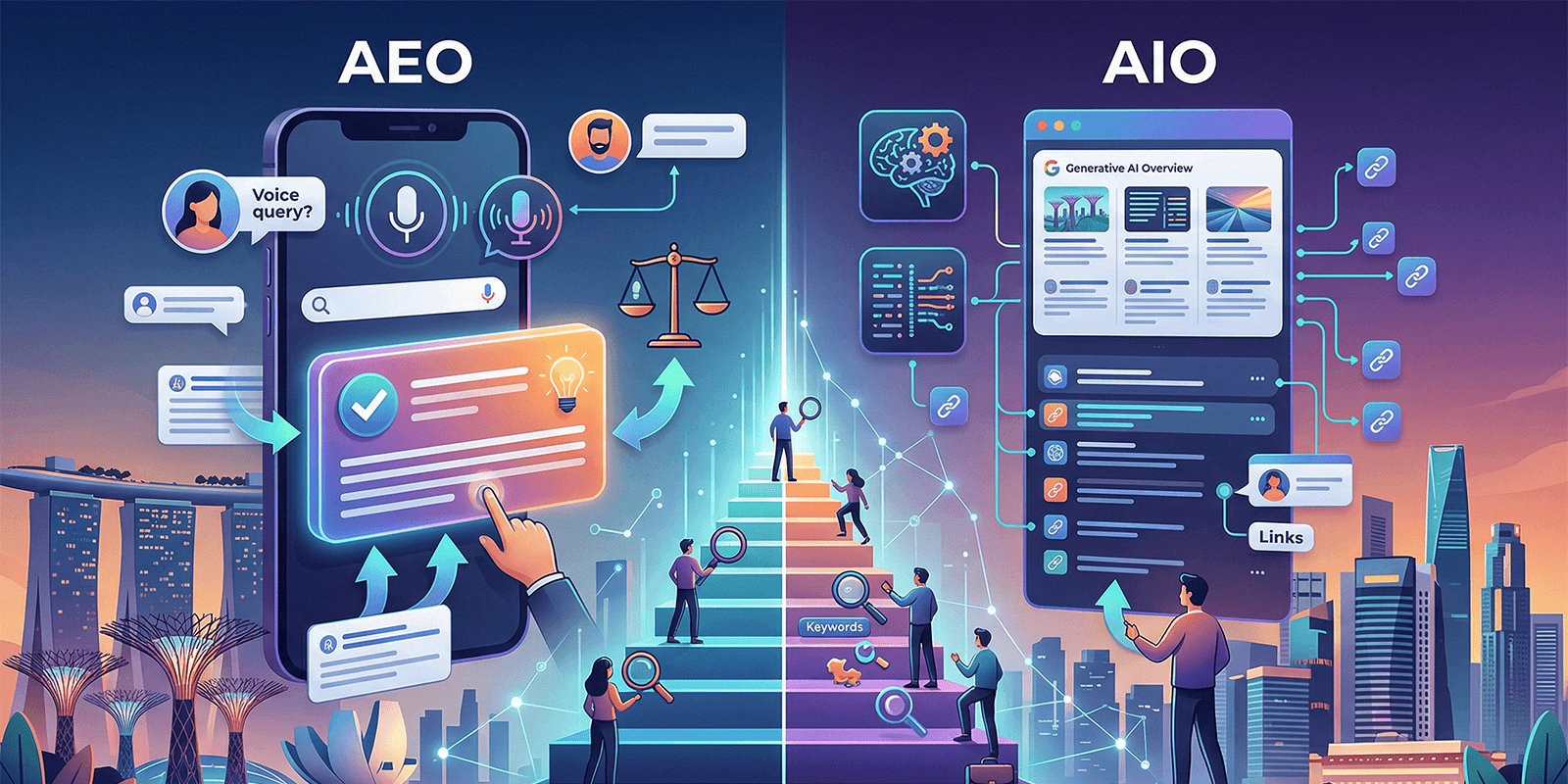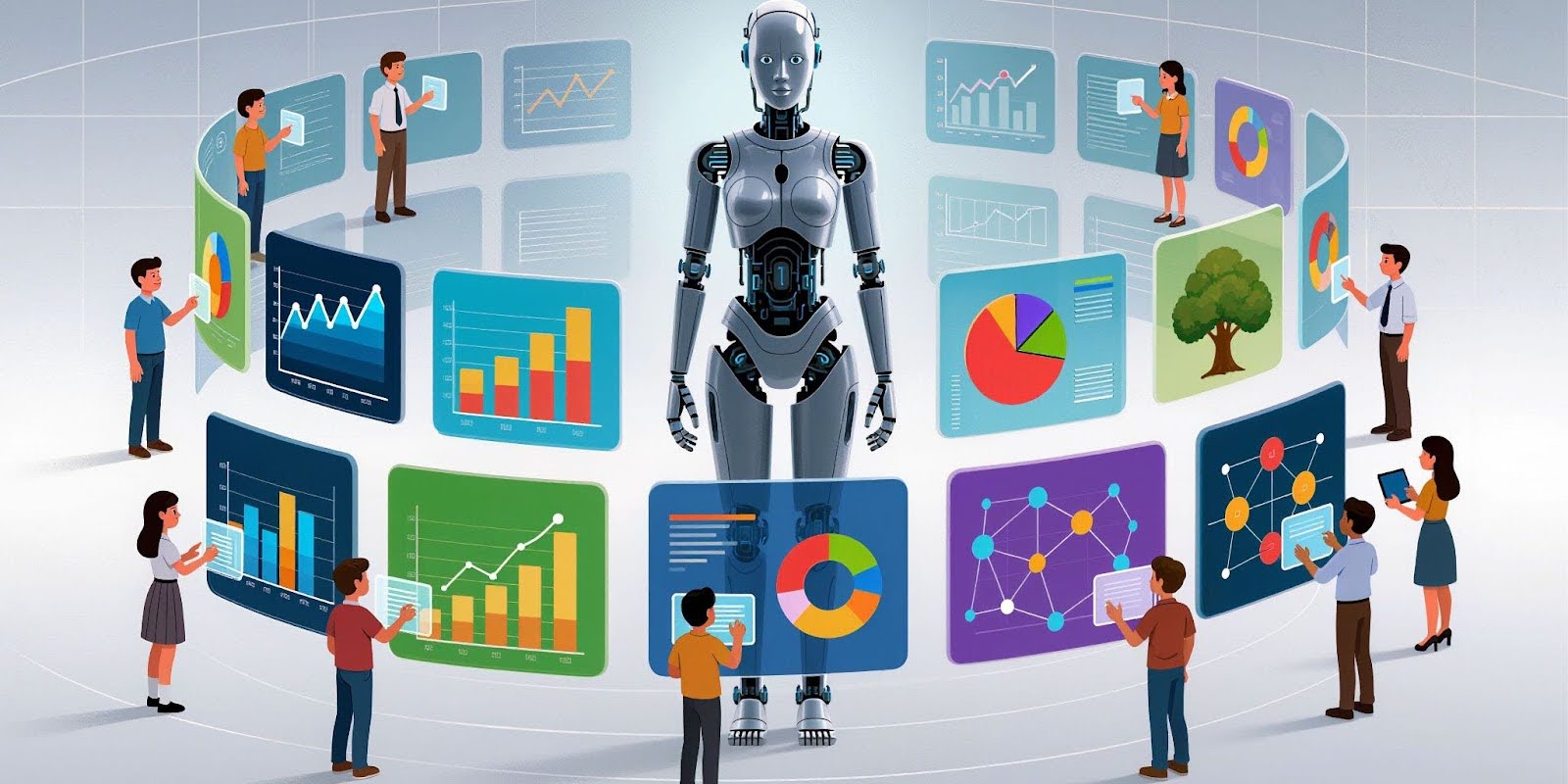
As search engines evolve beyond traditional keyword matching into AI-driven interpretation and intent analysis, businesses must rethink how they approach visibility online. AI SEO in Singapore is no longer experimental but a central part to how businesses compete in search results.
In 2026, AI SEO is more about understanding user behaviour and optimising content for both search engines and AI-generated search experiences. This is because AI is transforming SEO by automating data analysis and supporting AI Overview (GEO) optimisation, therefore, businesses in Singapore have begun using AI-driven SEO tools to enhance their search visibility. Keep reading to learn how you can adapt faster to Google’s evolving AI-powered search algorithms.
What Is AI SEO?
AI SEO refers to the use of artificial intelligence and machine learning to enhance search engine optimisation strategies. Rather than relying solely on manual analysis, AI tools process large volumes of data to identify patterns and optimisation gaps faster and more accurately.
In practice, AI SEO supports tasks such as keyword discovery, content optimisation, technical audits, performance forecasting, and search behaviour analysis. For Singapore-based businesses operating in competitive and multilingual markets, AI helps refine strategies based on real user intent rather than assumptions.
Why AI SEO Matters for Businesses in Singapore
Singapore’s digital ecosystem is not just highly competitive but also fast-moving and deeply localised. Internet penetration reaches 98.4% of the population, meaning nearly every resident is digitally connected and searching for products, services and information online.
The digital economy also plays an increasingly vital role in the national economy: it accounted for 18.6% of Singapore’s GDP in 2024, up from 14.9% in 2019, driven by digitalisation and AI adoption across sectors.
This makes AI SEO critical for:
- Local search behaviour optimisation: Users increasingly search for location-based services and voice queries.
- SME competitiveness: With 95% of SMEs adopting digital solutions, including SEO and AI tools, companies must integrate SEO into their digital transformation strategies.
- Enterprise scale: Larger firms use AI to manage multilingual content, cross-market optimisation, and real-time performance analytics.
For SMEs, AI-driven SEO levels the playing field. For enterprises, it enables scale, consistency, and precision across multiple campaigns and markets
AI Automation in SEO: From Manual Effort to Smart Scaling
One of the biggest shifts in SEO is the rise of AI automation. Tasks that once required hours of manual work can now be completed in minutes, allowing SEO teams to focus on strategy rather than repetitive execution.
AI automation supports technical SEO audits, on-page optimisation, internal linking analysis, and performance tracking. In Singapore, where marketing teams often manage multiple channels with limited resources, this improves efficiency while reducing human error. However, automation works best when guided by experienced SEO specialists who interpret insights and make strategic decisions.
Perks of AI-Powered Keyword Research
Unlike keyword tools that focus solely on search volume and competition metrics, AI-powered research identifies semantic relationships, user intent, and conversational trends. This is vital for Singapore because mobile search accounts for 96% of online queries.
AI tools now group keywords by intent clusters (e.g., transactional vs informational), suggest long-tail conversational phrases, and detect emerging queries before they become competitive. This is especially valuable for Singapore SMEs targeting niche markets, where understanding intent matters more than chasing high-volume keywords.
AI Content Optimisation: Writing for Humans and Algorithms
AI has significantly changed how content is optimised for search. Instead of keyword stuffing or rigid optimisation formulas, modern AI SEO focuses on relevance, clarity, and topical depth.
AI content optimisation tools assist with:
- Semantic relevance — aligning text with related keywords and concepts
- User behaviour signals — predicting which content keeps users engaged, based on behavioural data
- Readability enhancements — improving headings, summaries, and answer snippets
For Singapore enterprises managing large content libraries, AI helps maintain consistency and quality at scale. However, human expertise is essential to ensure brand voice and compliance with Google’s quality guidelines.
How AI-Driven SEO Services Are Changing Digital Marketing in 2026
SEO is now integrated closely with content marketing, paid media, UX, and analytics. In 2026, AI-driven SEO services enable predictive SEO planning based on behavioural data, faster testing and optimisation cycles, as well as deeper insights into customer journeys.
Agencies in Singapore are increasingly combining AI SEO with data analytics and conversion optimisation, to help businesses move beyond rankings into measurable growth and ROI.
GEO and AI Overview: Preparing for Future Search Interfaces
With the rise of AI Overviews and generative search results, SEO is expanding into GEO (Generative Engine Optimisation). This focuses on ensuring content shows up in answer boxes, summaries, and AI-generated insights.
GEO strategies emphasise structured content with clear answers, high authority and trust signals (E-E-A-T), and localised accuracy for Singapore search trends. Optimising for GEO means designing content that search engines understand as the most reliable response to a given query.
What are the Typical Challenges of AI SEO?
Despite its advantages, AI SEO is not without limitations. Over-reliance on automation can lead to generic content or misaligned strategies if not properly managed. Common limitations include:
- Lack of local or cultural context without human input
- Risk of over-optimisation if tools are misused
- Dependence on data quality and training models
In Singapore’s diverse and multilingual market, human oversight is critical to ensure AI-driven insights are applied correctly and ethically.
FAQs
Yes, when used responsibly. Google’s guidelines allow AI assistance as long as content adds real value and isn’t designed to manipulate rankings.
No. AI enhances speed and insight but lacks strategic creativity, cultural understanding, and nuanced decision-making that human experts provide.
AI uncovers patterns in local search behaviour, suggests neighbourhood-specific keywords, and optimises Google Business Profiles to improve visibility where intent is strongest.
AI can speed up research and optimisation, but high-quality, locally relevant content, especially in multilingual markets like Singapore, still requires human expertise.
Partner with W360 Group for Smarter AI SEO Solutions
AI SEO is no longer the future, it is the present reality of search engine optimisation in Singapore. In 2026, businesses that embrace AI-driven SEO strategies will be better equipped to adapt to AI-powered search experiences and compete in an increasingly complex digital landscape.
The key to success lies in hiring a reliable digital marketing agency such as W360, who can balance leveraging AI for speed and intelligence, while relying on human expertise for strategy and judgement. Contact us to learn how you can harness the power of AI SEO in Singapore.