
Local SEO management is the ongoing process of maintaining and improving a business’s visibility in local search results. It involves continuous optimisation of business information, Google Business Profile signals, reviews, local content, technical SEO, and geographic relevance.
Local rankings are not static as search visibility changes regularly due to user behaviour, Google algorithm updates, review signals, and AI-driven search systems. Businesses that stop maintaining their local presence may gradually lose visibility in Google Maps, Google’s Local Map Pack, and localised organic search results.
In Singapore, local competition is often concentrated within densely populated commercial and residential districts. Businesses competing within the same service areas need consistent local SEO management to remain visible for neighbourhood-based searches, “near me” queries, and AI-generated local recommendations.
What Is Local SEO Management?
Local SEO management is the continuous optimisation needed to sustain and improve local search performance over time. Unlike one-time SEO setup tasks, local SEO management focuses on long-term maintenance and adaptation.
The purpose of local SEO management is to ensure that business information remains accurate, search visibility remains competitive, and local relevance continues to align with user search behaviour.
Local SEO management in Singapore typically includes:
- Google Business Profile updates
- Review monitoring and responses
- Local content publishing
- Citation consistency checks
- Competitor monitoring
- Seasonal optimisation
- Local performance tracking
These activities help businesses maintain strong local search signals across search engines and AI-driven search platforms.
Why Ongoing Optimisation Matters for Local Rankings
Ongoing optimisation matters because local search environments change frequently. Search engines continuously evaluate business relevance, trustworthiness, proximity, and user engagement.
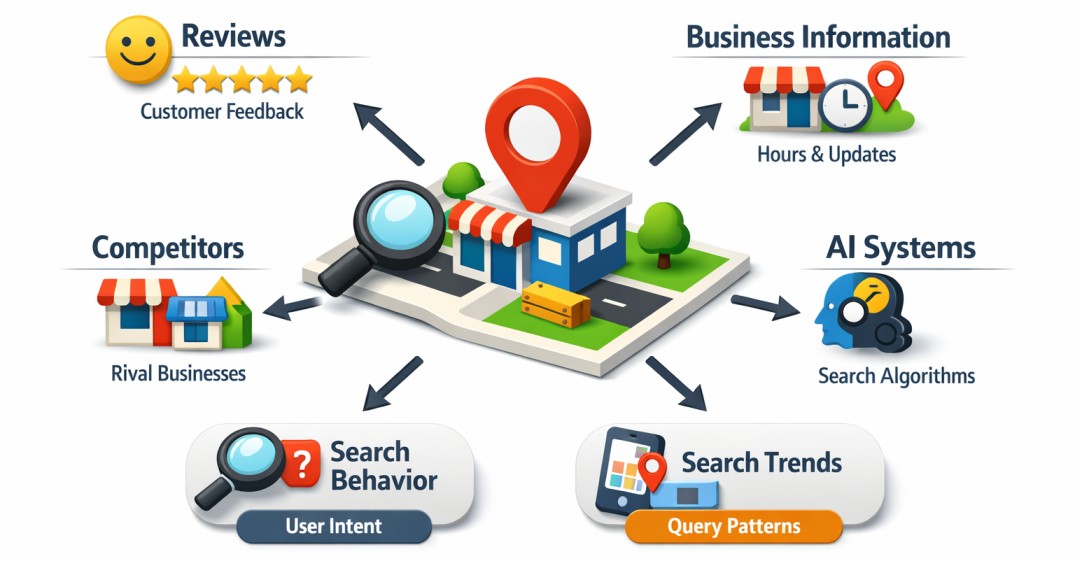
A business that ranks well today may lose visibility if competitors improve their local presence or if business information becomes outdated. These factors influence local ranking changes:
Ranking Influence | Why It Changes |
Reviews | New customer feedback affects trust signals |
Business information | Hours, services, and addresses may change |
Competitor activity | Other businesses continue optimising |
Search behaviour | User intent and search patterns evolve |
AI systems | Search engines improve interpretation methods |
Local SEO management helps businesses respond to these ongoing changes systematically.
Google Business Profile Management
Google Business Profile management is one of the most important parts of local SEO management. It ensures that search engines and users receive accurate and updated business information. Google Business Profile affects visibility within:
- Google Maps
- Google’s Local Map Pack
- Mobile local searches
- AI-generated search summaries
A neglected profile may weaken local relevance and reduce user trust.

Updating Business Information
Business information should remain accurate across all digital platforms. Inconsistent or outdated information may confuse search engines and users. Important details to monitor include:
- Business name
- Address
- Phone number
- Operating hours
- Website URL
- Service categories
Businesses should also update holiday schedules, temporary closures, and service changes when necessary.
Maintaining Accurate Service Categories
Business categories help Google understand which searches are relevant to a listing. For example:
| Industry | Primary Category Example |
| Dental clinic | Dentist |
| Restaurant | Restaurant |
| Gym | Fitness centre |
| Salon | Hair salon |
Find out how category accuracy supports stronger local search matching through this detailed guide on local SEO for Singapore organisations.
Profile Activity and Updates
Google Business Profile activity may indicate that a business remains operational and engaged with customers. Useful updates may include:
- New service announcements
- Seasonal operating hours
- Event participation
- Service changes
- Informational business updates
Regular activity supports profile freshness and user engagement.
Review Monitoring and Reputation Management
Review monitoring is the process of tracking customer feedback across platforms such as Google, Facebook, and industry-specific directories.
Reviews influence both search visibility and customer decision-making. Search engines evaluate review quantity, recency, relevance, and engagement when assessing business prominence.
Why Reviews Affect Local Rankings
Reviews act as trust signals that help search engines understand customer satisfaction and business activity. Businesses with active review profiles may appear more relevant because reviews often provide:
- Service-related keywords
- Customer experience details
- Geographic context
- Fresh engagement signals
Reviews also affect user confidence when comparing businesses in local search results.
Responding to Reviews Consistently
Professional review responses demonstrate business responsiveness and customer engagement. These are some useful review responses to take note of:
- Acknowledging customer feedback
- Addressing concerns professionally
- Clarifying misunderstandings calmly
- Maintaining neutral language
Review management should prioritise authenticity rather than manipulation.
Monitoring Review Trends
Review monitoring helps businesses identify patterns that may affect customer perception and operational performance. Businesses should track:
| Review Element | Purpose |
| Rating changes | Reputation monitoring |
| Common complaints | Service improvement insights |
| Review frequency | Customer engagement activity |
| Platform distribution | Visibility across channels |
This information can support both SEO and operational decisions.
Publishing Local Content Consistently

Local content publishing helps businesses maintain geographic relevance and support long-term local visibility.
Search engines favour businesses that continue providing updated and contextually useful information. Regular local content may also help businesses appear in AI-generated search summaries.
Types of Local Content
Local content can address specific service areas, community topics, or location-based search intent. Useful local content types include:
- Area-specific service pages
- Local FAQs
- Community-focused guides
- Industry updates relevant to Singapore
- Seasonal local content
Content should remain informative, factual, and relevant to the business’s service areas.
Hyperlocal Content Maintenance
Hyperlocal content should be updated periodically to reflect current information and search behaviour, therefore, businesses need to review:
- Area references
- Service availability
- Nearby landmarks
- Local demand patterns
- Search intent trends
Updated content helps maintain local relevance signals.
Content Freshness and Search Relevance
Search engines may prioritise recently updated content for queries involving current information or evolving user behaviour. Businesses do not need to rewrite pages constantly, but they should review whether:
- Information remains accurate
- Search intent has changed
- Competitor content has improved
- New services have been introduced
This process supports long-term content relevance.
Local Citation Management
Why Citation Consistency Matters
Inconsistent business details such as the following may weaken trust signals.- Different business names
- Incorrect phone numbers
- Old addresses
- Incomplete operating hours
Common Citation Sources
Businesses in Singapore may appear on multiple local and international platforms. Examples include:| Citation Type | Example Platforms |
| Maps platforms | Google Maps |
| Local directories | Yellow Pages Singapore |
| Social platforms | |
| Industry directories | Medical or legal directories |
Competitor Tracking in Local SEO

What Businesses Should Monitor
Competitor analysis should focus on observable local search signals, such as:
- Google review growth
- Local keyword visibility
- Map Pack presence
- Content updates
- Local backlinks and mentions
This information helps businesses identify competitive gaps and emerging trends.
Monitoring Local Search Changes
Local rankings vary based on:
- Search location
- Mobile or desktop device
- User behaviour
- Search intent
- Business proximity
Businesses should monitor rankings from relevant service areas rather than relying only on broad national visibility.
Seasonal Optimisation for Local SEO
Why Seasonal Updates Matter
User search behaviour changes throughout the year. Businesses that update local content and profile information accordingly may improve relevance during seasonal demand periods. Examples of seasonal local SEO updates include:| Industry | Seasonal Example |
| Restaurants | Festive dining searches |
| Clinics | School reopening health concerns |
| Retail | Holiday shopping demand |
| Gyms | New Year fitness interest |
| Tuition centres | Examination preparation periods |
Updating Business Information During Seasonal Periods
Businesses should update operational details when schedules or services change. Important seasonal updates may include:- Holiday operating hours
- Temporary closures
- Event-related services
- Seasonal promotions
- Appointment availability
AI-Generated Local Search and GEO
AI-generated local search refers to search systems that summarise and recommend businesses using AI-driven interpretation rather than traditional ranking methods alone. These systems increasingly analyse structured data, reviews, local content, and entity signals to generate responses.
How AI Systems Interpret Local Businesses
AI systems evaluate whether business information is:
- Clear
- Consistent
- Structured
- Contextually relevant
- Frequently referenced
Businesses with strong local SEO management may improve their visibility within AI-generated summaries and local recommendations.
GEO and Local Search Visibility
Generative Engine Optimisation (GEO) focuses on making content easier for AI systems to interpret and cite. A local SEO management strategy supporting GEO consists of:
- Structured headings
- Clear factual explanations
- FAQ content
- Accurate business information
- Consistent location references
These elements support AI extraction and summarisation.
Conversational Search and Local Queries
Users increasingly search using conversational phrases such as:
- “Which clinic near Orchard is open today?”
- “Where can I find a gym near Paya Lebar?”
- “Best family restaurant near Jurong East”
Content structured around natural search behaviour may improve AI-driven discoverability.
Technical Maintenance for Local SEO

Technical SEO maintenance supports local rankings by ensuring that websites remain accessible, usable, and understandable to search engines. Technical issues may reduce crawlability, user experience, or local search performance.
Important Technical Maintenance Areas
Businesses should review these technical SEO factors regularly as technical stability supports both search visibility and user experience.
- Mobile usability
- Page speed
- Structured data
- Internal linking
- Broken links.
Mobile Experience and Local Search
Many local searches happen on mobile devices. Poor mobile usability may reduce engagement and affect local rankings. Businesses should ensure that users can easily:
- View contact information
- Access maps and directions
- Call the business
- Read service information
- Submit enquiries
Mobile accessibility is strongly connected to local search behaviour.
Tracking Local SEO Performance
Performance tracking helps businesses evaluate whether ongoing optimisation improves local visibility and engagement. Local SEO management should focus on measurable outcomes rather than rankings alone.
Important Local SEO Metrics
Useful local SEO metrics include:
| Metric | What It Measures |
| Google Maps visibility | Local discoverability |
| Direction requests | Visit intent |
| Phone calls | Lead generation |
| Website clicks | User engagement |
| Review growth | Reputation development |
Tracking trends over time provides better insights than short-term ranking changes.
Using Google Business Profile Insights
Google Business Profile Insights provides data on how users interact with business listings. Businesses may review:
- Search appearances
- Direction requests
- Call activity
- Photo interactions
- Website visits
These insights help identify user behaviour patterns and local engagement trends.
Common Challenges in Local SEO Management
Local SEO management requires consistency because local search environments are highly competitive and constantly changing. Businesses commonly face challenges such as:
- Outdated business information
- Low review activity
- Duplicate listings
- Inconsistent citations
- Weak local content
Addressing foundational issues is often necessary before advanced optimisation can produce long-term improvements.
Managing Multiple Locations
Businesses operating multiple branches may face additional complexity. Multi-location businesses often need:
- Unique location pages
- Separate Google Business Profiles
- Consistent branding
- Area-specific optimisation
- Local performance tracking
Location management should maintain consistency while supporting geographic relevance.
Frequently Asked Questions
Local SEO management is the ongoing process of maintaining and improving a business’s local search visibility. It includes managing business information, reviews, local content, citations, and local ranking performance.
Local rankings change due to competitor activity, search behaviour shifts, reviews, and algorithm updates. Continuous optimisation helps businesses maintain relevance and visibility over time.
Business information should be updated whenever operational changes occur. Regular reviews are also useful to ensure that operating hours, categories, and contact details remain accurate.
Reviews help search engines evaluate business trustworthiness and activity. They also influence customer decisions and contribute to local visibility signals.
AI-driven search systems increasingly use structured data, local content, reviews, and business consistency to generate recommendations and summaries. Businesses with clear and reliable information are easier for AI systems to interpret.
Yes. Local SEO management can support multi-location businesses through separate location pages, accurate branch listings, local content, and geographic performance tracking.
Sustaining Local Visibility Through Continuous Optimisation
Local SEO management is an ongoing process to ensure long-term local search visibility through consistent optimisation, accurate business information, review monitoring, and locally relevant content.
As search engines and AI systems continue evolving, businesses benefit from maintaining structured, updated, and geographically relevant digital signals. Sustainable local rankings depend not only on initial setup but also on continuous adaptation to changing user behaviour, local competition, and AI-driven search experiences.
For organisations reviewing their long-term local search visibility, consider partnering with a reputed Singapore SEO agency like W360 Asia. Contact our team to evaluate your current optimisation processes and Google Business Profile to develop an efficient local SEO strategy.