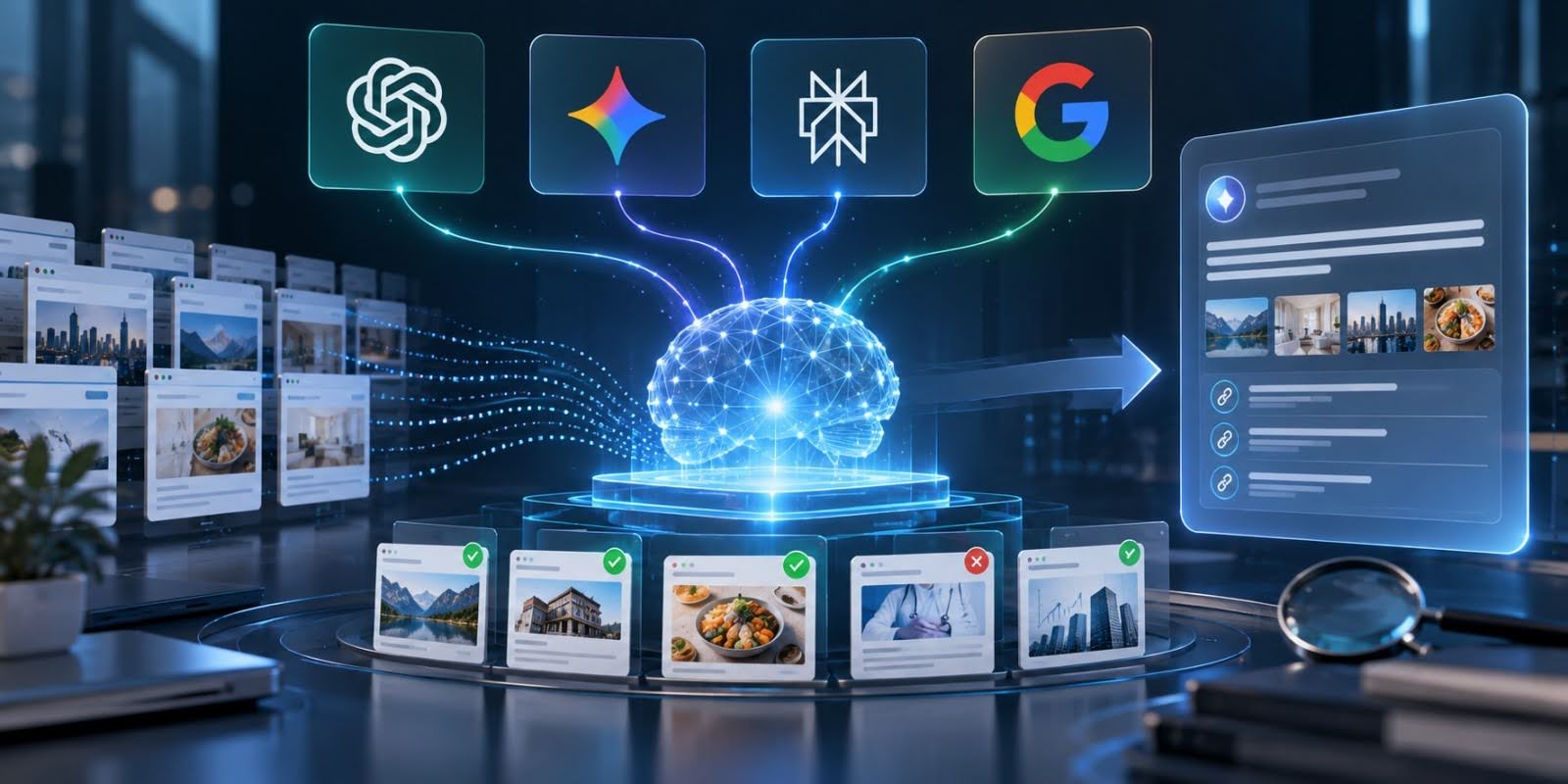
Off-page SEO services help businesses improve search visibility through external authority signals such as backlinks, citations, reviews, digital PR, and brand mentions. These services support how search engines and AI-driven systems evaluate trustworthiness, relevance, and industry authority.
With search engines and AI search systems now assessing the quality and credibility of external signals rather than only on backlink quantity, off-page SEO has evolved beyond traditional link building. Businesses evaluating off-page SEO services should focus on transparency, backlink quality standards, and long-term authority development.
Keep reading to learn why sustainable SEO performance depends on trustworthy external signals rather than traditional ranking tactics.
What Off-Page SEO Services Include
Off-page SEO services involve activities performed outside a website to improve authority and search visibility. These services support how search systems understand a business’s reputation and credibility within its industry.
Modern off-page SEO services commonly involve:
- Backlink acquisition
- Digital PR
- Citation management
- Review monitoring
- Brand mention tracking
- Competitor backlink analysis
- Toxic link monitoring
- Authority-building campaigns
Search engines increasingly evaluate these signals collectively rather than independently. Businesses should understand that effective off-page SEO requires a broader authority-building strategy rather than isolated link generation efforts.
Why Businesses Need Off-Page SEO Services
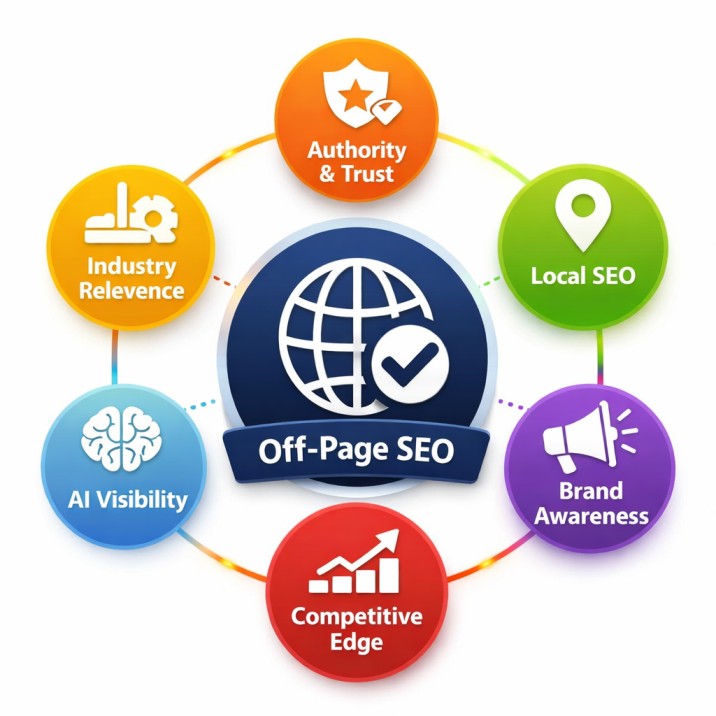
Off-page SEO supports search visibility by strengthening external trust signals. Search systems use these signals to determine whether a website deserves visibility for competitive queries. Businesses may require off-page SEO services to improve:
- Authority and trustworthiness
- Industry relevance
- Local visibility
- Brand recognition
- AI search discoverability
- Competitive search performance
In competitive industries, websites with stronger external credibility often perform better in both traditional rankings and AI-generated search summaries. For businesses in Singapore, off-page SEO may also help strengthen local relevance and industry recognition within regional search markets.
Ethical Link Building Is a Core Requirement
Ethical link building refers to acquiring backlinks naturally through credible and relevant methods. Search engines reward trustworthy link acquisition strategies while penalising manipulative practices. Ethical link-building methods include:
- Editorial outreach
- Digital PR campaigns
- Industry collaborations
- Research-based content
- Expert contributions
Businesses should avoid agencies relying on automated link schemes or artificial backlink generation methods. Search engines now evaluate link quality using AI-driven systems that detect unnatural patterns more effectively than before.
What High-Quality Backlinks Look Lik

High-quality backlinks come from trusted, relevant, and contextually appropriate sources. They support authority signals because they reflect genuine external recognition.
The following characteristics are commonly associated with high-quality backlinks:
Backlink Characteristic | Importance |
Industry relevance | Strengthens topic association |
Editorial placement | Indicates natural inclusion |
Trusted domain authority | Supports credibility |
Contextual alignment | Improves semantic relevance |
Natural anchor usage | Reduces manipulation signals |
Businesses should prioritise backlink relevance and trustworthiness rather than focusing only on backlink volume. An agency that promises large quantities of backlinks without discussing quality standards may not align with modern search guidelines.
White-Hat SEO Practices Support Long-Term Stability
White-hat SEO refers to optimisation methods that comply with search engine quality guidelines. These methods prioritise sustainable growth and user trust:
- Genuine outreach
- Editorial backlink acquisition
- Ethical digital PR
- Accurate citations
- Transparent reporting
- Authentic review management
Search systems increasingly prioritise trust, authenticity, and semantic credibility when evaluating authority signals. Therefore, businesses should avoid agencies using manipulative or deceptive techniques because these practices may create long-term visibility risks.
Transparency in Reporting Matters
Transparent reporting helps businesses understand how off-page SEO efforts contribute to authority growth and visibility improvements. An effective reporting process should include:
- Referring domain analysis
- Backlink quality review
- Citation updates
- Toxic link monitoring
- Brand mention tracking
- Referral traffic analysis
Organisations should be cautious of agencies that focus only on backlink quantity without explaining relevance or authority impact. Transparent reporting supports informed decision-making and helps businesses assess whether SEO efforts align with long-term objectives.
Digital PR Has Become More Important in SEO

Digital PR combines public relations with authority-building strategies. It supports off-page SEO by generating media mentions, trusted backlinks, and industry visibility through these activites:
- Publishing research studies
- Providing expert commentary
- Participating in interviews
- Launching data-driven campaigns
- Contributing industry insights
AI-driven search systems often treat recognised publications as trustworthy sources. Consistent media visibility can strengthen authority and improve brand recognition across search ecosystems.
Backlink Quantity Is No Longer the Main Metric
Search engines now evaluate backlink quality and contextual trust more heavily than raw backlink counts. Large volumes of low-quality backlinks may weaken trust signals rather than improve rankings.
These are the long-term impacts of quality-focused and quantity-focused approaches:
SEO Approach | Characteristics | Long-Term Impact |
Quality-focused | Relevant and trusted links | Sustainable authority |
Quantity-focused | High-volume low-quality links | Potential risk |
Editorial strategy | Natural authority growth | Strong trust signals |
Automated link schemes | Artificial patterns | Weak credibility |
Businesses should prioritise sustainable authority development instead of short-term backlink accumulation.
Agencies Should Understand AI Search Trends
AI-driven search systems evaluate websites differently from traditional ranking systems. They analyse semantic relationships, entity recognition, source credibility, and contextual trust signals.
Agencies providing modern off-page SEO services understand:
- AI-generated search behaviour
- Entity recognition
- Topical authority
- Semantic relevance
- External trust validation
This is because businesses appearing consistently across trusted sources are more likely to gain visibility in AI-generated answers and summaries. An agency that focuses only on outdated backlink tactics cannot support modern AI-driven visibility requirements effectively.
Competitor Backlink Analysis Supports Strategic Planning
Competitor backlink analysis helps businesses understand how industry competitors build authority and earn external references. This process may identify:
- Relevant publications
- Industry partnerships
- Trusted directories
- Media opportunities
- Topic associations
Competitor analysis should focus on identifying authority patterns rather than duplicating every backlink source. An effective agency should explain how competitor insights contribute to broader strategic decisions.
Citation Management Supports Local Search Visibility
Citation management involves maintaining consistent business information across directories and local platforms. Important citation elements include:
- Business name
- Address
- Phone number
- Website URL
- Industry category
Search engines use citations to validate legitimacy and geographic relevance. For Singapore businesses targeting local visibility, citation consistency helps strengthen local trust signals and business verification.
Review Management Supports Trust Signals
Review management involves monitoring, responding to, and maintaining authentic customer feedback across online platforms. This contribute to:
- Business credibility
- User trust
- Local SEO visibility
- Reputation management
- AI trust evaluation
Search systems increasingly analyse review sentiment, frequency, and authenticity, therefore, ensure to avoid agencies encouraging fake or manipulated reviews because these practices may weaken credibility signals.
Toxic Link Monitoring Is Essential
Toxic links are backlinks associated with spam-heavy or manipulative sources. Excessive toxic links may weaken search trust signals. Ensure to monitor them by reviewing:
- Spam indicators
- Irrelevant domains
- Link farms
- Automated linking patterns
- Suspicious anchor text
Businesses should ensure agencies actively monitor backlink health rather than focusing exclusively on acquisition. Regular toxic link assessment helps maintain a healthier authority profile over time.
Strong Agencies Focus on Topical Authority
Topical authority refers to how strongly a business is associated with a subject area.
Off-page SEO services contribute to topical authority through:
- Industry backlinks
- Relevant media mentions
- Expert references
- Topic-focused outreach
- Trusted content citations
Search systems evaluate whether external sources consistently associate a business with a specific topic or industry. Businesses targeting competitive search markets benefit from agencies that prioritise topical relevance rather than generic link acquisition.
Agencies Should Explain Their Outreach Process
Outreach refers to the process of contacting publishers, journalists, website owners, or industry platforms to secure mentions and backlinks. A transparent process includes:
- Identifying relevant websites
- Evaluating publication quality
- Developing contextual content
- Building industry relationships
- Monitoring authority outcomes
Businesses should understand how outreach targets are selected and whether the approach aligns with ethical SEO practices. Agencies unwilling to explain their methods may rely on low-quality or automated systems.
Reporting Should Include Meaningful Metrics
Meaningful off-page SEO reporting focus on authority growth rather than vanity metrics alone.
Reporting Metric | Purpose |
Referring domain quality | Measures trustworthiness |
Topical relevance | Evaluates contextual alignment |
Brand mentions | Tracks recognition |
Citation consistency | Supports local trust |
Referral traffic quality | Measures engagement |
Businesses should ensure the agency they choose prioritises actionable reporting that explains strategic impact rather than isolated numerical growth.
Businesses Should Avoid Unrealistic SEO Guarantees
Search visibility depends on multiple factors including competition, authority, technical performance, content quality, and search algorithm changes.
Agencies making unrealistic guarantees may rely on manipulative tactics or misleading claims. Businesses should be cautious of these promises:
- Guaranteed rankings
- Instant visibility improvements
- Mass backlink generation
- Artificial authority metrics
Sustainable SEO performance typically develops gradually through consistent authority-building efforts.
How Off-Page SEO Supports AI Search Visibility
AI-generated search systems increasingly rely on external authority signals when deciding which sources to reference. Important AI visibility signals include:
- Trusted media mentions
- Expert references
- Industry authority
- Consistent entity recognition
- Contextual relevance
Businesses recognised consistently across authoritative sources are more likely to appear in AI-generated search summaries and answer systems. Modern off-page SEO services should therefore support greater digital credibility rather than isolated ranking manipulation.
Frequently Asked Questions
Off-page SEO services involve external optimisation activities that improve a website’s authority and search visibility. These services commonly include backlinks, digital PR, citation management, review monitoring, and authority-building strategies.
Ethical link building supports sustainable authority growth and complies with search engine quality guidelines. Manipulative or artificial backlink practices may weaken trust signals and create long-term ranking risks.
Quality backlinks usually come from relevant, trusted, and contextually appropriate websites. Editorial placement, industry alignment, and source credibility are important indicators of backlink quality.
Digital PR combines public relations and SEO strategies to improve authority and visibility through media mentions, expert commentary, and trusted publications. It also supports brand recognition and entity authority.
Transparent reporting helps businesses understand how SEO activities contribute to authority growth and visibility improvements. It also allows businesses to assess backlink quality and strategic relevance more accurately.
Toxic backlinks are links from spam-heavy, manipulative, or irrelevant websites. Excessive toxic links may weaken trust signals and negatively affect search visibility.
AI-driven search systems evaluate external trust signals such as authority mentions, credible backlinks, and entity recognition. Businesses with stronger external credibility are more likely to appear in AI-generated responses.
Choosing Off-Page SEO Services for Long-Term Authority
Off-page SEO services now involve broader authority-building strategies that support search visibility, trust evaluation, and AI-driven discoverability. Search engines increasingly assess quality, contextual relevance, and credibility rather than relying on backlink quantity alone.
Agencies that focus on credible external recognition and long-term authority signals are generally better aligned with modern search requirements. Therefore when evaluating SEO agencies, make sure to check for ethical practices, transparent reporting, topical authority development, and sustainable trust-building methods.
If you are looking for a trusted digital marketing agency in Singapore for off-page SEO services, partner with the W360 Group. Reach out to our expert team to review your current digital PR efforts and get guidance to boost your presence both on traditional and AI search platforms.