SEO off-page optimisation improves a website’s authority, credibility, and search visibility by helping search engines and AI search platforms verify whether a website is trustworthy and relevant to a user’s query.
With search engines and AI-generated searches now evaluating authority using trust indicators such as citation consistency, review quality, topical relevance and brand mentions, off-page SEO is not just about acquiring backlinks.
Consistent monitoring and improvement across external trust signals can strengthen visibility in both traditional and AI-driven search environments. Follow this off-page optimisation checklist to identify gaps in authority-building and support sustainable long-term rankings.
What SEO Off-Page Optimisation Includes
SEO off-page optimisation includes external signals that influence how search engines evaluate a website’s authority and relevance. These signals originate outside the website itself and contribute to overall trust evaluation.
Modern off-page optimisation involves:
- Backlink quality management
- Citation consistency
- Review monitoring
- Digital PR
- Competitor backlink analysis
- Toxic link monitoring
- Brand mention tracking
- Entity recognition support
Search engines increasingly combine these signals to determine whether a website deserves visibility for competitive search terms. For Singapore businesses that improve their authority, use this checklist as a guide.
Checklist Item 1: Conduct a Backlink Audit
A backlink audit is the process of reviewing all inbound links pointing to a website. The purpose is to assess link quality, relevance, authority, and potential risks. Backlink audits help identify whether a website has acquired harmful or low-quality links by evaluating:
- Referring domain quality
- Industry relevance
- Link placement context
- Anchor text patterns
- Spam indicators
Backlinks from unrelated or low-quality websites can create long-term ranking risks. Therefore, regular audits are needed to maintain a healthier backlink profile that aligns with modern search quality standards.
Checklist Item 2: Assess Backlink Quality Instead of Quantity
Search engines prioritise contextual relevance and authority rather than total backlink volume. A smaller number of trusted backlinks can provide greater value than large quantities of low-quality links.
Backlink quality is typically influenced by:
- Editorial placement
- Source credibility
- Topical relevance
- Natural acquisition patterns
- User trust signals
The following table outlines how backlink quality differs across common link types:
| Backlink Type | Characteristics | SEO Value |
| Editorial links | Naturally included in content | High |
| Industry references | Relevant and contextual | Strong |
| News publication links | Trusted authority sources | Strong |
| Spam directory links | Low relevance and quality | Weak |
| Automated links | Artificial placement patterns | Risky |
Modern SEO off-page optimisation focuses on credibility and relevance rather than scale alone.
Checklist Item 3: Review Anchor Text Distribution
Anchor text refers to the clickable words used within a hyperlink. Search engines analyse anchor text to understand the relationship between linked pages and topics.
Over-optimised anchor text patterns may appear manipulative if exact-match keywords are repeated excessively. Healthy anchor text distribution typically includes:
- Branded anchors
- Natural phrase anchors
- URL anchors
- Partial-match anchors
- Generic anchors
Anchor text should appear natural within the context of the surrounding content. Balanced distribution supports topical relevance without triggering spam signals.
Checklist Item 4: Monitor Toxic Backlinks
Toxic backlinks are links that may negatively affect trust signals due to spam indicators, manipulation patterns, or irrelevant sources. Search systems increasingly detect artificial linking behaviour using AI-driven analysis and pattern recognition.
These are some of the potential toxic link indicators:
- Irrelevant domains
- Link farms
- Automated content networks
- Spam-heavy directories
- Suspicious anchor repetition
Monitoring toxic links helps businesses maintain a cleaner backlink profile. Websites with excessive spam associations may experience weaker trust evaluation over time.
Checklist Item 5: Maintain Citation Consistency
Citation consistency refers to keeping business information accurate and aligned across all online listings and directories. Search engines use citations to validate business legitimacy and local relevance. Inconsistent information may weaken trust signals.
Key citation elements include:
Citation Element | Purpose |
Business name | Entity consistency |
Address | Local validation |
Phone number | Trust confirmation |
Website URL | Authority association |
Business category | Contextual classification |
Consistent citations are particularly important for businesses targeting local visibility in Singapore.
Checklist Item 6: Monitor Online Reviews
Online reviews function as external trust signals that influence both search visibility and user confidence.
Search engines and AI systems evaluate review quality, frequency, authenticity, and consistency to assess an organisation’s reputation. Review monitoring should include:
- Review frequency
- Platform consistency
- Customer sentiment
- Response quality
- Authenticity indicators
Businesses should prioritise genuine customer feedback rather than artificial review generation practices.
Checklist Item 7: Analyse Competitor Backlinks
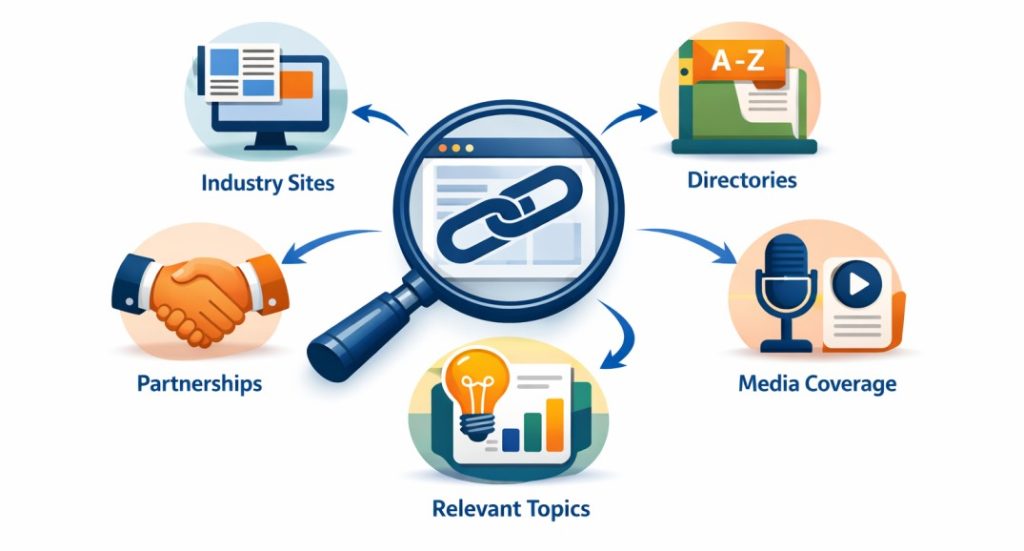
Competitor backlink analysis helps businesses identify authority-building opportunities within their industry. This process involves reviewing where competing websites earn mentions, backlinks, and references. Competitor backlink analysis can reveal:
- Industry publications
- Relevant directories
- Partnership opportunities
- Media references
- Topic associations
Understanding competitor link sources may help businesses identify trusted websites relevant to their sector. The goal is not to replicate every backlink but to understand broader authority patterns within the industry.
Checklist Item 8: Strengthen Brand Mentions
Brand mentions are references to a business name without necessarily including hyperlinks. Search systems increasingly treat brand mentions as authority indicators.
AI-driven search systems evaluate how often a business is associated with specific industries, topics, and services. Brand mentions can come from:
- Media articles
- Industry blogs
- Interviews
- Social discussions
- Event participation
Consistent brand references across trusted sources help strengthen entity recognition and topical relevance.
Checklist Item 9: Support Entity Recognition
Entity recognition helps search engines identify businesses, organisations, and individuals as unique entities connected to specific topics. SEO off-page optimisation supports entity recognition by reinforcing consistent external associations.
Important entity signals include:
- Consistent branding
- Industry references
- Author credibility
- Professional affiliations
- Trusted citations
Entity clarity improves how AI systems interpret business expertise and relevance within a topic area.
Checklist Item 10: Improve Topical Authority
Topical authority refers to how strongly a website is associated with a subject or industry. Search systems evaluate topical authority using both on-page and off-page signals. External references from relevant sources strengthen authority within a topic cluster.
These off-page activities support topical authority:
- Industry-specific backlinks
- Expert interviews
- Relevant guest contributions
- Research citations
- Subject-focused media mentions
Businesses with stronger topical authority are more likely to appear in AI-generated answers and competitive search results.
Checklist Item 11: Evaluate Digital PR Opportunities
Digital PR combines public relations with online authority-building efforts. It supports off-page SEO by generating visibility across credible media and industry platforms, this consists of:
- Expert commentary
- Industry research publication
- Media interviews
- Data-driven campaigns
- Thought leadership contributions
Search engines and AI systems often treat reputable publications as trusted authority sources. Consistent media exposure can strengthen external credibility signals.
Checklist Item 12: Track Referral Traffic Quality
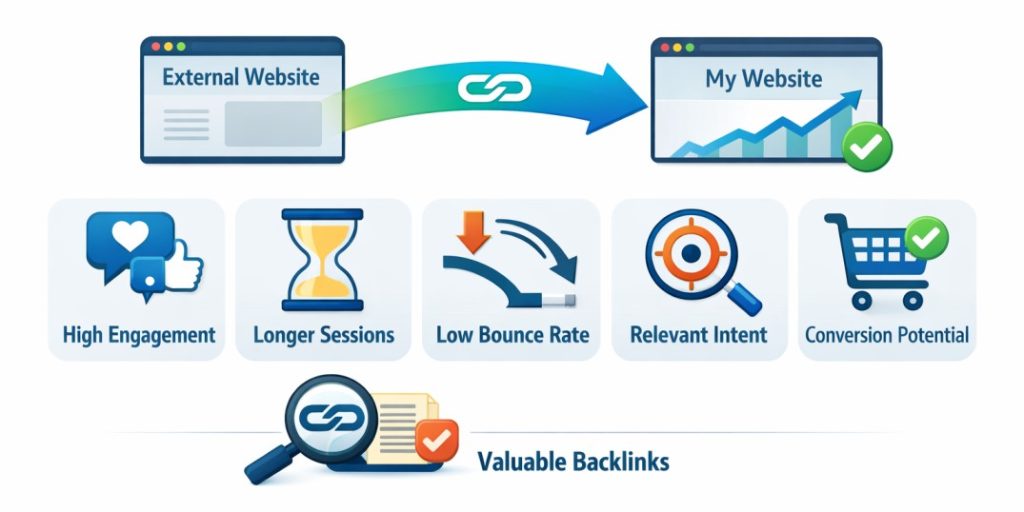
Referral traffic refers to website visitors arriving from external websites. Analysing referral traffic quality helps determine whether off-page SEO efforts are attracting relevant audiences. High-quality referral traffic typically shows:
- Strong engagement
- Longer session duration
- Lower bounce rates
- Relevant user intent
- Conversion potential
Referral traffic quality provides additional context regarding the value of external mentions and backlinks.
Checklist Item 13: Review Local Directory Presence
Local directories continue to support business discoverability and geographic validation. Businesses should ensure their listings appear on relevant and trustworthy platforms rather than low-quality directories.
Useful local directory characteristics include:
- Industry relevance
- Accurate business details
- Trusted reputation
- Local recognition
- User accessibility
For Singapore businesses, local directory consistency supports regional search visibility and local trust signals.
Checklist Item 14: Monitor Unlinked Brand Mentions
Unlinked brand mentions occur when a business is referenced without receiving a backlink. These mentions still contribute to authority evaluation and entity recognition.
AI-driven systems increasingly analyse mention frequency and contextual associations rather than relying solely on hyperlinks. Monitoring unlinked mentions helps businesses understand brand visibility, identify pr opportunities, assess industry recognition, and discover partnership opportunities.
Checklist Item 15: Avoid Manipulative Link Building
Manipulative link-building tactics may weaken trust signals and create long-term SEO risks. These outdated tactics should be avoided:
- Link exchanges at scale
- Automated link generation
- Paid spam networks
- Excessive exact-match anchors
- Irrelevant guest posting schemes
Search engines now use AI-driven detection systems to identify unnatural linking patterns more accurately. Sustainable SEO off-page optimisation focuses on genuine authority development rather than artificial manipulation.
Checklist Item 16: Measure Authority Growth Over Time
Authority growth should be monitored continuously rather than measured using a single metric. Useful indicators include:
Authority Indicator | What It Measures |
Referring domains | External authority sources |
Brand mentions | Recognition and visibility |
Citation consistency | Local trust validation |
Media coverage | Industry authority |
Topical relevance | Subject association |
Long-term monitoring helps businesses evaluate whether off-page optimisation efforts are improving overall trust and visibility.
Checklist Item 17: Align Off-Page SEO with AI Search Trends

AI-generated search systems evaluate credibility differently from traditional ranking systems. They rely heavily on semantic understanding, contextual relevance, and cross-platform trust validation.
Businesses should ensure off-page optimisation aligns with:
- Entity recognition
- Source trustworthiness
- Topic consistency
- External authority signals
- Structured credibility indicators
AI search visibility increasingly depends on how consistently a business is recognised across trusted external sources.
Frequently Asked Questions
SEO off-page optimisation refers to external activities that improve search visibility, authority, and trust. This includes backlinks, reviews, citations, digital PR, brand mentions, and authority-building efforts outside the website itself.
Backlink audits help identify harmful, irrelevant, or low-quality links that may weaken trust signals. Regular audits also help businesses understand the overall quality and relevance of their backlink profil
A high-quality backlink typically comes from a trusted and relevant website. Contextual placement, editorial integrity, and topical relevance are important factors in evaluating backlink quality.
Citation consistency helps search engines verify business legitimacy and local relevance. Inconsistent business details may create confusion and weaken local trust signals.
Reviews contribute to external trust evaluation and influence user perception. Search engines may analyse review quality, sentiment, and consistency when assessing business credibility.
Toxic backlinks are links associated with spam-heavy, manipulative, or irrelevant websites. Excessive toxic backlinks may weaken trust signals and create ranking risks.
AI-driven search systems place greater emphasis on trust, entity recognition, contextual authority, and consistent external validation. Off-page SEO now focuses more heavily on credibility and semantic relevance rather than backlink quantity alone.
Building a Sustainable Off-Page SEO Framework
SEO off-page optimisation now involves authority-building strategies as search engines and AI-driven systems evaluate trust signals using backlinks, citations, reviews, entity recognition, and contextual relevance together.
Singapore businesses that regularly audit and strengthen their off-page signals are better positioned for sustainable visibility in competitive search environments. A structured optimisation checklist helps maintain authority, credibility, and long-term search stability across both traditional and AI-enhanced search systems.
If your organisation is seeking guidance for off-page optimisation, book a meeting with W360 Asia. Our expert SEO specialists will review your backlink quality, citation consistency, and authority profile to create strategies that align with modern search evaluation standards.