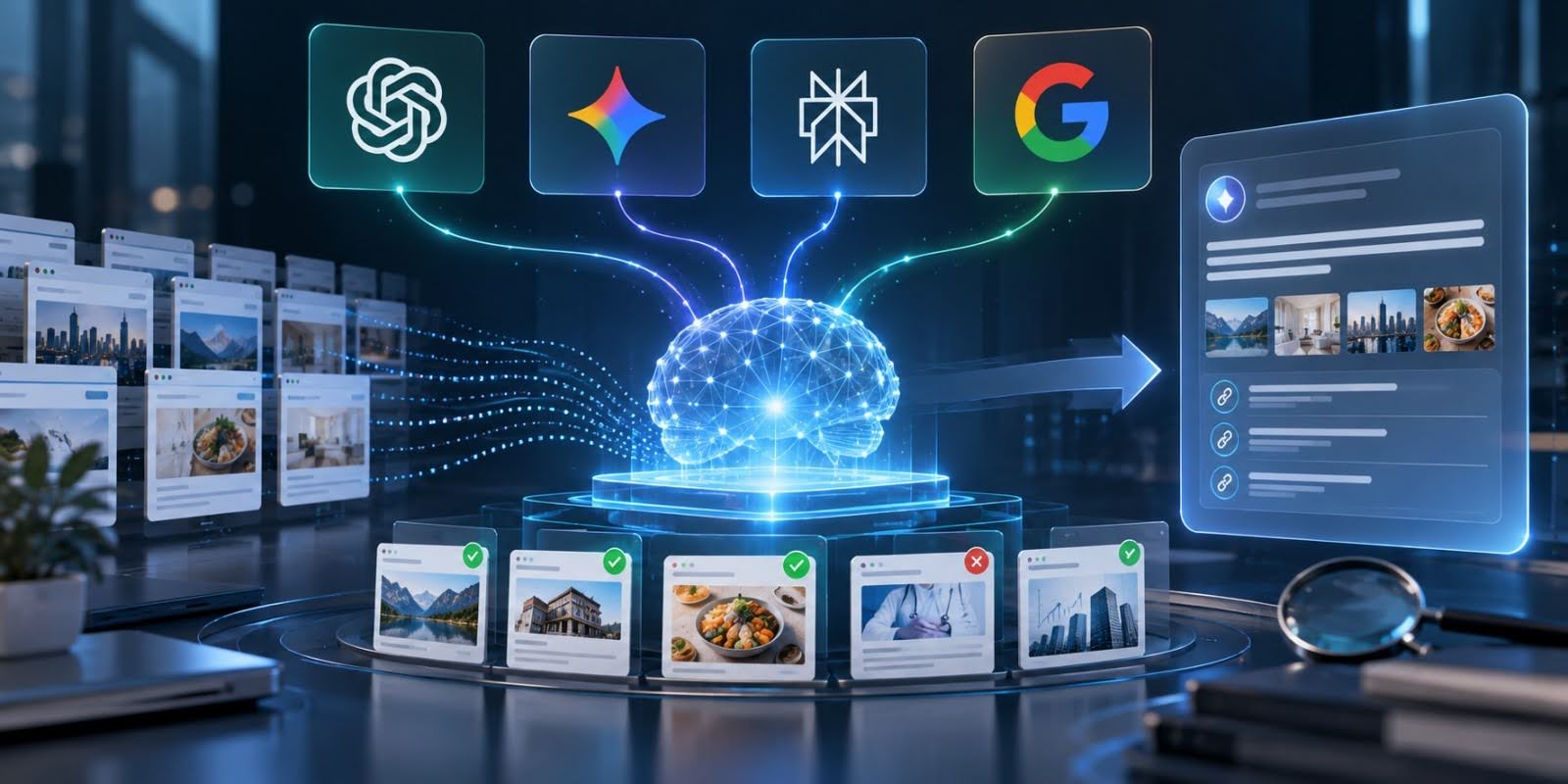
Off-page SEO consists of optimising external signals that help search engines and AI-driven systems evaluate the authority, trustworthiness, and relevance of a website. These signals include backlinks, brand mentions, citations, reviews, digital PR, and entity associations across the web.
Off-page SEO has changed significantly with the growth of AI-powered search experiences. Search engines now rely more heavily on contextual understanding, semantic relevance, and trust evaluation rather than simple backlink volume. AI-generated search summaries also assess whether a business is consistently recognised across authoritative sources before including it in generated responses.
Learn why modern off-page SEO focuses on quality over quantity and how businesses can build credible external signals and trustworthy brand recognition to achieve sustainable visibility in both traditional and AI-enhanced search environments.
What Off-Page SEO Means in AI-Driven Search
Off-page SEO is the process of improving a website’s authority using external digital signals. In AI-driven search systems, these signals help establish whether a business or website is reliable enough to be referenced, cited, or surfaced in generated responses.
While traditional ranking systems focused heavily on backlinks, modern AI-driven search systems evaluate contextual relationships between entities, authors, brands, and topics. Off-page SEO now has to supports:
- Search engine trust evaluation
- AI-generated answer inclusion
- Brand credibility
- Entity recognition
- Topic association
- Digital authority
AI systems increasingly interpret websites as entities rather than standalone pages. This means reputation signals matter more than isolated SEO tactics.
Why Backlink Quantity Matters Less Than Before
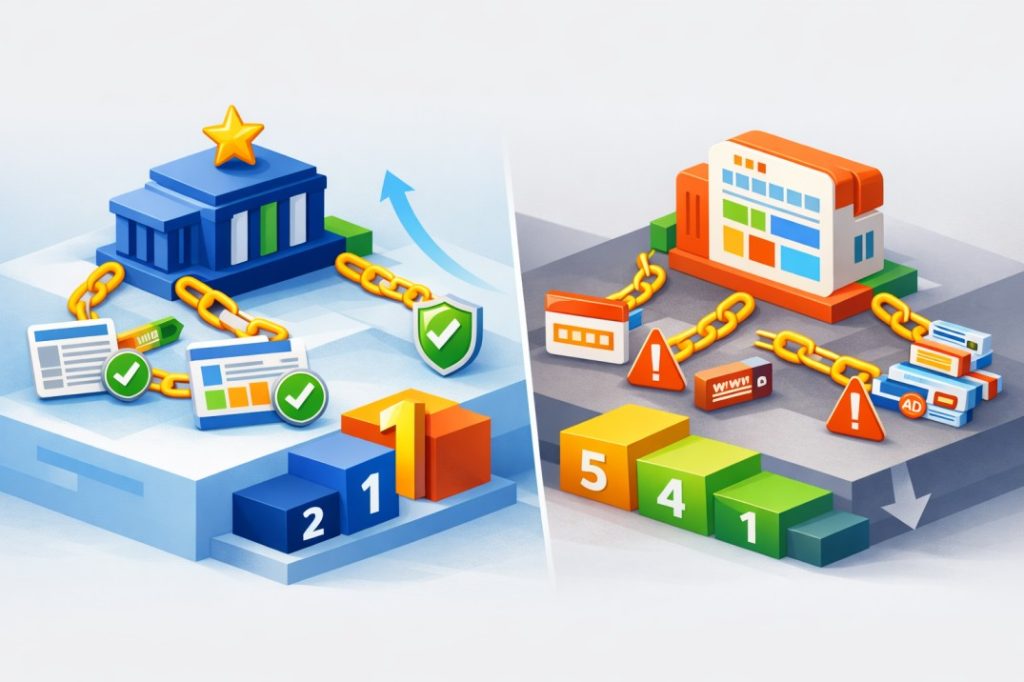
Search engines now prioritise backlink quality and relevance over raw volume. Large quantities of low-quality backlinks no longer provide sustainable ranking advantages.
Modern algorithms evaluate backlinks using factors such as:
- Source authority
- Industry relevance
- Contextual placement
- Editorial integrity
- Natural linking behaviour
A small number of authoritative backlinks often carries more value than hundreds of low-quality links. This comparison displays the between effective and ineffective backlinks and their impact:
| Backlink Type | Characteristics | Likely Impact |
| Editorial backlinks | Naturally referenced within trusted content | Strong positive signal |
| Industry-related links | Relevant to the business sector | Positive authority support |
| News publication links | Associated with trusted media | Supports trust and visibility |
| Spam directory links | Low-value and unrelated | Weak or harmful signal |
| Manipulative link schemes | Artificial and repetitive | Risk of penalties |
Businesses focusing on sustainable off-page SEO should prioritise relevance and authority rather than rapid link accumulation.
AI Search Systems Evaluate Context, Not Just Links
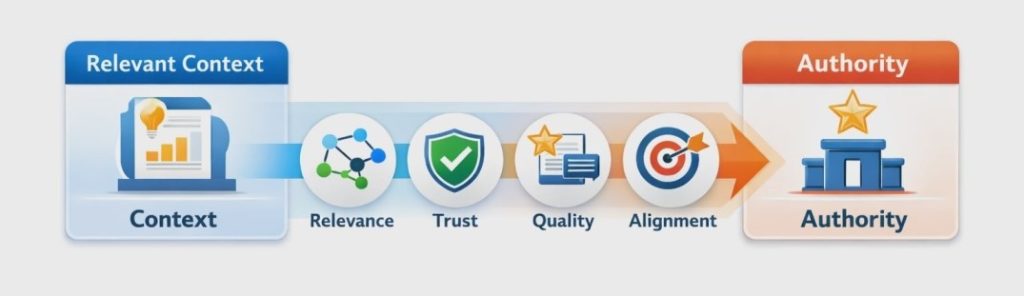
AI-powered search systems analyse context surrounding a backlink or brand mention. The surrounding content, topic relevance, and semantic relationship all influence how authority is interpreted.
For example, a backlink within an in-depth industry article carries stronger contextual value than a random mention on an unrelated website. AI systems evaluate:
- Topic alignment
- Semantic relevance
- Industry consistency
- Source trustworthiness
- Content quality
This means off-page SEO must align with broader content and authority strategies. Contextual credibility is becoming more important than traditional link metrics alone.
Topical Authority Is a Core Ranking Signal
Topical authority refers to how strongly a website or business is associated with a specific subject area. Search engines and AI systems use topical authority to determine whether a source is qualified to rank or be cited for certain topics.
Off-page SEO contributes to topical authority through external validation. Repeated references from relevant sources strengthen the association between a business and its expertise area. These are some of the signals that support topical authority:
- Industry backlinks
- Expert interviews
- Research citations
- Relevant media mentions
- Consistent topic-focused references
Since AI-generated searches also rely on topical authority to surface reliable sources, off-page SEO needs to be optimised in order for websites to become more strongly associated as an expert in their respective sectors.
Entity Recognition Has Become More Important
Entity recognition is the process search engines use to identify people, businesses, organisations, and concepts as distinct entities. AI-driven systems use entity recognition to connect brands with industries and services, through these entity signals:
- Consistent brand mentions
- Author references
- Industry citations
- Business listings
- Social and media associations
Off-page SEO supports entity recognition through consistent external references across trusted sources. When multiple authoritative websites reference a business consistently, search engines gain greater confidence in understanding the entity behind the website.
Entity recognition also helps AI systems determine whether a business should appear in generated summaries or knowledge-based responses.
Brand Mentions Now Influence Search Visibility

Brand mentions are references to a business name without necessarily including a hyperlink. Search systems increasingly recognise brand mentions as authority indicators as they help search engines understand:
- Industry relevance
- Popularity
- External recognition
- Topical associations
- Digital reputation
AI-driven search technologies analyse how often a brand is associated with specific topics and industries, therefore, repeated contextual mentions can strengthen trust signals.
For example, if a business is frequently referenced in discussions related to construction or building materials, search systems may associate that brand strongly with those subjects. Brand mentions are particularly relevant in AI search because generated responses often rely on broad source consensus rather than direct links.
Digital PR Supports AI Visibility
Gaining online exposure through media coverage, expert commentary, and industry publications is essential as reputable publications are often treated as reliable data sources. Digital PR supports off-page SEO by generating trust signals and authoritative references through these activities:
- Publishing research findings
- Providing expert insights
- Participating in interviews
- Creating industry commentary
- Launching data-driven campaigns
AI-generated search systems also favour businesses that appear consistently across recognised publications and expert discussions. These generate authoritative references that strengthen brand recognition and topical authority.
EEAT Signals Are Reinforced Through Off-Page SEO
Experience, Expertise, Authoritativeness, and Trustworthiness (EEAT) are principles that help search engines assess both content and source reliability. Off-page SEO strengthens EEAT through external validation, for example:
- Third-party endorsements
- Verified credentials
- Media references
- Industry partnerships
- Expert citations
- Professional memberships
Trustworthiness is especially important in sectors involving financial, legal, healthcare, or professional advice. AI systems apply stricter evaluation standards to these industries because inaccurate information may affect users significantly.
Businesses should focus on demonstrating real expertise through credible external recognition.
Local Citations Still Matter in Local SEO
Local citations help validate business legitimacy and geographic relevance, therefore, search engines use citation consistency to verify operational details. These typically include:
- Business name
- Address
- Phone number
- Website URL
- Business category
Consistent citations improve local trust signals and reduce ambiguity for search systems. The role of local citations in SEO can be summarised below:
| Citation Factor | Purpose |
| Name consistency | Supports entity clarity |
| Address validation | Confirms local presence |
| Contact details | Improves legitimacy |
| Category relevance | Strengthens topic association |
| Website references | Connects authority signals |
For Singapore businesses targeting local search visibility, citations continue to support local discoverability and trust.
Low-Quality Link Building Is Less Effective
Many outdated link-building tactics such as the following examples are now significantly less effective due to improvements in spam detection and AI-driven evaluation systems:
- Automated link schemes
- Private blog networks
- Spam comments
- Mass directory submissions
- Irrelevant guest posting
Search systems now evaluate link patterns more intelligently. Artificial linking behaviours can weaken trust signals instead of improving rankings. Modern off-page SEO requires genuine authority-building strategies rather than manipulative shortcut techniques.
AI Search Rewards Trustworthy Source Relationships
AI-generated search systems prioritise trustworthy information ecosystems. Businesses associated with credible sources are more likely to gain visibility. Trustworthy source relationships consist of:
- Industry publications
- Academic references
- Government-related mentions
- Professional organisations
- Established media websites
These relationships help reinforce authority signals and improve the likelihood of appearing in AI-generated summaries.
Search visibility increasingly depends on whether a business is recognised externally as a reliable source of information.
Social Signals and Their Indirect SEO Influence
Social media activity does not directly function as a ranking factor in most search systems. However, social visibility can indirectly support off-page SEO by increasing exposure and brand recognition.
Social activity may contribute to:
- Brand mentions
- Content discovery
- Media attention
- Referral traffic
- Industry engagement
AI systems may also interpret broader online visibility as a trust and relevance indicator when evaluating entities. Businesses should view social media as a supporting visibility channel rather than a standalone SEO tactic.
Why Content Quality Still Drives Off-Page SEO Success
Content remains central to off-page SEO because authoritative content naturally attracts citations, mentions, backlinks, and references. High-value content often includes:
- Research reports
- Technical insights
- Educational resources
- Data studies
- Industry analysis
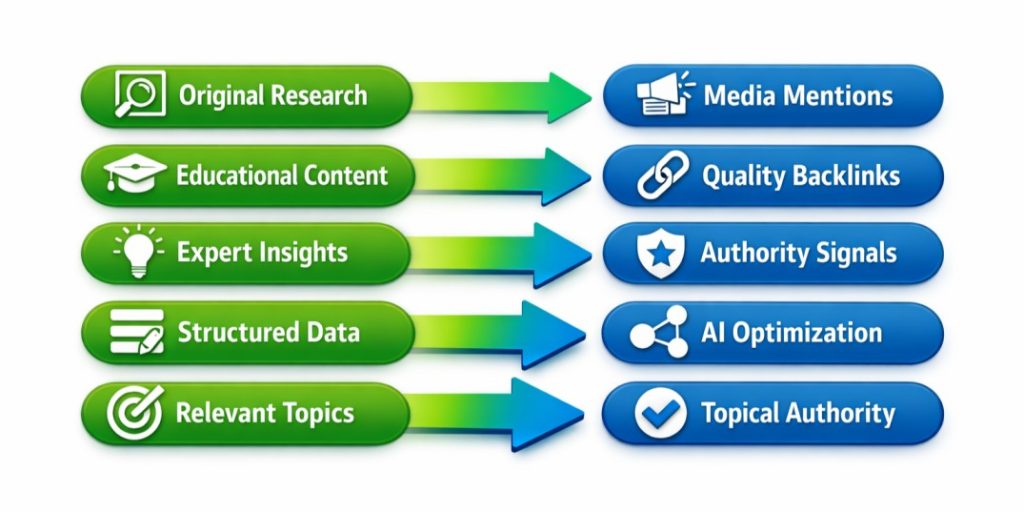
Search engines and AI systems favour content that contributes meaningful information rather than repetitive or low-value material. The relationship between content quality and off-page SEO can be summarised as follows:
| Content Quality Factor | Off-Page SEO Benefit |
| Original research | Earns media references |
| Educational depth | Attracts backlinks |
| Expert insights | Builds authority |
| Structured information | Improves AI extraction |
| Topic relevance | Supports topical authority |
Content that demonstrates expertise is more likely to generate sustainable authority signals over time.
What Still Works in Off-Page SEO
Several off-page SEO strategies remain effective because they align with how modern search systems evaluate authority and trust. Strategies that still work include:
- Earning contextual editorial backlinks
- Building topical authority
- Improving entity recognition
- Securing digital PR coverage
- Strengthening citation consistency
- Publishing authoritative content
These approaches support long-term credibility rather than short-term ranking manipulation. Search systems continue to reward businesses with strong external validation and trustworthy digital reputations.
What No Longer Works Reliably
Some older SEO tactics have become ineffective or risky due to advances in AI evaluation and spam detection systems, such as:
- High-volume low-quality backlinks
- Exact-match anchor overuse
- Automated link-building software
- Irrelevant directory submissions
- Artificial link exchanges
Search systems now evaluate intent, authenticity, and context more accurately. Manipulative tactics may reduce trust rather than improve visibility. Businesses should prioritise sustainable reputation development over artificial optimisation methods.
Frequently Asked Questions
Off-page SEO refers to external activities that help improve search visibility and authority. This includes backlinks, brand mentions, digital PR, citations, reviews, and other trust signals outside the website itself.
AI-driven search systems evaluate authority and trust before surfacing content in generated responses. Off-page SEO helps establish credibility through external validation from trusted sources and relevant industry references.
Backlinks remain important, but quality and relevance matter more than quantity. Search engines now evaluate the authority, context, and authenticity of links rather than simply counting them.
Topical authority refers to how strongly a business or website is associated with a specific subject area. It is strengthened through consistent content, industry mentions, backlinks, and external recognition related to that topic.
Entity recognition helps search engines understand businesses, organisations, and individuals as identifiable entities. Consistent brand references across authoritative sources strengthen entity clarity and improve trust signals.
Low-quality or manipulative backlinks can weaken trust signals and create ranking risks. Search engines increasingly detect unnatural linking behaviours and may reduce visibility for websites using spam-heavy tactics.
Digital PR supports SEO by generating media mentions, authoritative backlinks, and brand visibility. It also strengthens topical authority and trust signals that AI search systems may use when evaluating sources.
Building Authority in an AI-Driven Search Environment
Off-page SEO continues to play a major role in search visibility, but the methods that produce sustainable results have changed. AI-driven search systems now prioritise contextual relevance, entity trust, topical authority, and external credibility over simple backlink volume.
Singapore businesses that focus on genuine authority-building strategies are more likely to achieve long-term visibility across traditional search engines and AI-generated search experiences. This is because strong off-page SEO now depends on consistent trust signals, credible references, and meaningful industry recognition rather than outdated manipulation tactics.
To check whether your current off-page SEO approach aligns with modern search evaluation standards contact a reliable SEO agency such as W360 Asia for guidance on external authority strategies.